Table of Contents
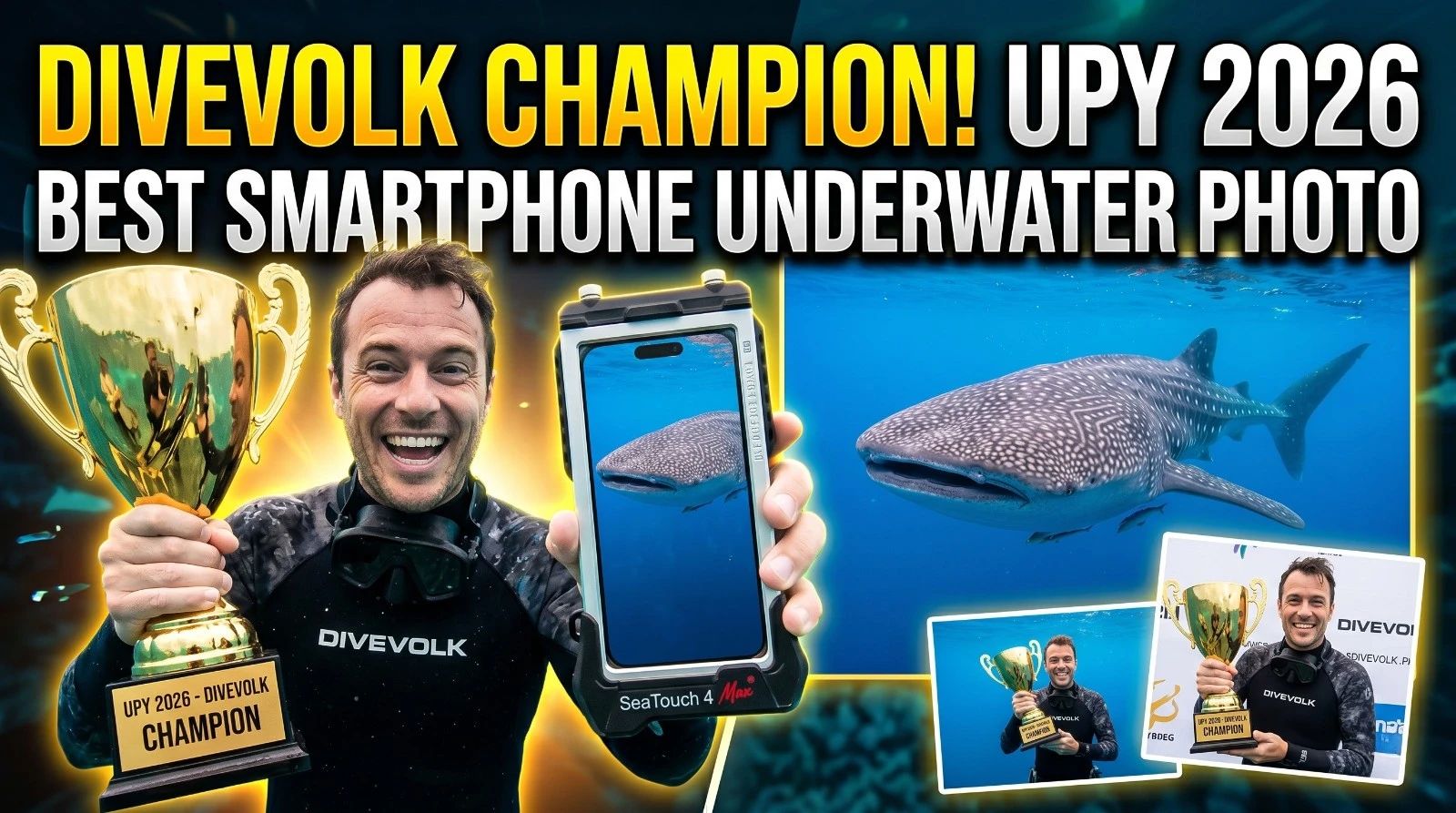
A smartphone DiveVolk wins the first prize at the UPY 2026 smartphone competition. The SeaLink enables live underwater streaming. Complete analysis.
Share
/blog/divevolk-wins-the-upy-2026-underwater-photo-with-a-smartphone
Questions about the Journal
Which smartphone should you use with a DiveVolk housing for underwater photography?
The SeaTouch 4 Max is compatible with both iOS and Android. The best results come from recent smartphones with high-performance camera sensors: iPhone 15 Pro and newer, Samsung Galaxy S24 and above, or any model with a main sensor of 48 megapixels or more.
How does the DiveVolk SeaLink enable live streaming underwater?
The SeaLink is a wireless underwater transmitter that sends the phone's video signal to the surface in real time. It enables video transmission, two-way audio communication, and even video calls from beneath the surface.
Why did the UPY create a smartphone category in 2026?
The quality of smartphone underwater photos has reached a level that justifies dedicated recognition. The first prize, awarded for a frogfish macro taken at 15 meters with an iPhone in a DiveVolk housing, demonstrates that results can rival equipment ten times more expensive.
Does the smartphone replace a compact or DSLR underwater?
For the vast majority of divers who want to bring back beautiful images without the bulk, the smartphone has gone from plan B to a legitimate option. It does not replace a dedicated setup for advanced macro or pelagic photography in extreme conditions. But the gap is narrowing, and the investment represents a fraction of the cost of a compact plus housing.
What smartphone to use with a DiveVolk housing for underwater photography?
The SeaTouch 4 Max is compatible with iOS and Android. The best results are achieved with recent smartphones equipped with high-performance cameras: iPhone 15 Pro and newer, Samsung Galaxy S24 and newer, or any model with a main sensor of 48 megapixels or more. The phone's computational processing handles a large portion of the work.
How does the DiveVolk SeaLink enable live underwater streaming?
The SeaLink is a wireless underwater transmitter that sends the phone's video signal to the surface in real time. It enables video transmission, bidirectional audio communication, and even video calls from underwater. It connects to the DiveVolk housing and works with a receiver on the surface.
Why did UPY create a smartphone category in 2026?
The quality of underwater photos taken with a smartphone has reached a level that warrants its own recognition. The first prize in this category, awarded to a frogfish macro shot at 15 meters with an iPhone in a DiveVolk enclosure, demonstrates that the results can compete with equipment ten times more expensive. This is not a beginner category: it is the recognition of a tool that has become legitimate.
Does the smartphone replace a compact or a DSLR underwater?
For the majority of divers who want to bring back beautiful images without being weighed down, the smartphone has gone from a backup option to a legitimate choice. It does not replace a dedicated setup for advanced macro or pelagic photography in extreme conditions. However, the gap is closing, and the investment (DiveVolk case alone) represents a fraction of the cost of a compact + dedicated case.

