How do microplastics reach 2,000 metres below the ocean surface?
A Korean study published in July 2026 in the journal Water Research shows that microplastics travel down to hydrothermal vents through deep-ocean currents and chain ingestion by organisms. Researchers found traces in 92% of animals sampled in the North Fiji Basin and Indian Ocean, at depths exceeding 2,000 metres. Polystyrene was the dominant polymer, with Indian Ocean levels up to 14.7 times higher than in the Southwest Pacific.
What is Haliphron atlanticus and why is it so hard to film?
Haliphron atlanticus is the seven-arm octopus of the tropical deep sea. Females reach four metres and 75 kilograms. It lives between 200 and 1,000 metres depth, in the mesopelagic zone rarely visited by robots. The Schmidt Ocean Institute expedition filmed in July 2026 a female eating a jellyfish at 800 metres: a direct observation never documented with this level of precision.
Why are Cape Verde loggerhead turtles nesting less and less often?
A 17-year study by Queen Mary University of London shows that climate change is reducing biological productivity in the Atlantic along the West African coast, where these turtles feed. Less food means less energy for reproduction: the interval between two nesting seasons increased from 2 years to 4 years over the study period. The turtles arrive earlier in the year, but less frequently and with fewer eggs.
What does the first 3D cellular imaging performed at sea represent?
The Schmidt Ocean Institute expedition completed in 2026 the first ever in situ observation of the living internal cellular structure of a marine micro-organism in 3D, aboard a vessel at sea. The DeepPIV and EyeRIS instruments developed by MBARI create sub-millimetre volumetric models without removing animals from the water. It is the difference between understanding a living organism in its own environment and dissecting it outside of it.
The Ink is a weekly series on recent marine discoveries. The ink of writing. The anchor of the seabed. One issue, a few findings, and what they change when you dive with a camera.
"We are tied to the ocean. And when we go back to the sea, whether it is to sail or to watch it, we are going back from whence we came." John F. Kennedy
It is July 2026, and three pieces of news have arrived this week from places most human beings will never see.
The first comes from two thousand metres below the surface, in the hydrothermal fissures of the North Fiji Basin, where Korean scientists were searching for organisms adapted to extreme conditions.
The second comes from 800 metres depth, somewhere in the tropical Atlantic, where a robot filmed something no one had ever documented with this level of clarity.
The third comes from the beaches of Cape Verde, where a 17-year study has just revealed a quiet fracture in the reproductive cycle of loggerhead sea turtles.
These three stories share no common headline. They share something simpler: all three say that the human footprint arrived before our images did.
A giant octopus filmed at 800 metres eating a jellyfish
The Schmidt Ocean Institute expedition off the coast of Brazil has been documenting the mesopelagic zone for several weeks now, that space between the sunlit surface and the seafloor which scientists consider the largest habitat on Earth still largely undocumented.
This week, a particular image circulated in the scientific community.
A female , the seven-arm octopus of the tropical depths (up to four metres long and 75 kilograms), was filmed at 800 metres depth capturing and eating a jellyfish. She begins with the tissues of the bell, then trails the stinging tentacles behind her, likely repurposing them as a defence mechanism.
Haliphron atlanticus
This is the first direct observation of this feeding behaviour documented with this level of precision, under the animal's real living conditions.
What makes this image possible is also a deeper breakthrough: the expedition achieved for the first time at sea the 3D scan of the living cellular structure of a micro-organism. The DeepPIV and EyeRIS instruments, developed by MBARI and mounted on ROV SuBastian, use lasers to create volumetric models at sub-millimetre resolution, without touching the animal, without removing it from the water.
That is the difference between understanding a living organism in its own environment and dissecting it outside of it. And in terms of biological data, that difference is enormous.
The expedition had already confirmed 31 new species during its first phase, including a helmet-shaped jellyfish of the genus Bathykorus, which lives so far below the surface that it has only ever been seen by robots. The data keeps accumulating. The mesopelagic zone is only now beginning to reveal what it contains.
Polystyrene at 2,000 metres: the deep sea was not intact
A team of Korean researchers from KRIBB and KIOST has just published in the journal Water Research the first cross-ocean comparative study on microplastic presence in hydrothermal vent animals.
The findings are straightforward.
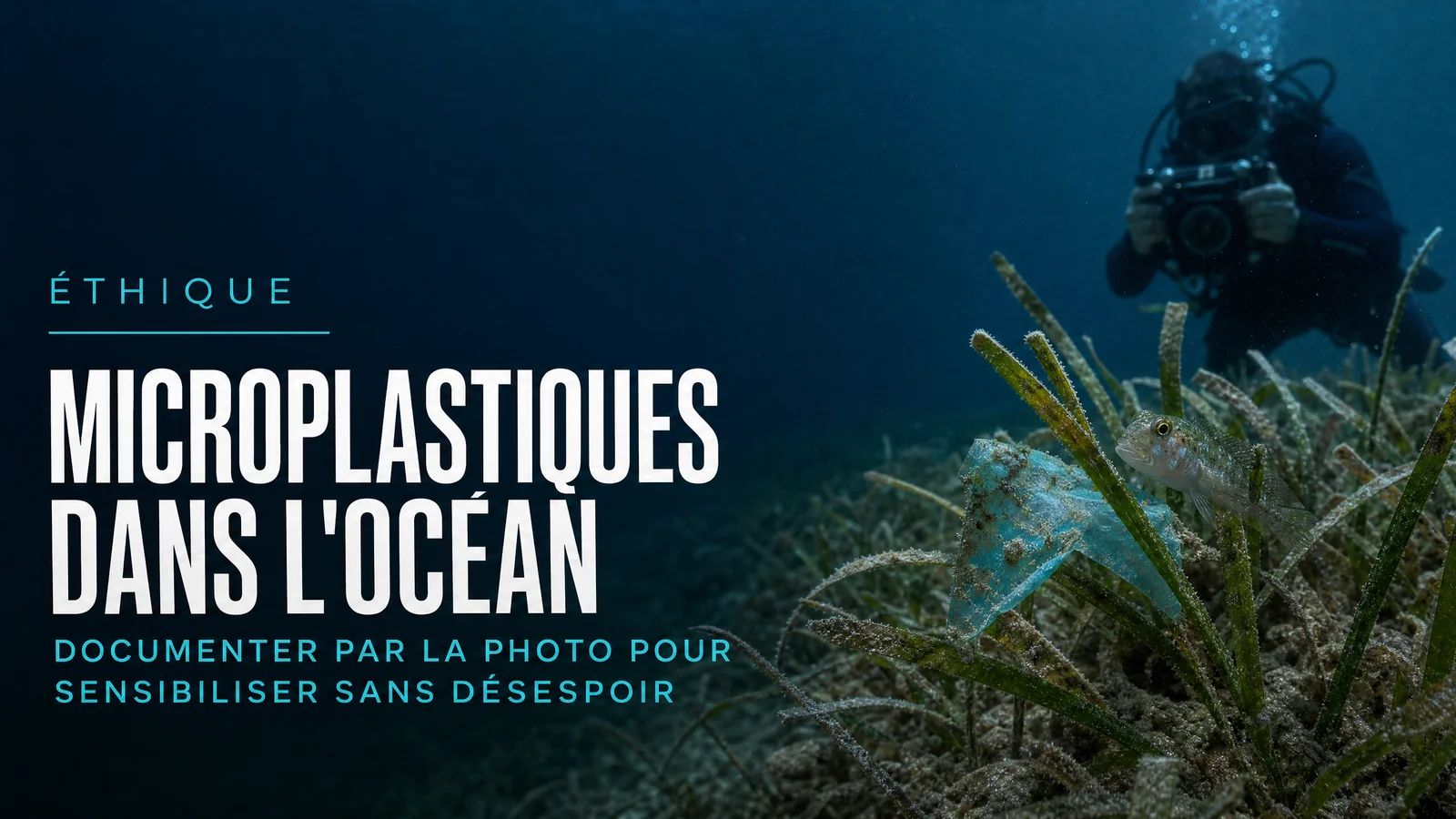
92% of the animals sampled, collected from more than 2,000 metres depth in the North Fiji Basin and the Indian Ocean, contained microplastics. The average was 3.42 particles per individual. The most prevalent polymer: polystyrene, the material used in food packaging, cups, and trays.
Contamination levels in the Indian Ocean were up to 14.7 times higher than in the Southwest Pacific. Researchers attribute this gap to regional oceanographic conditions: currents, the structure of the water column, the depth at which particle-carrying water masses circulate.
Hydrothermal vents host ecosystems that appeared long before humans existed. Blind shrimps, tube worms, mussels adapted to environments without photosynthesis, without light, under crushing pressure. None of these places is connected to the surface by a commercial route. Yet polystyrene arrived there before our ROVs did.
This is information that underwater photographers should carry somewhere in their gaze. The areas we visit, even the most remote ones, are not beyond reach. They are beyond our images. They are not beyond our waste.
Cape Verde turtles are nesting earlier, but less and less often
A 17-year study by Queen Mary University of London on loggerhead sea turtles (Caretta caretta) nesting in Cape Verde has just revealed a tension biologists had anticipated.
The warming of beaches and surface water is pushing females to begin their nesting season earlier in the year. On the surface, this looks like a successful adaptation.
But the average interval between two nesting seasons increased from two years to four years over the course of the study. And the number of eggs per season decreased. The females arrive earlier, but they arrive depleted.
The reason lies thousands of kilometres from the beaches of Cape Verde, in the Atlantic waters along the West African coast where these turtles feed. Climate change is reducing the biological productivity of these zones: less plankton, fewer prey, less stored energy for migration and reproduction.
Cape Verde holds one of the largest loggerhead turtle populations in the Atlantic. What we observe there is not a local incident. It is a signal about how large-scale disruptions show up in the biology of one particular animal, on one particular beach, within a life cycle that unfolds over decades.
For further context on how climate change is altering ocean currents and diving conditions, the article on the AMOC slowdown provides a precise picture of what is playing out in the North Atlantic.
What this changes for us, underwater
These three stories are not catastrophes. They are measurements.
And measurements, in underwater photography, are what you need before you can understand what you are looking at.
When you dive with a camera, you produce images of places few people will ever see. You document. And the value of that documentation depends on the precision with which you observe what is actually there, not what you hoped to find.
The microplastics study changes something in the way we perceive deep zones. We tended to think of them as beyond the reach of human impact. They are not, if they ever were.
The octopus at 800 metres reminds us that the zone underwater photographers rarely visit (below 200 metres) may be the densest in terms of undocumented behaviours. Not because there is nothing there. Because we do not go there, and because the tools to do so correctly are very recent.
And the Cape Verde loggerheads remind us that the subjects we photograph at the surface (nesting sites, migrations, beach returns) are connected to dynamics no diver can see directly: in waters thousands of kilometres away, in a biological productivity that has been changing for decades.
Marine protected areas do not protect those dynamics. And yet, that is where everything begins.
If you want to develop your underwater photography practice and build the biological understanding that gives your images real depth, the AquaExposure underwater photography course is built around exactly that. All the learning resources are also available on AquaExposure training.
The image you take this weekend, in three metres of water, is connected to what is happening at 2,000 metres down. Both belong to the same system. And that system, we are only just beginning to learn to read.
Frequently asked questions
How do microplastics reach 2,000 metres below the ocean surface?
A Korean study published in July 2026 in Water Research shows that microplastics travel down to hydrothermal vents through deep-ocean currents and the food chain. 92% of animals sampled in the North Fiji Basin and the Indian Ocean contained them, averaging 3.42 particles per individual. Polystyrene was the most abundant polymer.
What is Haliphron atlanticus and why is it so rarely filmed?
It is the seven-arm octopus of the tropical deep sea. Females reach four metres and 75 kilograms. It lives between 200 and 1,000 metres depth, in a zone rarely visited by robots. The Schmidt Ocean Institute expedition filmed in July 2026 a female eating a jellyfish at 800 metres: a direct observation never previously documented with this level of precision.
Why are Cape Verde loggerhead turtles nesting less often?
The 17-year study from Queen Mary University of London shows that climate change is reducing food productivity in the Atlantic along West African coasts, where these turtles feed between seasons. Less food, less energy for reproduction: the interval between two nesting seasons increased from 2 to 4 years.
What does the first 3D cellular imaging performed at sea bring?
It is the difference between dissecting an animal outside its environment and scanning it alive within its own habitat. The DeepPIV and EyeRIS instruments developed by MBARI provide sub-millimetre volumetric resolution, mounted on ROV SuBastian, without any contact with the organism. It opens a new door onto the physiology of deep-sea creatures.
Find previous issues of the series on the AquaExposure blog. And to progress in reading the underwater living world, all resources are available on AquaExposure training.
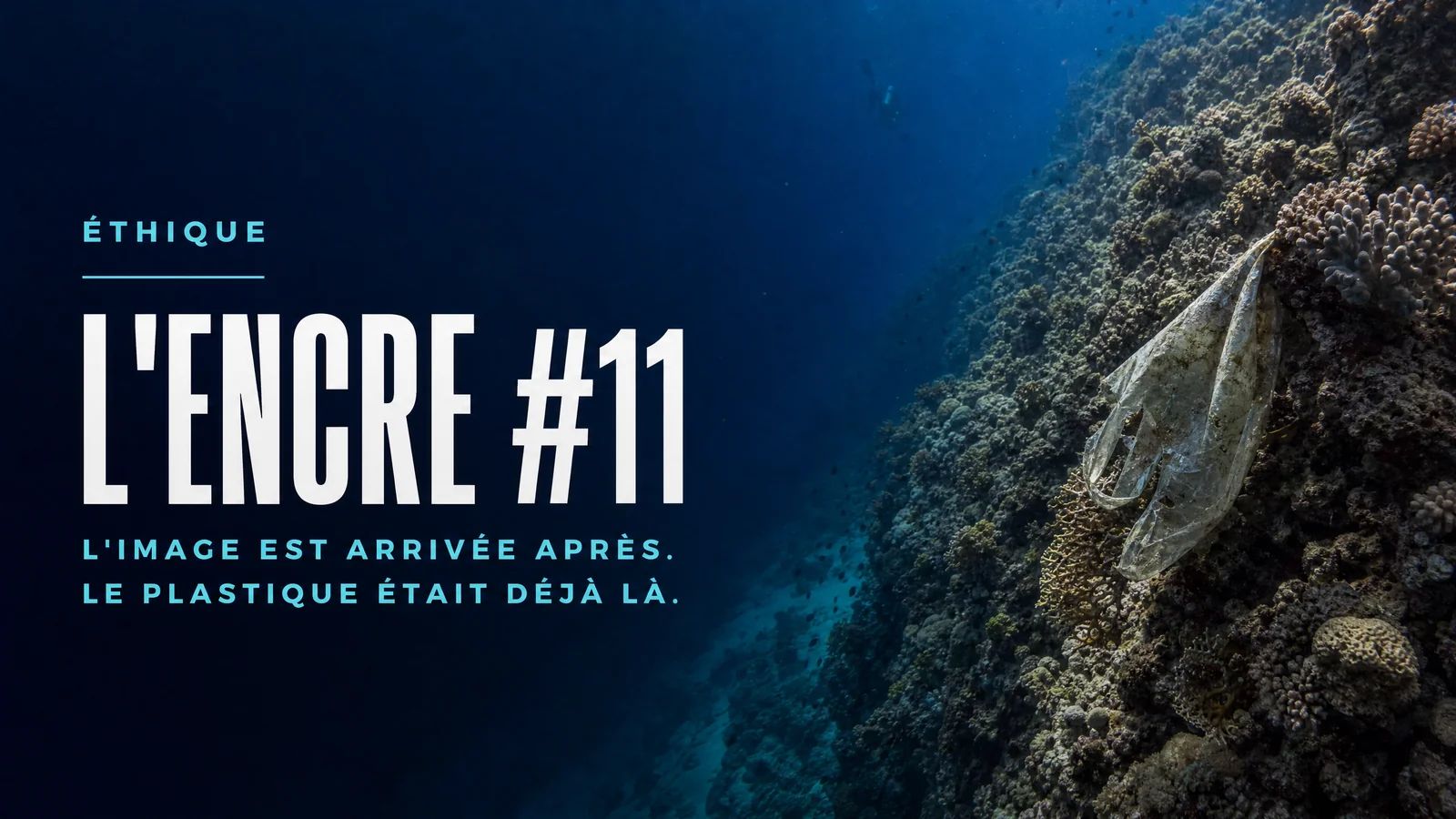
The Ink #11 - The image came after. The plastic was already there. | AquaExposure