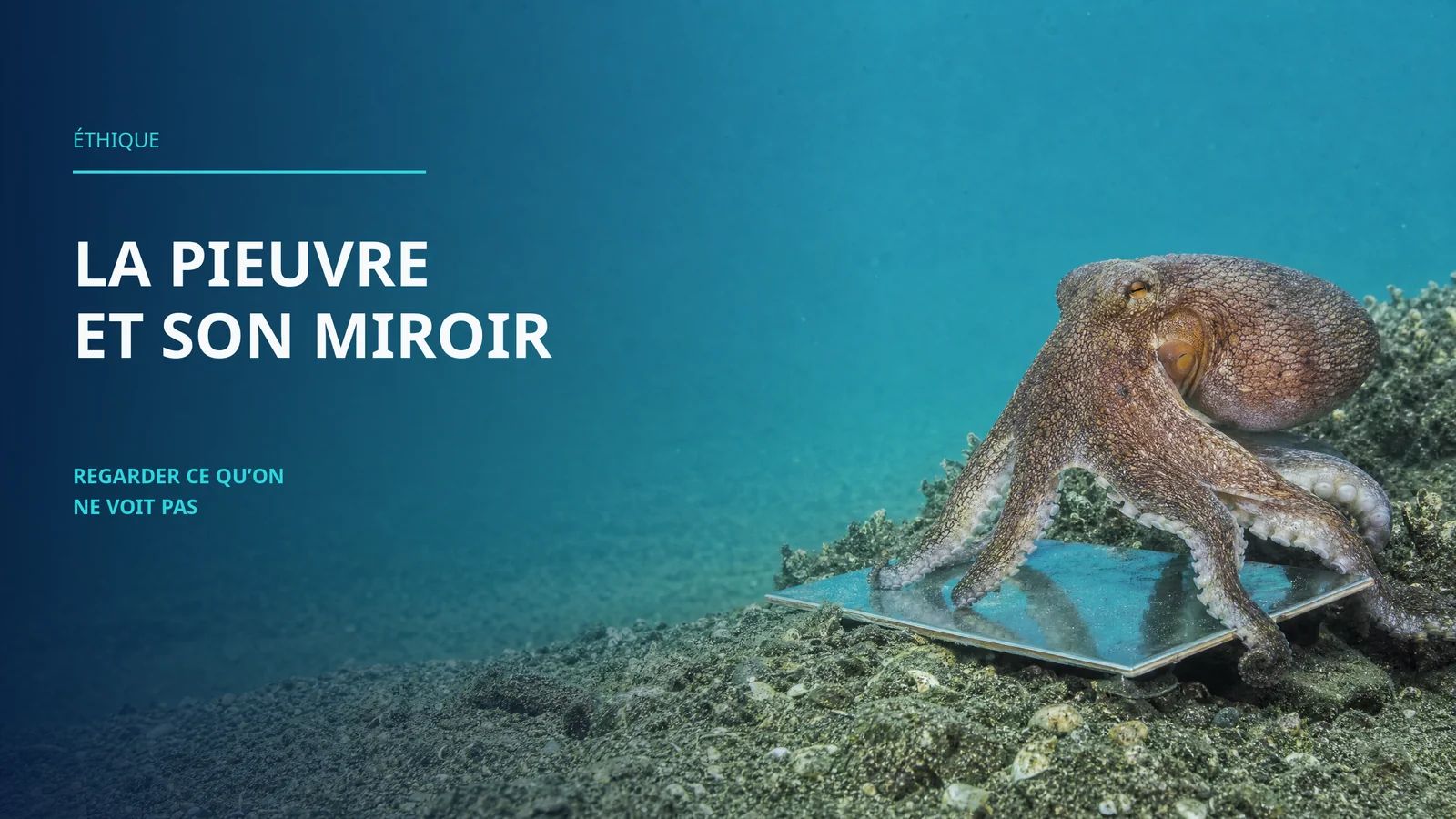
A Dartmouth College study published in Current Biology in June 2026 showed that an octopus of the species Octopus bimaculoides learns to interpret a reflected image to locate prey placed outside its direct line of sight. After training, the animal reached about 73% correct choices. It is the first evidence that an invertebrate can use a mirror as an abstract spatial tool, an ability long thought to be reserved for certain vertebrates.
Why do belugas switch partners and why does it matter?
A Florida Atlantic University study published in Frontiers in Marine Science analysed the DNA of more than 600 belugas in Bristol Bay, Alaska, over thirteen years. Males and females have offspring with different partners over their lifetimes. This system reduces the risk of inbreeding and maintains genetic diversity in a population that is small and isolated, around 2000 individuals.
What does the 10% protected ocean threshold reached in 2026 mean?
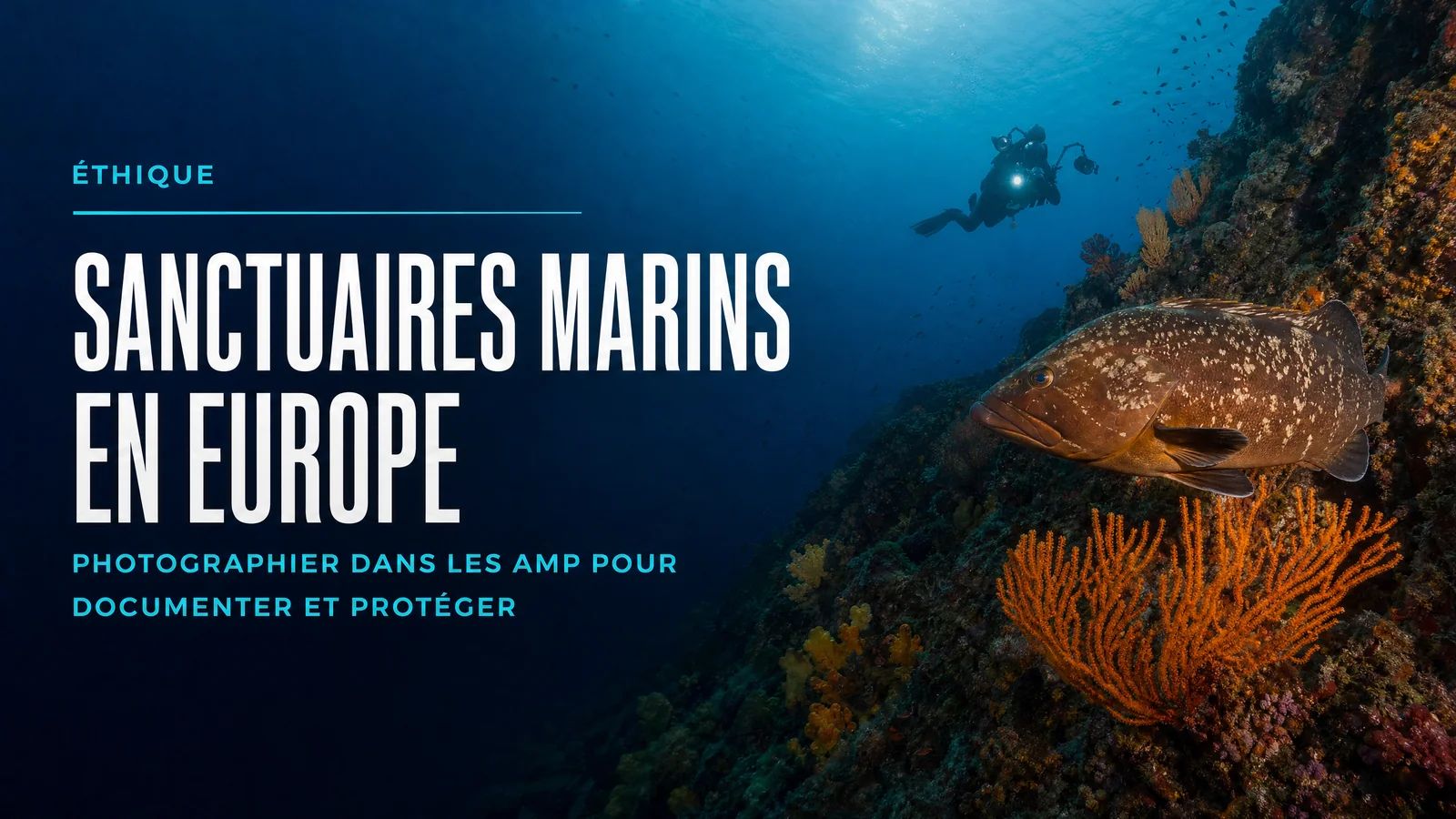
Around World Oceans Day 2026, marine protected areas covered 10% of the ocean surface for the first time, one third of the 30% target set for 2030. Among recent announcements, French Polynesia placed about 520,000 km² around the Austral and Marquesas Islands under the highest level of protection, and Ghana created its first marine protected area.
Can a diver really collect scientific data with their own gear?
Yes. The REEF network and the Semmens Lab developed a filtering mesh attached to a diver's tank, which captures the environmental DNA present in the water during the dive. Other projects use laser calipers mounted on a camera housing to measure fish length from the images. The diver with a camera becomes a dated and geolocated biodiversity sensor.
The Ink is a weekly series on recent marine discoveries. The ink of writing. The anchor of the seabed. One issue, a few findings, and what they change when you dive with a camera.
"This is probably the closest we will come to meeting an intelligent alien." Peter Godfrey-Smith
We are in the last week of June 2026, and three results arrived one after another, from a laboratory in New Hampshire, a bay in Alaska, and a map of the world we have just redrawn.
None of the three teams knew one another. None worked on the same animal, at the same scale, or with the same tools.
The thread that connects them is quiet. Each time, someone understood something we believed was out of reach.
And each time, the ocean answered faster than expected.
An octopus looked into a mirror, and understood
It all starts in a tank of seawater at Dartmouth College, where a small two-spotted octopus was waiting for its meal.
In front of it, a mirror. Behind it, out of its field of vision, a live crab placed on one side or the other.
Mary Kieseler's team, with Peter Tse as senior author, wanted to know one simple thing. Would the octopus use the reflection to work out where the prey it could not see directly was located.
The answer landed in Current Biology in June 2026.
The animal looked at the mirror, processed the reflected image of the crab, turned about ninety degrees, and headed for the right side.
After training, the species Octopus bimaculoides reached roughly 73% correct choices.
It sounds trivial, put that way. It is not trivial at all.
Until now, reading spatial information in a reflection, understanding that the mirror speaks of an elsewhere, was considered the preserve of animals with a large centralised brain. Mammals, birds.
The octopus has none of that. Its nervous system is distributed, its arms think almost on their own, and its mental architecture resembles none of ours.
It is the first time an invertebrate has been documented using a mirror as an abstract spatial tool.
What is unsettling is not that the octopus is intelligent. We already knew that. It is that it reaches the same solution by an evolutionary path entirely foreign to ours.
Two branches of life, separated by hundreds of millions of years, arriving at the same idea. The reflection does not show reality, it points to it.
Belugas switch partners, and it saves them
While the octopus was solving its mirror problem, another team was reading the DNA of an entire population, at the other end of the continent.
Destination Bristol Bay, Alaska, where about 2000 belugas live, a small population isolated from the rest of the species.
Researchers from the Harbor Branch Oceanographic Institute at Florida Atlantic University, with the Alaska wildlife services, analysed the DNA of more than 600 individuals, tracked over thirteen years.
The result appeared in Frontiers in Marine Science.
What they reconstructed are whale family trees. Who descends from whom, who had calves with whom, and across how many seasons.
The pattern is clear. Both males and females change partners over their lifetimes. Many half-brothers and half-sisters, very few full siblings.
Put another way, belugas practice a kind of rotating fidelity, and it is not a behavioural accident.
This rotation of partners reduces the risk of inbreeding and maintains genetic diversity, even though the population is small and cut off from the others.
A population of this size should, in theory, grow genetically poorer over time. This one holds, thanks to a reproductive strategy that looks like insurance against collapse.
What it tells us goes beyond belugas. A species trapped in small numbers is not doomed by default. Sometimes its social behaviour does the work that demography no longer can.
Protected ocean has just passed 10%
The third result is not a field discovery. It is a threshold, and it was announced around World Oceans Day, in early June 2026.
For the first time, marine protected areas cover 10% of the ocean surface.
That is one third of the way toward the target of 30% of protected sea by 2030, the commitment made by a broad coalition of countries.
The figure on its own can seem cold. What lies behind it is far less so.
French Polynesia placed about 520,000 km² around the Austral and Marquesas archipelagos under the highest level of protection. No mining, no trawling, no industrial fishing.
These waters are home to species found nowhere else, like the Marquesan domino damselfish.
Elsewhere, Indonesia and Thailand together added 284 marine or coastal areas. Ghana, for its part, created its very first marine protected area, after more than fifteen years of effort.
We should keep a cool head. An area on a map is not a protected area as long as it is neither monitored nor funded.
But the movement is real, and it is heading the right way, which is not so common in this column.
Three pieces of news, three scales. An invertebrate brain, a genealogy of whales, a planetary map. And the same underlying observation, the ocean delivers more than what we look for, the moment we agree to measure differently.
For underwater photographers, each of these stories has a direct hold.
The octopus at the mirror changes the way you photograph it. It is not a soft backdrop that shifts colour. It is a subject that watches you, that anticipates, that decides. Photographing a gaze is not the same thing as photographing a texture.
The belugas remind us that what matters often plays out off frame, over time, in the bonds between individuals. A single image freezes a moment. A dated and geolocated series tells a story that researchers can read.
And that is where the third piece of news meets the fin and the housing.
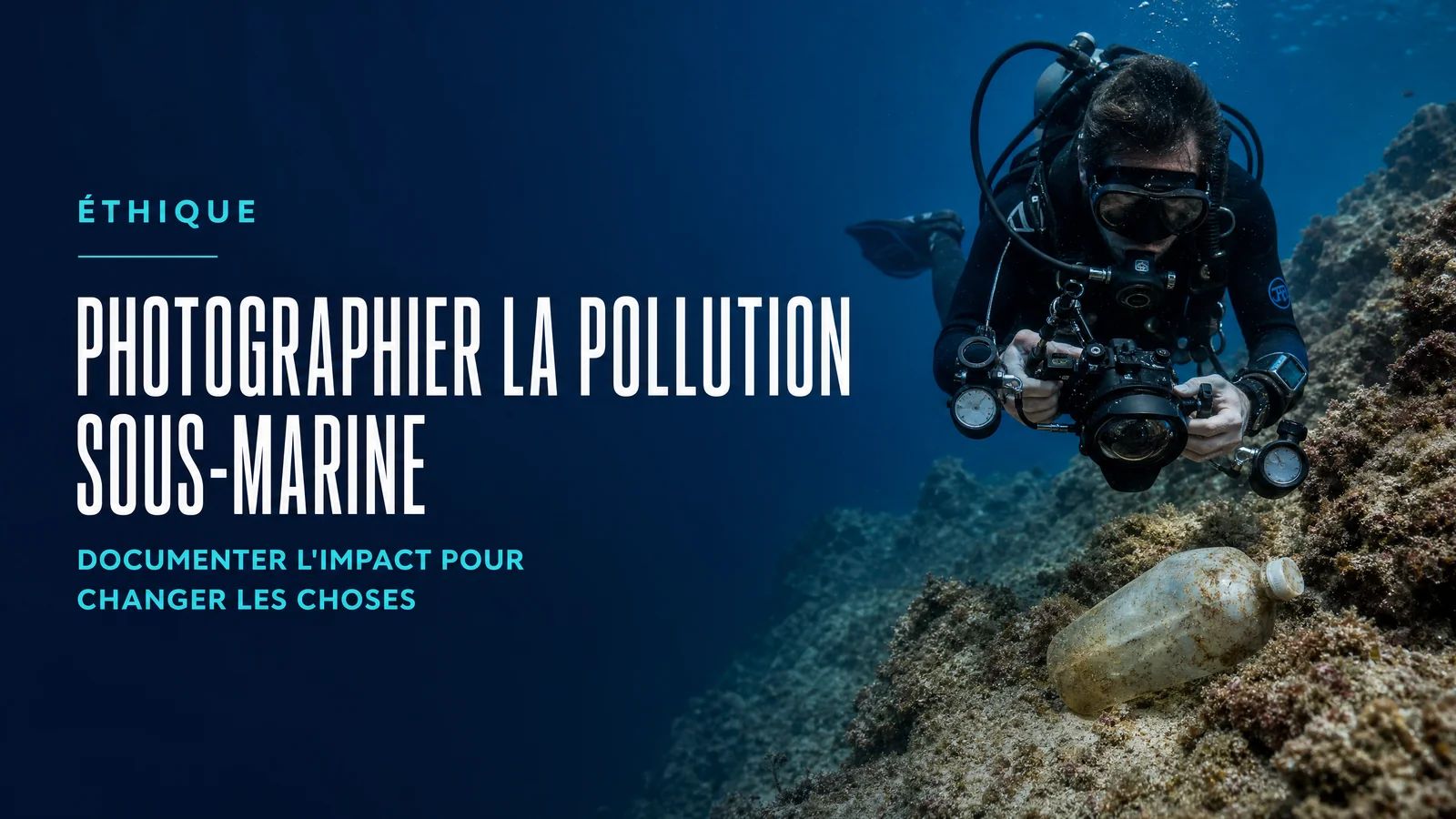
The REEF network and the Semmens Lab developed a filtering mesh that attaches to a diver's tank. During the dive, water passes through it and leaves behind the environmental DNA of the animals nearby.
Other projects mount laser calipers on housings, to measure fish length directly from the images, without touching anything.
In other words, the diver with a camera is no longer only a witness. They become a biodiversity sensor, dated, located, verifiable.
This is exactly what the AquaExposure training has repeated from the start. A good underwater image is not only a beautiful image. It is data, and sometimes evidence.
A Dartmouth College study published in Current Biology in June 2026 showed that an octopus of the species Octopus bimaculoides learns to interpret a reflected image to locate prey placed outside its direct line of sight. After training, the animal reached about 73% correct choices. It is the first evidence that an invertebrate can use a mirror as an abstract spatial tool, an ability long thought to be reserved for certain vertebrates.
Why do belugas switch partners and why does it matter?
A Florida Atlantic University study published in Frontiers in Marine Science analysed the DNA of more than 600 belugas in Bristol Bay, Alaska, over thirteen years. Males and females have offspring with different partners over their lifetimes. This system reduces the risk of inbreeding and maintains genetic diversity in a population that is small and isolated, around 2000 individuals.
What does the 10% protected ocean threshold reached in 2026 mean?
Around World Oceans Day 2026, marine protected areas covered 10% of the ocean surface for the first time, one third of the 30% target set for 2030. Among recent announcements, French Polynesia placed about 520,000 km² around the Austral and Marquesas Islands under the highest level of protection, and Ghana created its first marine protected area.
Can a diver really collect scientific data with their own gear?
Yes. The REEF network and the Semmens Lab developed a filtering mesh attached to a diver's tank, which captures the environmental DNA present in the water during the dive. Other projects use laser calipers mounted on a camera housing to measure fish length from the images. The diver with a camera becomes a dated and geolocated biodiversity sensor.