Notre Histoire
Une passion pour la photographie sous-marine
Our History
We're not here to "take" photos. We're here so that the ocean allows us to receive them.
In a world where underwater photography is often associated with "image hunting," bulky equipment, and intrusive flashes, AquaExposure offers a different approach. We believe that the most beautiful image is one that leaves no trace, neither on the reef nor in the animal's memory.
Impact & Vision
Ethical photography is not an option, it is the future of our sport.
88%Rifical ImpactAquaExposure field studies
5xMore InteractionsSAGE method vs standard approach
Our Philosophy
The Scenography of Erasure
Our school is based on a simple observation: the diver's technical expertise is the only guarantee of free creativity. As long as your mind is preoccupied with managing your buoyancy or complex settings, you cannot be available for the encounter.
Absolute Priority to Living Beings
The image is merely a pretext. The animal's well-being and respect for its environment always come first. We don't teach chasing, but rather the art of approaching tangentially. If the animal refuses, we know when to give up.
A Celebration of Natural Light
We challenge the myth that requires students to purchase thousands of euros worth of artificial lighting. Our students learn to manipulate and sculpt natural light, to work with contrasts, and to use digital tools to reveal authentic colors.
Liberation Through Simplicity
We've led you to believe that you need heavy equipment to take professional-quality photos and videos. That's not true. We train agile divers who use action cameras or smartphones. By reducing your equipment, we also reduce your mental burden.
Ethical photography is not an option, it is the future of our sport.
Dr. Richard SmithMarine Biologist - Pygmy Seahorse Expert
The Founder: Benjamin Coste
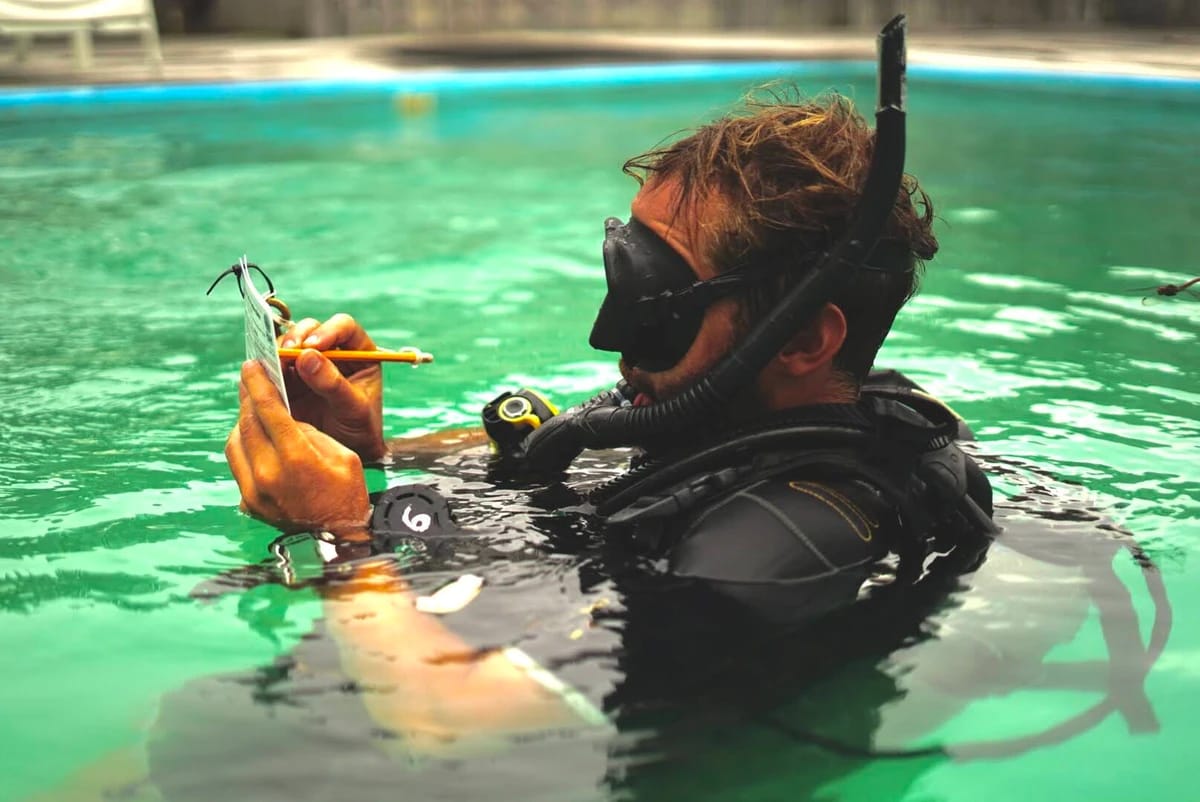
Behind AquaExposure is Benjamin Coste, an entrepreneur and passionate instructor.
His approach was born out of frustration with the traditional teaching of underwater photography, which was often too technical, elitist, and disconnected from the actual biological reality. He designed AquaExposure not as a series of technical courses, but as a manifesto for a respectful and immersive approach.
His mission is clear: to help everyone experience exceptional underwater encounters and bear witness to them with integrity, without ever betraying the environment that welcomes us.
Discovering Benjamin's journey→🌊
Our Pledge of Authenticity and Animal Ethics
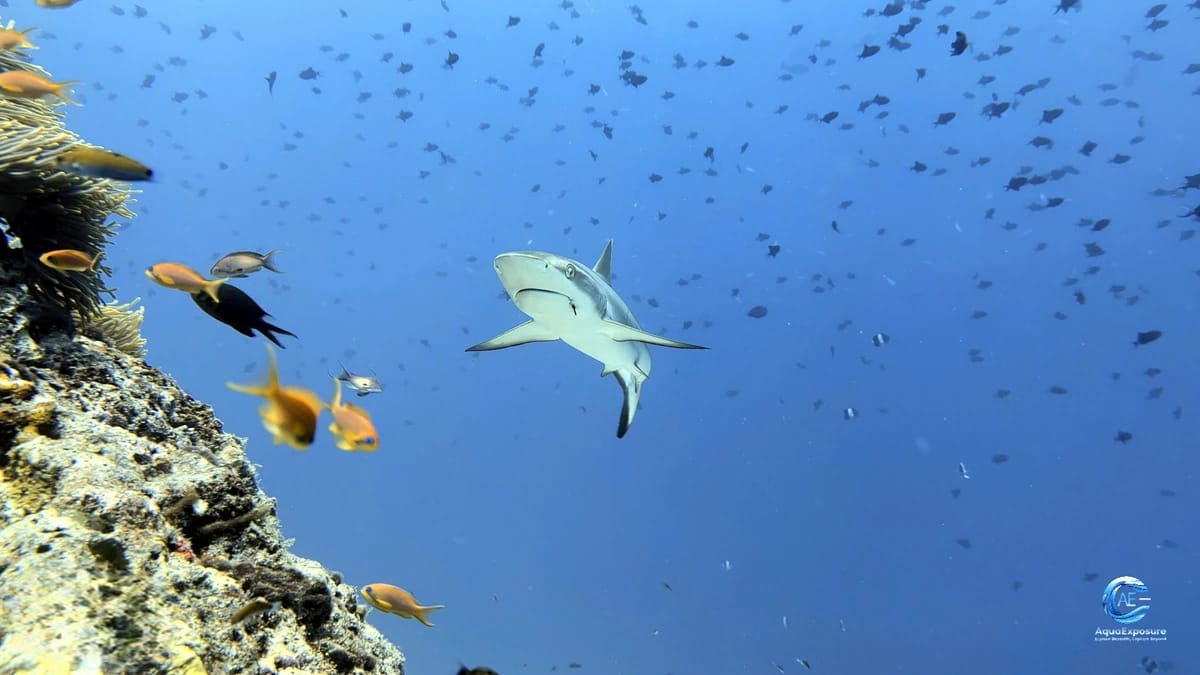
100% of the underwater photos and videos on AquaExposure are authentic field shots taken with a smartphone (iPhone 14 Pro), an action camera (GoPro Hero 11/12), or a rugged compact camera (Olympus TG-6).
All these images are captured exclusively in natural ambient light, with zero strobes and zero artificial video lights, protecting wildlife tranquility.
Our practice is rooted in absolute ethics: we never chase animals and we never use bait. The animals came to me freely, offering these genuine encounters.
Becoming a Sentinel
Joining AquaExposure means transitioning from being a "mere underwater tourist" to becoming a "guardian" of the marine environment.
Our training doesn't end with filming. It leads to participatory science. We teach you how to turn your videos into scientific data.
Forget about performance. Focus on harmony.
Welcome to the School of Silent Explorers.
Ready to embark on an adventure?
Join our community and start your transformation.
Frequently Asked Questions
Is specialized, expensive equipment required to complete the training?
No. The AquaExposure philosophy is based on simplicity to facilitate a smooth workflow. We teach you how to achieve professional-quality results using readily available tools such as a GoPro, Insta360, or iPhone with an underwater housing.
Why are my underwater videos always blue or green?
This is a natural physical phenomenon: the absorption of colors by water. We teach a digital restoration method on iPad to revive the original colors without the need for a powerful computer.
Why does the AquaExposure school discourage the use of flashlights and spotlights?
Our top priority is the respect for living beings. Artificial light damages the animals' retinas and alters their natural behavior. We teach the use of natural light to create images without intrusion.
How does underwater photography affect my diving safety?
Module 1 is dedicated to managing mental overload (Task Loading). We will teach you how to automate your safety procedures so that taking pictures never becomes a dangerous activity.
How can we approach marine animals without scaring them?
The key lies in the "Erase Scenography" technique: a tangential approach, frog-like movements, and perfect stabilization to allow the animal to perceive the presence as neutral.
What is the real impact of photography on marine ecosystems?
Without ethical training, the impact is significant: 88% of divers touch the reef inadvertently. Our mission is to reduce this figure to zero by teaching the Scenography of Erasure, turning each photographer into a passive observer and a contributor to science.
Can I take the training without being an expert diver?
Absolutely. The AquaExposure training is designed for all levels. We have trained children as young as 10 and grandparents alike. The fluid approach and the Scenography of Erasure are skills acquired through practice and patience.
What purpose do my images serve after the training is completed?
Your images become Optical Imprints useful to science. Module 10 trains you in identification protocols to submit your videos to global databases like Manta Matcher. You become a true Ocean Sentinel.
How can my photos concretely contribute to citizen science?
Your images, particularly those of identifiable species such as manta rays or turtles, can be submitted to global databases (like Wildbook or MantaMatcher). Researchers use each animal's unique patterns to track populations, migrations, and ecosystem health. Our training guides you on how to take identification photos useful to science.
What is the difference between an underwater tourist and a Guardian?
A tourist passively consumes an experience. A Guardian, as we train them, becomes an active conservation participant. They possess the skills to minimize their impact, understand ecological challenges, and use their images to witness, educate, and actively contribute to ocean protection.
Why is buoyancy control so crucial in your teaching?
Perfect buoyancy is the foundation of erasure. It allows you to approach wildlife without disturbing it, avoid any destructive contact with fragile corals, and ensure your own safety by freeing your mental load to focus on observation and image capture.