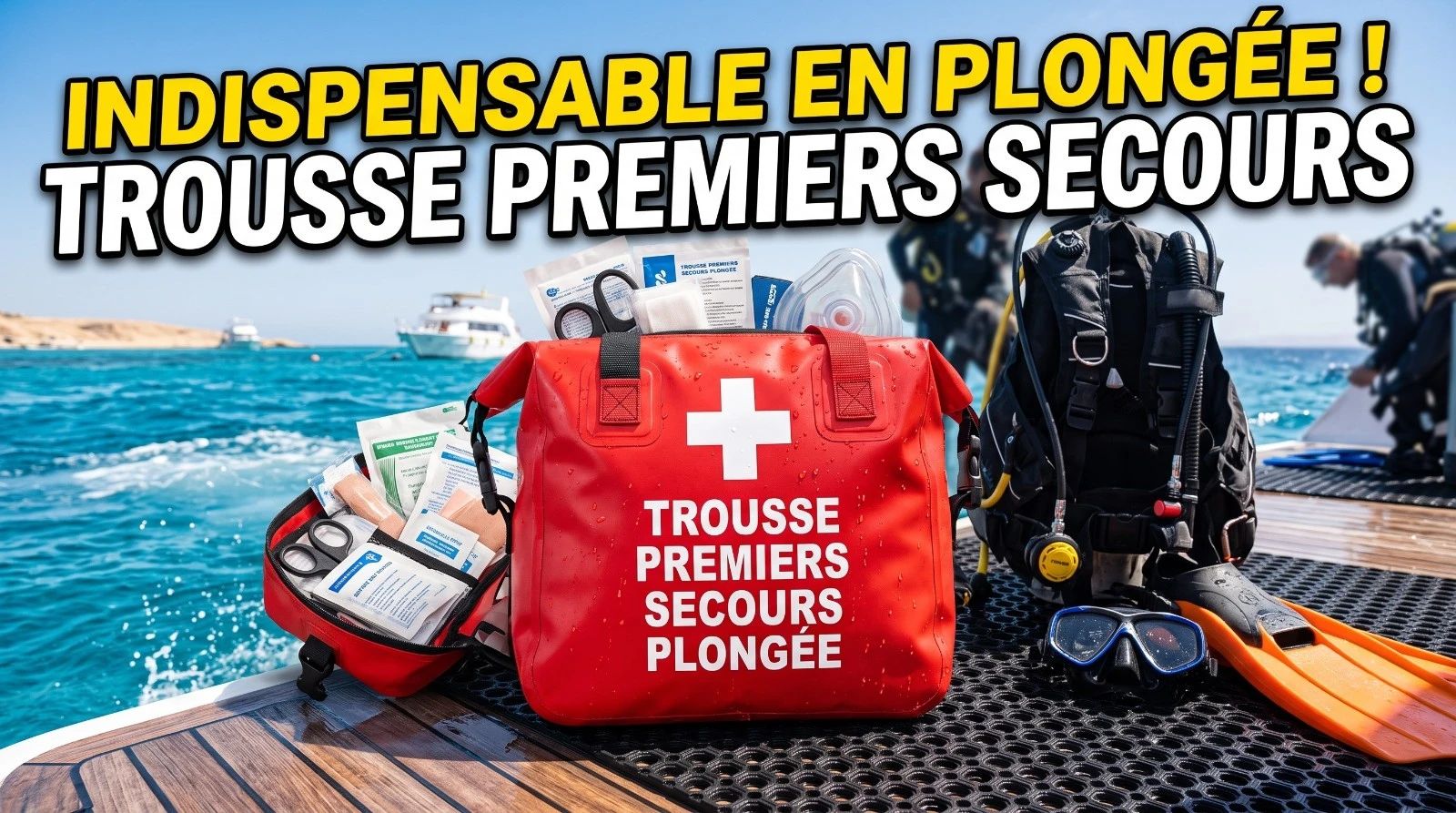
DAN First Aid Kit for Scuba Diving Travel : What to Pack as a Photographer
DAN Europe first aid kit for dive travel photographers: recommended contents, oxygen kit, photographer-specific additions. Oxygen Provider training guide.
What first aid kit does DAN recommend for travelling scuba divers?
DAN Europe recommends a kit covering wound care (antiseptic, gauze, waterproof dressings), ear barotrauma management, mild shock treatment, and above all, normobaric oxygen. A DAN Oxygen Provider kit with a pocket mask is the minimum for any dive leader travelling abroad.
Do I need training to use a DAN oxygen kit?
Yes. The DAN Oxygen Provider course (half-day, renewable every two years) teaches you to recognise decompression sickness and administer O2 correctly. It is strongly recommended before any dive trip to a remote area.
What's the difference between a save-a-dive kit and a first aid kit?
A save-a-dive kit covers equipment failures (O-rings, straps, batteries). A first aid kit covers medical emergencies (wounds, mild hypothermia, decompression accidents). Both are complementary and neither replaces the other.
What medications should I bring on a dive trip?
Antihistamines (stings), paracetamol preferred over NSAIDs before diving, nasal decongestant, SPF50+ sunscreen (consistently forgotten by photographers absorbed in their surface work), and ibuprofen as a last resort on medical advice. Always consult a dive medicine doctor for dive-specific medications.
How do I carry the first aid kit on a plane?
Most contents travel in cabin luggage (gauze, antiseptics in sub-100ml bottles, dressings). The DAN compact oxygen kit is designed for air transport with appropriate documentation. Check airline rules for liquids and prescription medications.
Does a DAN kit cover decompression sickness?
The DAN oxygen kit is the first response for suspected DCS, but it does not replace evacuation to a hyperbaric chamber. DAN insurance completes this chain by covering evacuation and recompression treatment costs.
In Agde, September 2022, we were coming up from a dive on the Monument aux Morts when one of my students equalised poorly during a slightly too-fast ascent of the last few metres. No decompression accident - we were lucky - but an ear pain that didn't let up for the rest of the day. The question came up immediately: what do we have in the bag to manage this while we wait for medical attention?
The answer was insufficient.
Since then, I have completely rebuilt my first aid kit, basing it on DAN Europe recommendations - and adding a few underwater photographer specifics that generic lists consistently miss.
What DAN Europe Says (and What It Actually Means)
DAN (Divers Alert Network) Europe publishes detailed recommendations on the contents of a dive-adapted first aid kit. These are not legally binding, but they are based on the analysis of thousands of real incidents.
The basic principle: a travelling diver's kit must cover three types of situations.
Contact injuries (coral cuts, sea urchin spines, housing scrapes on the skirt). They are common, rarely serious, but poorly treated in marine environments they become infected quickly. An appropriate antiseptic (diluted Betadine or aqueous chlorhexidine), sterile gauze, and waterproof dressings are enough for the first hour.
Minor barotrauma (ear pain, sinus squeeze on ascent). A nasal decongestant gets you through the night before a consultation. An ear rinse helps clean up after each session in salt water. These issues represent the majority of incidents on photo trips: you're focused on the image, you forget to equalise, you come up slightly too fast.
Suspected decompression accidents. This is where the dive kit diverges radically from a standard first aid kit. Normobaric oxygen is the first response recommended by DAN for suspected DCS: it accelerates the elimination of nitrogen bubbles in the blood and improves the prognosis before transfer to a hyperbaric chamber.
The Oxygen Kit: The Centrepiece
A compact DAN oxygen kit contains a non-rebreather mask (NRB), a flow regulator adapted for portable medical cylinders, and instructions. It fits in a 2-litre bag and weighs under a kilogram without the cylinder.
A D cylinder (around 400 litres of O2) lasts about 10-15 minutes at high flow (15 L/min) - long enough to reach help in most organised dive destinations. On a boat or in an isolated area, an E cylinder (660 litres) gives more margin.
The DAN Oxygen Provider course is the prerequisite for using this kit correctly. It takes half a day and covers: recognising DCS symptoms, administering O2, and coordinating evacuation. It renews every two years. If you are not yet certified, it is the most useful investment you can make before your next trip.
A standard diver returns to the boat after two dives and has lunch in the shade. An underwater photographer often stays an extra 45 minutes at the surface - reviewing images, adjusting settings, preparing for the next dive - exposed to tropical sun without thinking about it.
SPF50+ waterproof sunscreen. This is the first thing forgotten. Over 10-14 days in a sunny destination, a severe sunburn can compromise subsequent dives. I now put it systematically in the kit, not the suitcase.
Forced hydration. Dehydration is a recognised risk factor for decompression sickness. And the photographer, focused on images and settings between dives, drinks less than the average diver. A water bladder or thermos in the boat bag is a habit worth building.
Eye drops (preservative-free artificial tears). Dive masks create accumulated eye irritation over a week of intensive diving. By the end of a trip, dry and red eyes disrupt concentration on images - and on safety. Lightweight and effective.
Barotrauma and ENT - Nasal decongestant (saline spray + vasoconstrictor) - Antiseptic ear drops - Compact thermometer
Emergency and medication - Antihistamines (tablets, travel format) - Paracetamol (preferred before diving) - Anti-nausea (useful on choppy surface during photo sessions) - Ibuprofen (on medical advice, not before diving) - Mild corticosteroid cream (jellyfish stings)
Photographer - SPF50+ waterproof sunscreen (50 ml tube) - Preservative-free eye drops - Rehydration sachets (to dissolve in water)
Everything fits in a rigid first aid pouch of 20 × 15 × 8 cm. The oxygen kit travels in a separate bag with its documentation.
What the Kit Does Not Replace
It does not replace appropriate insurance. In the event of a decompression accident, hyperbaric chamber costs - where not covered by the local system - can exceed €10,000. DAN Excellence or Trip insurance covers these costs and medical evacuation. For photo gear coverage, also see our full guide on dive travel insurance.
It also does not replace the save-a-dive kit, which covers equipment failures. Both travel together, but in separate bags.
Before You Leave: Quick Pre-Departure Check
For a complete pre-departure review, see our ultimate dive photography travel checklist - the DAN kit has its own section with verifications to run 48 hours before departure.
And for organising all photo gear between cabin and hold, the cabin vs hold luggage guide details the rules and trade-offs.
If you want to learn underwater photography from a solid foundation - including safety management and travel organisation - the AquaExposure training programme covers it all in a flexible format.
AquaExposure receives no affiliate commission on DAN products or any other items mentioned in this article.
DAN First Aid Kit for Scuba Diving Travel : What to Pack as a Photographer | AquaExposure