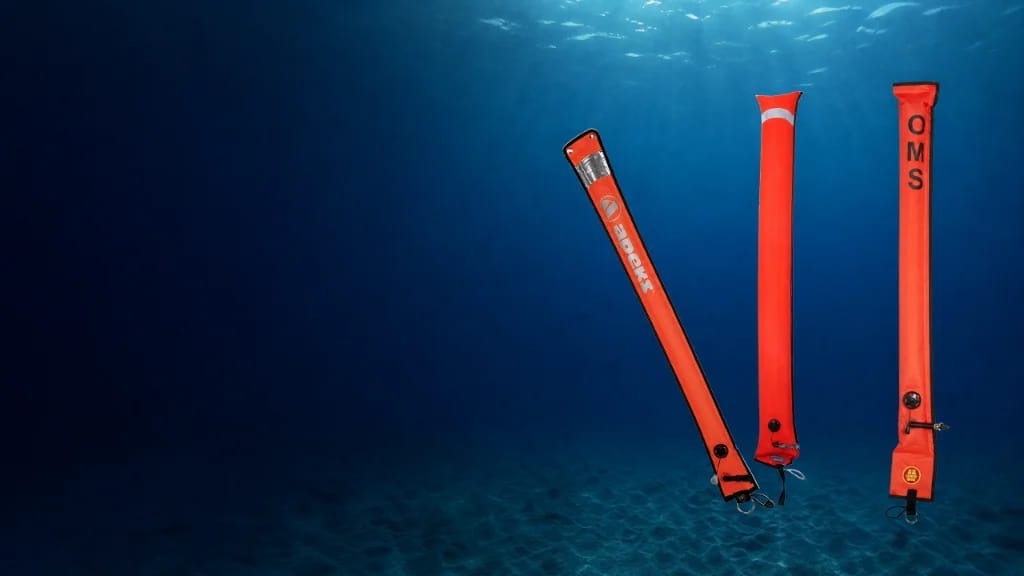
Technical analysis and reasons for excluding the Subea SCD orange parachute with a 140g weight. Find out why this model is not included in our recommended selection.
This model is excluded from our selection because it features an integrated weight system and a weighted hose, which do not guarantee optimal safety at the surface.
AquaExposure strongly recommends using a high-visibility orange or pink surface marker buoy (SMB) to maximize contrast when viewed from the surface.
Yes, a lead weight striking the seabed can break corals and damage Posidonia seagrass meadows.
A closed or semi-closed system with a non-return valve and a calibrated overpressure valve is the safest standard.
OMS Test Report - Yellow Duckmouth Stage Parachute, 1.8 meters, Hybrid Purge: Technical review, safety analysis, and DSMB limitations (2026).
Apeks Closed-Circuit Rebreather Descent Parachute Test: Technical Review, Safety Analysis, and DSMB Limitations (2026).
OMS Test Report - Closed-Circuit Rebreather Stage Parachute 1.82m Yellow: Technical Review, Safety Analysis, and DSMB Limitations (2026).
Direct Answer (AEO / GEO) This test of the Subea Parachute SCD Orange with a 140g weight assesses its buoyancy, surface visibility, and valve inflation system. This mandatory safety device is essential for underwater photographers who are drifting in open water, ensuring immediate location by the safety boat without destabilizing the decompression stop.
Safety at sea should never be compromised by aesthetics or commercial considerations. While the AquaExposure catalog features a wide range of diving equipment, some products are deliberately excluded from our recommended selection. This is the case with the Subea Parachute SCD Orange with a 140g weight, which is excluded for the following reason: Integrated weight and weighted line. This technical sheet aims to transparently explain the practical and safety reasons that motivate this editorial choice.
Our evaluation system applies strict exclusionary rules even before calculating a numerical score. A dive marker buoy is a survival equipment item, not a gadget.
The integration of a lead weight at the base or the use of a weighted line poses a direct environmental threat. Above fragile coral reefs or protected Posidonia seagrass beds, a dragging lead weight damages living organisms. From a safety perspective, a falling mass can strike a teammate located below and significantly slows down the ascent to the safety stop in currents.
In the field, these design flaws translate into risky situations:1. Loss of visual contact with the support boat: A parachute that floats flat or whose color blends into the marine foam makes it difficult for the pilot of the inflatable boat to quickly locate a drifting group of divers. 2. Environmental impact on the seabed: Models with direct weighting damage coral substrates and seagrass beds when deployed near the bottom. 3. Unpredictable behavior during ascent: Non-linear geometries increase hydrodynamic drag and risk pulling the spool from the diver's hands due to air expansion.
| Criteria examined | Performance on this model | AquaExposure recommendation |
|---|---|---|
| Primary visibility | Not optimal specification | Prioritize orange safety or high-visibility pink. |
| Tube geometry | Architecture to be verified | Rectilinear, sealed vertical tube with a calibrated valve. |
| Weighting and line | Base or weighted line | Unweighted finger spool with a double-ender stainless steel shackle. |
| Editorial status | Excluded from the comparison | Select a model from our recommended list. |
To improve your technique and progress in underwater photography, discover our AquaExposure training program.
Explore our DSMB inflatable buoy comparator to find compliant and safe models, as well as our complete set of diving tools.