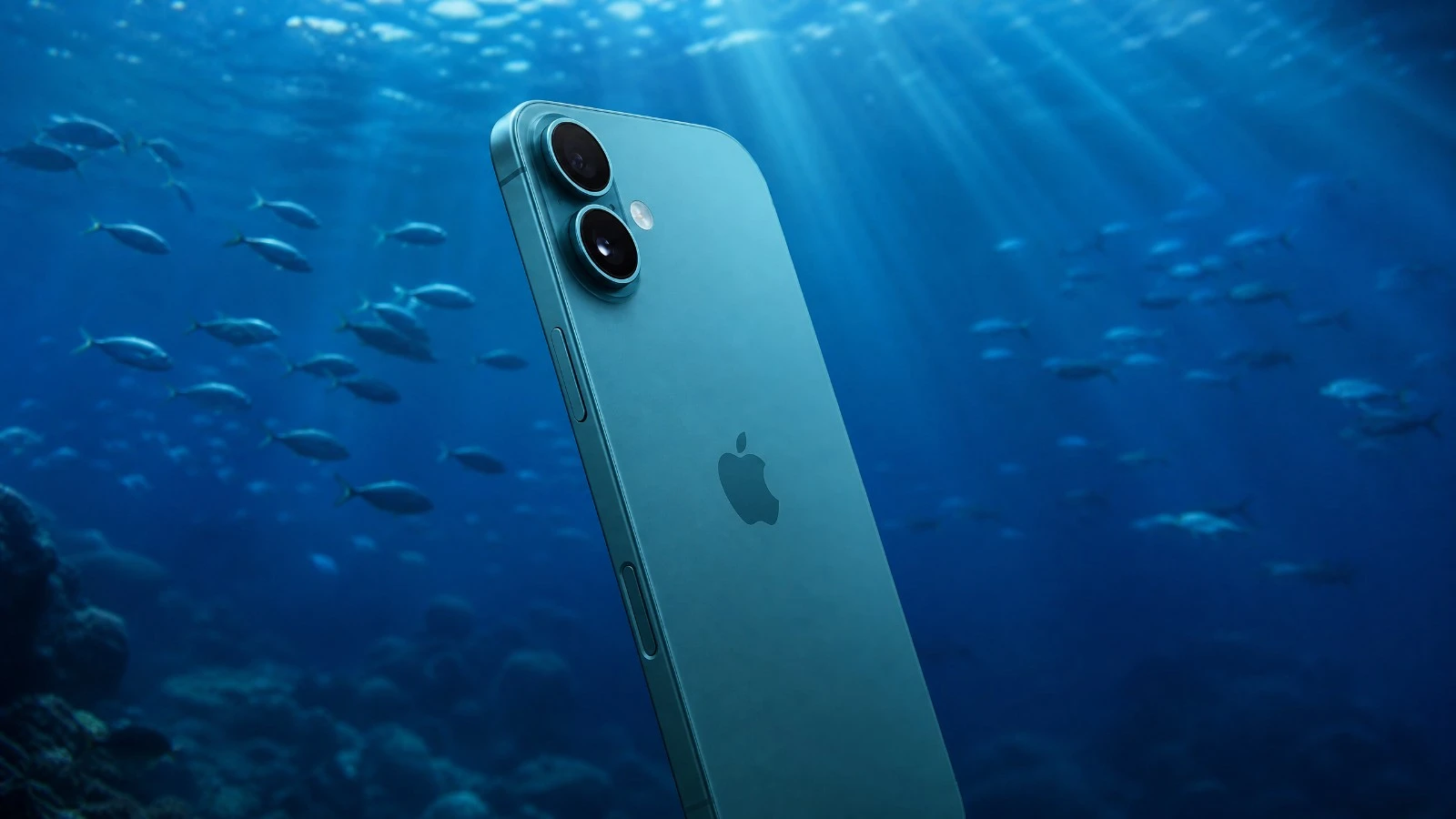
iPhone 16 Plus underwater camera test: natural light performance, AquaExposure score, and available cases. Read before you buy!
To learn how to get the most out of your gear underwater, discover the AquaExposure Training. # iPhone 16 Plus for Underwater Photography: Our 2026 Review
1. Introduction
When we talk about underwater photography, the iPhone is often on everyone's mind. Many of you ask me if the latest model, the iPhone 16 Plus, holds up well underwater. I took the time to put it to the test. No frills, just the facts. We'll forget the marketing specifications. What matters is what you capture from your dives. Is this iPhone a good companion for your explorations in natural light? Let's see together. I'm giving you my opinion as an instructor. Someone who has seen hundreds of devices come and go. And who knows what really works when you're 20 meters deep, without a flash or external light. Just you, the ocean, and your phone.
2. The Verdict in Summary
The iPhone 16 Plus is a capable device. It doesn't revolutionize underwater photography, but it gets the job done. Especially if you are just starting out, or if you want a versatile device. Here's its overall AquaExposure score:
Overall score: 3.5/5
| Criterion | Score | Description |
|---|---|---|
| B1 Optics | 4/5 | High-performance sensor. Good light management. |
| B2 RAW | 2/5 | No native ProRAW. DNG via third-party app. |
| B3 Storage | 3/5 | USB-C 2.0. Slow transfer speeds for video. |
| B4 Thermal | 2/5 | Aluminum chassis. High risk of condensation. |
| B5 Battery | 4/5 | Good battery life. Will last a day of diving. |
| B6 Autofocus | 4/5 | Fast and accurate. |
| B7 Housing | 5/5 | Compatible with Divevolk SeaTouch 4 Max. |
Ideal profile: The occasional diver. Someone who wants beautiful pictures without overcomplicating things. Or the beginner learning underwater photography. It's perfect for capturing your vacation memories without investing in professional equipment.
3. Block-by-block analysis
B1 Optics
The camera sensor of the iPhone 16 Plus is good. Very good, in fact. In natural light, it captures colors well. The details are present. You will get sharp images, even in slightly low-light conditions. This is a key feature for underwater photography, as light is scarce underwater, and we don't want digital noise. You can trust its optics to produce successful shots.
To learn more: The main sensor offers excellent dynamic range. It handles contrasts well. This is an advantage for underwater scenes, where areas of shadow and light are often pronounced.
B2 RAW
Here, this is the real issue. The iPhone 16 Plus doesn't have ProRAW. That's a shame. The ProRAW feature on the Pro models offers enormous flexibility in post-production. It allows you to recover details and adjust white balance. With the 16 Plus, you are limited to JPEG or DNG via third-party apps. This is a compromise. But for occasional use, it's acceptable. For a demanding photographer, this is a weakness.
To go further: Using the DNG format through a third-party application is one option. However, the quality is not the same as ProRAW. The color depth is lower, and the dynamic range (latitude of exposure) is reduced. This is something to consider.
B3 Storage
USB-C is here. That's good news. But it's USB-C 2.0. With a transfer speed of 480 Mbps. It's slow. Very slow. If you shoot a lot of 4K video, emptying your phone will take time. A lot of time. After a day of diving, you want to transfer your files quickly. That's not the case here. This is a drawback. Especially if you have a large memory card. Or if you film a lot.
"For more information: USB-C 2.0 is an older standard. The Pro models have USB-C 3.2, which offers significantly higher data transfer rates. This is a major difference for the post-dive workflow."
B4 Thermal
The frame is made of aluminum. This is a problem. Especially in cold water. The risk of condensation is high. Moisture can accumulate inside the casing. And that is the enemy of electronics. I have seen phones die like that. You must be vigilant. Use dehumidifying packets. And open the casing carefully. This is an important point to watch out for. For the lifespan of your device.
"For more information: The Pro models with a titanium frame handle heat better, and therefore reduce condensation. This is an undeniable advantage for underwater reliability."
B5 Battery
The battery life of the iPhone 16 Plus is excellent. You can easily plan for a day with three dives. No problem at all. This is a great feature, because you can't recharge underwater, and you don't want to run out of power. That's what matters. To avoid missing that once-in-a-lifetime shot, make sure to fully charge it before you go. And optimize the settings to conserve energy.
"For more information: Apple's software optimization is effective. It allows for good energy management, even with intensive use, such as underwater video recording."
Before each diving session, remember to check your external battery. Use our portable battery comparator tool to choose the right power bank for your dive equipment and desired battery life.
B6 Autofocus
The autofocus is fast and precise. It locks onto subjects well, even when they are moving. This is a great advantage for underwater photography, where fish don't stay still. You can rely on it to capture sharp images. It's a real plus for responsiveness and for not missing the action.
For more information: The autofocus system uses advanced algorithms. It performs well even in low light conditions, which is common underwater.
B7 Enclosure
The Divevolk SeaTouch 4 Max case is compatible. This is excellent news. This case is reliable. It allows you to use the touchscreen underwater. This is very convenient. For changing settings. For navigating menus. This is a case that I recommend. For its robustness and ease of use. This is a strong point for the iPhone 16 Plus.
For more information: The Divevolk SeaTouch 4 Max is waterproof up to 60 meters and offers optimal protection for your iPhone.
4. What you need to know before buying.
Boxes/Containers
The Divevolk SeaTouch 4 Max is the reference waterproof case. It is reliable. It will give you access to all the functions of your iPhone. There are other options available, but this one has been proven. That's what matters for the safety of your device and the quality of your images.
Terrain workflow
Prepare your iPhone before diving. Clear the memory. Charge the battery. Put it in airplane mode. Check the waterproof seal of the housing. This is a routine. But it is crucial. To avoid unpleasant surprises. Underwater, every detail matters.
Key Considerations
The condensation is a weak point. The aluminum frame is susceptible to it. Use dehumidifying packets. And don't leave the enclosure in direct sunlight. File transfer is slow. Allow for extra time. Or consider a fast adapter if possible. The lack of ProRAW is a limitation. If you are a professional, or want to become one.
Prix
The iPhone 16 Plus is an investment. The subwoofer also is. It's a significant expense. But it's a versatile device that will also be useful outside of the water. Weigh the pros and cons based on your needs and expectations.
5. Our Verdict
The iPhone 16 Plus is a good device for underwater photography in natural light. It's not perfect. The lack of ProRAW and the slowness of the USB-C port are drawbacks, especially for experienced photographers. However, its optics are excellent, its autofocus is fast, and its battery life is good. For occasional divers, it's an excellent choice, a great option for those who want to get started without breaking the bank. It's a device that will give you beautiful images and wonderful memories. But if you're looking for pure performance, ProRAW capabilities, or fast transfer speeds, then consider the Pro models or dedicated cameras. The 16 Plus is a good compromise, but it's still a compromise.
7. Learning Underwater Photography with this iPhone
You have your iPhone 16 Plus and its housing? Now is the time to take action. Come discover our training courses. To master underwater photography and get the most out of your equipment. Visit [Access a specialized course for smartphone and action camera photography](/en/blog/Overheating and condensation on a smartphone in an underwater housing.
Compare this device with others.
Are you hesitating between several devices? Use our underwater photography equipment comparison tool to compare this device with other tested models.
Share
Table of Contents
- 011. Introduction
- 022. The Verdict in Summary
- 033. Block-by-block analysis
- 04B1 Optics
- 05B2 RAW
- 06B3 Storage
- 07B4 Thermal
- 08B5 Battery
- 09B6 Autofocus
- 10B7 Enclosure
- 114. What you need to know before buying.
- 12Boxes/Containers
- 13Terrain workflow
- 14Key Considerations
- 15Prix
- 165. Our Verdict
- 177. Learning Underwater Photography with this iPhone
- 18Compare this device with others.
Questions about the Journal
Can I use the photographs from this journal?
All images are protected by copyright. For any commercial or editorial use, please contact us via our form.
How can I be notified of new articles?
Follow us on social media or join the Sentinels Circle to receive our immersion stories before anyone else.
Do you offer hands-on workshops?
Yes, we organize masterclasses and field expeditions for members of our school. Check the Training page for details.