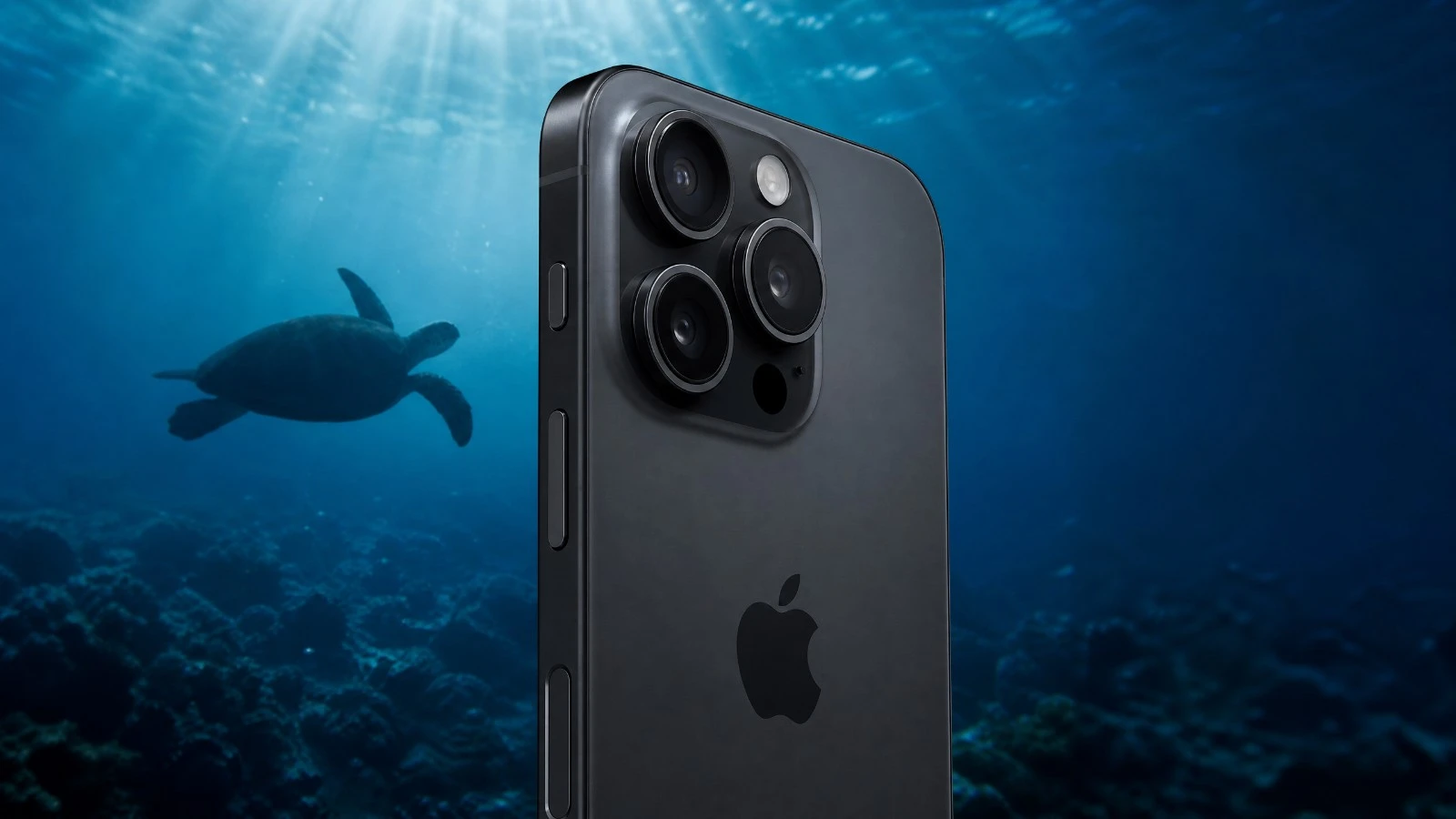
Underwater iPhone 16 Pro Max camera test in natural light. AquaExposure score, condensation check, available housings. Read before buying!
To learn how to get the most out of your gear underwater, discover the AquaExposure Training.
Introduction
The iPhone 16 Pro Max is the large format model. It's for those who don't want to compromise. This logic holds true underwater, but it also brings its own constraints. A larger chassis means more metallic surface exposed to temperature fluctuations. A bigger battery provides longer battery life, but also generates more heat to manage. I've used it while diving in various conditions, from the temperate Mediterranean Sea to the tropical Indo-Pacific, and here's what I've learned from my experiences.
The Verdict in Summary
The iPhone 16 Pro Max is currently the best iPhone for underwater photography in natural light, with an overall score of 4.2/5.
| AquaExposure Criteria | Score | Explanation |
|---|---|---|
| B1 Optics | 4.5/5 | Triple 48 MP system + 5x periscope telephoto lens, the best iPhone sensor. |
| B2 RAW | 5/5 | ProRAW + ProRes 4K 120fps, maximum post-production flexibility. |
| B3 Storage | 4/5 | USB-C 3.2 at 10 Gbps, up to 1 TB internal storage. Very fast Wi-Fi 7 transfer. |
| B4 Thermal | 3.5/5 | Titanium frame is a good conductor but large size = risk of condensation in cold water. |
| B5 Battery | 4/5 | 4685 mAh, the best battery life in the range. Lasts for 3 dives without problems. |
| B6 Autofocus | 4.5/5 | PDAF + LiDAR, fast focus even on fast-moving subjects in low light. |
| B7 Housing | 5/5 | Divevolk SeaTouch 4 Max, full compatibility including Camera Control. |
Ideal Profile: The serious underwater videographer who wants ProRes, long battery life, and the best telephoto lens available on a smartphone. They primarily dive in warm or temperate waters and are willing to invest in a rigorous anti-condensation protocol.
Block-by-block analysis
B1 Optics
The optical system of the 16 Pro Max is a key strength of this device. The main 48MP sensor with an f/1.78 aperture captures a significant amount of light, which directly translates to cleaner images underwater as depth increases and light becomes scarce. The 48MP ultra-wide lens at 13mm is excellent for wide scenes, shipwrecks, and schools of fish. The 5x periscope telephoto lens at 120mm, inherited from the 15 Pro Max and refined here, allows you to get closer to shy subjects without disturbing them. This is a real advantage over standard models.
Specs B1 Main sensor: 48 MP, f/1.78, 24 mm (2nd generation optical stabilization) Ultra-wide angle: 48 MP, f/2.2, 13 mm Telephoto lens: 12 MP, f/2.8, 120 mm periscope, 5x optical zoom LiDAR: integrated 3D TOF scanner
B2 RAW
ProRAW is the main reason why serious photographers choose an iPhone Pro. Underwater, a blue or green tint is inevitable. With a JPEG file, you can recover very little. With ProRAW, you have complete freedom to recreate lost reds and oranges, adjust white balance precisely, and work on shadows without excessive noise. ProRes video at 4K 120 fps is another level: it provides smooth slow-motion shots of fish movements and a color richness that H.264 cannot approach. This is the real deal for anyone who wants to produce high-quality underwater video content.
Specs B2 Photo: ProRAW (DNG up to 48 MP) Video: ProRes 4K at 24, 25, 30, 60, and 120 fps Log video: Apple Log available for color grading Note: No ProRes RAW video (introduced on the iPhone 17)
B3 Storage
ProRAW files weigh between 25 and 75 MB depending on the scene. A one-hour ProRes 4K 120 fps recording can exceed 200 GB. Therefore, choosing internal storage is a strategic decision: opt for at least 512 GB, or 1 TB if you're doing liveaboards. The USB-C 3.2 port at 10 Gbps allows you to transfer 100 GB in just a few minutes to an external SSD. Wi-Fi 7 is also very fast for wireless transfers to a NAS or an iPad Pro on the boat. This is a field workflow that works well.
Specs B3 Internal Storage: 256 GB, 512 GB, 1 TB (NVMe) USB-C: 3.2 Gen 2 at 10 Gbps Wi-Fi: Wi-Fi 7 (802.11be), up to theoretical speeds of 5.8 Gbps Bluetooth: 5.3 * AirDrop: Fast peer-to-peer transfer to Mac or iPad
B4 Thermal
This is the main point of concern for the 16 Pro Max. The titanium frame is an excellent thermal conductor, which is good for dissipating heat from the processor in warm water. However, in cold water, this same conductivity creates a risk of condensation inside the housing. The temperature difference between water at 14°C and ambient air at 25°C can cause fogging on the lens of the housing or inside the enclosure. The larger size of the 16 Pro Max slightly amplifies this risk compared to the 16 Pro, because the surface area in contact with the air inside the housing is greater. The use of silica gel is mandatory below 18°C.
Specs B4 Chassis: Grade 5 titanium (frame) + ceramic glass (back) Processor: Apple A18 Pro (3 nm) Thermal management: Integrated vapor chamber Risk of condensation in cold water (below 18°C): high - mandatory silica gel * Time until overheating in tropical ProRes conditions (28°C+): approximately 35 minutes
B5 Battery
The 4685 mAh battery is the most generous ever integrated into an iPhone. For a typical day of diving with 2 to 3 dives and reasonable video recording, it easily lasts the entire day. In intensive ProRes 4K 120 fps mode, power consumption increases significantly, and you will end the day with approximately 20-30% battery remaining. A 10,000 mAh power bank between dives solves this problem. The standard Li-Ion chemistry performs well in cold water, without the capacity drop observed in some lower-quality Li-Po batteries.
Specs B5 Battery: 4685 mAh Li-Ion Fast charging: 27W wired, 25W MagSafe Performance in cold water: stable, no significant drop until 10°C Estimated battery life for 3 dives (moderate recording): sufficient without recharging.
Before each diving session, remember to check your external battery. Use our portable battery comparator tool to choose the right power bank for your dive equipment and desired battery life.
B6 Autofocus
The autofocus on the 16 Pro Max is among the best available on smartphones. The dual-pixel PDAF covers the entire main sensor, ensuring fast focusing even on fast-moving subjects like dolphins or rays. LiDAR provides valuable assistance in low light conditions, where contrast-only systems struggle. In practice, underwater, the focus lock is reliable and subject loss is rare. The macro mode available through the ultra-wide lens allows you to get as close as 2 cm to the subject for portraits of nudibranchs or small crustaceans.
Specs B6 Autofocus: Dual-pixel PDAF on the main and ultrawide sensors. Assistance: LiDAR scanner with TOF (Time of Flight) 3D. Macro: Minimum distance of 2 cm (via the ultrawide lens). Subject tracking: Yes, with underwater subject detection in video mode.
B7 Enclosure
The Divevolk SeaTouch 4 Max is the reference case for the iPhone 16 Pro Max. It integrates compatibility with the Camera Control button that appeared on the iPhone 16 Pro models, allowing you to trigger the shutter, zoom, and adjust exposure without touching the screen. Full touchscreen functionality works well up to 10 meters. Beyond that, water pressure can interfere with the capacitive buttons, but the physical button takes over. The maximum certified depth is 40 meters, which is sufficient for almost all recreational dives.
Specs B7 Recommended housing: Divevolk SeaTouch 4 Max Maximum depth: 40 meters Camera control compatibility: yes Full touchscreen access: yes * Optical lens: anti-reflective tempered glass
What you need to know before buying.
Containers
The Divevolk SeaTouch 4 Max is the only housing I recommend without reservation for this device. There are cheaper alternatives, but they compromise either touch screen access, or compatibility with the Camera Control button, or both. For a device at this price point, don't skimp on the housing.
Terrain workflow
Prepare the iPhone the day before: charge it to 100%, place 2 to 3 silica gel packets in the housing, and check the seals. Launch the camera app before closing the housing. Underwater, use the Camera Control for quick adjustments. After the dive, allow the housing to stabilize in temperature before opening it - especially in cold water. Connect the USB-C cable to a portable SSD to offload large files as soon as you return to the boat.
Key Considerations
Condensation in cold water: This is the number one risk with the 16 Pro Max. The titanium frame and large size amplify this phenomenon. Below 18°C, using silica gel packets is not an option, it's a necessity. Replace the sachets every two dives.
Enclosure size: The 16 Pro Max is large. Please ensure that your dive bag can accommodate the closed enclosure before you travel.
ProRes and storage: One hour of ProRes 4K at 60fps exceeds 100GB. Plan for a minimum of a 1TB external SSD for liveaboard trips.
Prix
The new iPhone 16 Pro Max costs between €1,299 and €1,599 depending on the storage capacity. Add €350 to €400 for the Divevolk SeaTouch 4 Max. The total budget exceeds €1,700. This is a significant investment. If your budget is tighter, the iPhone 16 Pro offers 90% of the performance at a lower price, or a used iPhone 15 Pro Max remains an excellent option for under €900.
Our Verdict
The iPhone 16 Pro Max is the most capable iPhone I've used for diving. The 4K 120 fps ProRes, the 5x telephoto lens, and the battery life make it a complete tool for underwater photography and videography in natural light. The only real concern is condensation in cold water, which requires a strict but simple protocol to manage. If you primarily dive in warm waters and are looking for the best smartphone available to capture professional-quality images, this is the one. However, if you regularly dive below 18°C (64°F), consider the 16 Pro or the standard 17, which handle that parameter better.
Learning Underwater Photography with this iPhone
You have the tool. Now it remains to master the technique. Underwater natural light has its own rules: angles of incidence, Snell's window, color correction at depth. Our training courses on AquaExposure LMS cover all of this, from exposure settings while diving to the ProRAW post-production workflow. Join the photographers who have already transformed their dives into images they are proud of.
To learn more about condensation and overheating, read our dedicated article: Overheating and condensation on a smartphone in an underwater housing.
Compare this device with others.
Are you hesitating between several devices? Use our underwater photography equipment comparison tool to compare this device with other tested models.
Share
Table of Contents
- 01Introduction
- 02The Verdict in Summary
- 03Block-by-block analysis
- 04B1 Optics
- 05B2 RAW
- 06B3 Storage
- 07B4 Thermal
- 08B5 Battery
- 09B6 Autofocus
- 10B7 Enclosure
- 11What you need to know before buying.
- 12Containers
- 13Terrain workflow
- 14Key Considerations
- 15Prix
- 16Our Verdict
- 17Learning Underwater Photography with this iPhone
- 18Compare this device with others.
Questions about the Journal
Can I use the photographs from this journal?
All images are protected by copyright. For any commercial or editorial use, please contact us via our form.
How can I be notified of new articles?
Follow us on social media or join the Sentinels Circle to receive our immersion stories before anyone else.
Do you offer hands-on workshops?
Yes, we organize masterclasses and field expeditions for members of our school. Check the Training page for details.