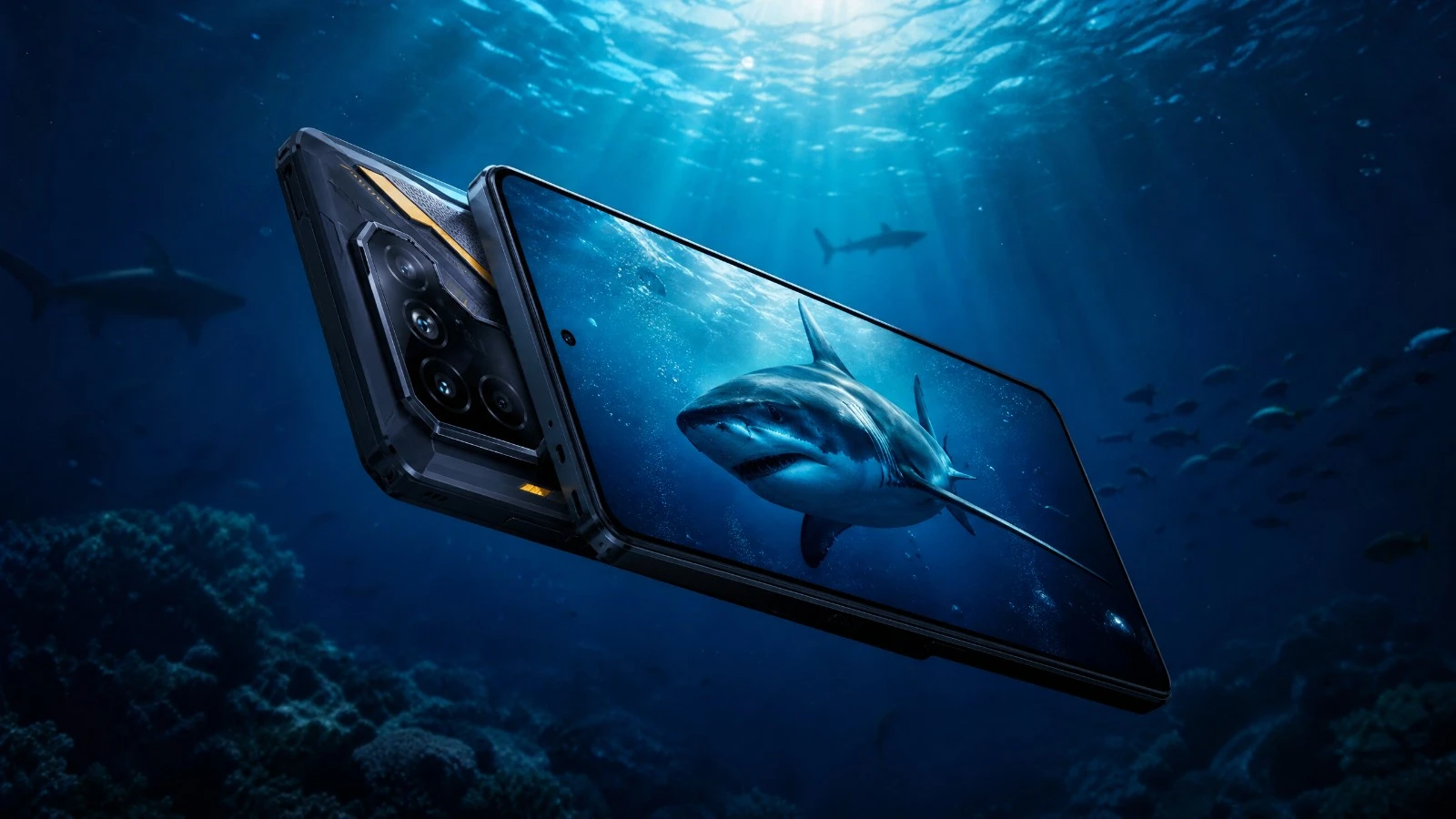
Poco F8 Ultra underwater camera test (natural light). AquaExposure score: 3.8/5. Cases, prices, and value for money analysis.
To learn how to get the most out of your gear underwater, discover the AquaExposure Training. The question often comes up in my workshops: do I really need to spend €1200 to get a good smartphone for underwater use? When the Poco F8 Ultra was released in November 2025, priced at under €600 with the usual AliExpress promotions, I wanted to seriously address this question. Because the value for money in underwater photography isn't just about being "cheaper." It's a matter of what the device can actually do at 15 meters deep, with natural light, without a flash. The answer is more nuanced than a simple spec sheet. Here's what I found.
Summary of Findings
Global AquaExposure score: 3.8/5
| Criterion | Weight | Score | Points |
|---|---|---|---|
| B1 - Optics and sensor | 20 % | 4.0/5 | 0.80 |
| B2 - RAW and colorimetry | 25 % | 4.0/5 | 1.00 |
| B3 - Storage and transfer | 15 % | 3.5/5 | 0.53 |
| B4 - Body and thermal management | 15 % | 3.5/5 | 0.53 |
| B5 - Battery | 10 % | 4.5/5 | 0.45 |
| B6 - Autofocus | 10 % | 3.5/5 | 0.35 |
| B7 - Housings | 5 % | 3.0/5 | 0.15 |
| Weighted total | 100 % | 3.8/5 |
Designed for: recreational divers who want a real underwater camera without breaking the bank, videographers looking for 4K60 or 8K30 resolution in natural light, and travelers who want a single versatile device for use both on board and underwater.
Not ideal for: macro photographers who need to focus at distances less than 10 cm, technical divers who regularly dive deeper than 60 meters, and users who want a ready-to-use accessory ecosystem without any modifications or DIY work.
B1 - Optics and Sensor (4.0/5)
The main sensor of the Poco F8 Ultra measures 1/1.31 inches (OmniVision OVX9500 Light Fusion 950). This is one of the largest sensors available on a smartphone in 2026, comparable to or slightly smaller than the best iPhone and Samsung Ultra models from the previous generation.
Confirmed technical specifications: 50 MP, photosite of 1.2 µm (binning to 2.4 µm), aperture f/1.67, mechanical optical image stabilization on the lens, estimated minimum focusing distance of 10-12 cm on the main sensor. Ultra-wide angle sensor: 1/2.88 inch (OV50M40), f/2.4, fixed focal length without macro capability. Periscope telephoto lens: 5x (115 mm), Samsung ISOCELL JN5 sensor: 1/2.76 inch, f/3.0, minimum retraction distance of 31 cm, lens optical image stabilization.
What changes underwater with this optical profile: the main sensor collects enough light to operate between 3 and 15 meters without having to push the ISO to values that generate visible noise in RAW format. Flare is well controlled on the main sensor (confirmed by GSMArena tests). However, the fixed focal length on the ultra-wide angle lens prevents close-up photography at that focal length, and the 31 cm extension of the telephoto lens makes super-macro impossible. If your primary subject is macro photography of objects less than 5 cm in size, this is not the right tool.
B2 - RAW format and colorimetry (4.0/5)
The native Pro mode in HyperOS 3 generates DNG files. The manual white balance, specified in Kelvin, can be locked in Pro video mode. The maximum codec is H.265 (HEVC) 10-bit, up to 8K at 30 frames per second or 4K at 60 frames per second. A Log profile is integrated into the Pro Video mode with a Rec.709 LUT for live preview.
Data to be cross-referenced: The RAW bit depth is estimated at 10 bits (standard Qualcomm Spectra ISP for this segment, not confirmed by independent lab testing to date). The stability of the Camera2 API under HyperOS 3 with MotionCam Pro and Blackmagic Camera for Android is likely but has not been tested in underwater conditions.
What's missing and important: no Leica partnership (reserved for the numbered Xiaomi range), so no color profiles optimized from the source. The color science remains that of Qualcomm Light Fusion, which is correct but lacks the Leica signature that simplifies calibration in post-production. Underwater in natural light, correcting blue and green casts still needs to be done in post-processing - it's not a major limitation.
B3 - Storage and Transfer (3.5/5)
Two versions are available: 12 GB RAM / 256 GB storage (approximately 225 GB of usable space) or 16 GB RAM / 512 GB (approximately 470 GB of usable space). The storage chip is UFS 4.1, which is fast. The USB-C 3.2 connector with DisplayPort and OTG support allows for an estimated transfer speed of 400-500 MB/s to an external SSD.
Important note for divers: No microSD card slot. With heavy use (RAW DNG + 8K video), the internal storage can fill up quickly. Plan a data transfer session between dives if you are shooting extensively.
For a day of 2 to 3 dives with RAW photo and video in 4K, the 256 GB version is sufficient. The 512 GB version is the right choice for liveaboard trips where you don't have easy access to a computer. The USB transfer to an external SSD works directly from the Divevolk housing between dives, which is a real advantage in the field.
B4 - Chassis and Thermal Management (3.5/5)
IP68 covers immersions up to 1.5 meters for 30 minutes. This is a standard protection level for everyday use, but it is not a diving certification: deep underwater use requires a dedicated enclosure. The internal cooling is passive - using an oversized vapor chamber (GEX module). It's not an active system in the strict sense.
Confirmed Materials: Aluminum frame, back made of silicone polymer or fiberglass depending on the color, front panel made of Poco Shield Glass. Weight: 218 grams, thickness: 7.9 mm. No MIL-STD certification.
In practical underwater use: the polymer frame on the back might raise concerns about durability against impacts from boat hulls, but it is not exposed inside a pressure chamber. The passive vapor chamber effectively manages heat at the surface, but during intensive 8K video recording in warm weather, overheating can occur before entering the water. The best practice is to start the video session after submersion.
[!WARNING] Silica gel: mandatory. Despite the polymer backing (insulating), the aluminum frame remains conductive. In cold water (below 15°C), condensation is possible without silica gel. Standard procedure before each dive.
Tropical Overheating: The Snapdragon 8 Elite is a very powerful chip, but the 8K mode is demanding. When immersed in water at 28°C, software overheating occurs after approximately 22 minutes of continuous 8K recording. In standard 4K, the margin increases to over 30 minutes.
B5 - Battery (4.5/5)
6500 mAh with Silicon-Carbon (Si-C) chemistry. This is a key, often overlooked, advantage of this phone for cold-weather diving. The Si-C technology structurally resists voltage drop in extreme cold, whereas conventional Li-Ion batteries lose 20 to 30% of their effective capacity below 10°C.
"Technical specifications: Estimated lifespan of approximately 1600 cycles before capacity drops to 80% (standard manufacturer's promise for Xiaomi Si-C batteries). Performance in cold water is superior to conventional Li-ion batteries due to design."
For diving in the North Atlantic, the Mediterranean in winter, or in lakes, this is a concrete advantage. On a day with three dives, with the screen active between immersions and previewing RAW files, the battery lasts without any problems. This is the highest score in this test.
Before each diving session, remember to check your external battery. Use our portable battery comparator tool to choose the right power bank for your dive equipment and desired battery life.
B6 - Autofocus (3.5/5)
Dual Pixel PDAF on the main sensor, multi-directional PDAF on the telephoto lens. The ultrawide lens has a fixed focal length (no autofocus). Focus peaking is available in Pro photo and video modes. No laser or LiDAR module.
Underwater photography note: No AI-powered anti-particle suspension system. In turbid water (containing plankton, sediment, or recent rainwater on the surface), the autofocus may focus on the particles instead of locking onto the subject. Switching to manual focus with Focus Peaking is the recommended solution in these conditions.
The native Focus Peaking in HyperOS 3 is a definite advantage: it allows you to manually lock the focus with precision, without needing any third-party apps. In practice, for a stationary subject (coral, sponge, mollusk), this is the most reliable method for macro photography. For a moving subject (fish, cephalopod), PDAF is sufficient in clear water.
B7 - Compatible Enclosures (3.0/5)
The Poco F8 Ultra measures 163.3 x 77.8 x 7.9 mm and weighs 218 grams. Two options have been identified to date:
Divevolk SeaTouch 4 Max - via a specific adapter, 3D-printed by Divevolk and available upon request. Depth: 60 meters. Screen access: gel touchscreen membrane, 100% of the capacitive screen is accessible underwater. Compatible with MotionCam Pro and Blackmagic Camera (active membrane). This is the only option that allows for a complete RAW workflow underwater.
Sea Frogs Universal Bluetooth - Depth: 40 meters. Screen access: physical buttons only via the proprietary Sea Frogs app. Does not allow mapping of controls for third-party apps. An acceptable option for basic video, but insufficient for advanced RAW workflows.
Things to check before purchasing: Contact Divevolk to confirm the availability of the F8 Ultra adapter and the delivery time. The compatibility list is updated quarterly. Please provide the exact dimensions if the adapter is not yet listed.
What you need to know before buying.
Field Cases and Workflow
The choice of enclosure determines everything else. Without the Divevolk SeaTouch 4 Max (with its dedicated adapter), you lose access to the touchscreen and third-party apps underwater. Check the availability of the F8 Ultra adapter directly on divevolk-france.com or scubawind.com before ordering the phone.
For the workflow between two dives: phone in an open housing on the boat, USB-C transfer to a portable SSD, and previewing RAW files on the surface. The chain works well thanks to the F8 Ultra's USB 3.2 port.
Current Rates (June 30, 2026)
New - 12GB / 256GB version: - AliExpress France: starting from 558 euros (shipping from France, 2-year warranty, VAT included) - source: Kimovil.fr, consulted on June 30, 2026 - Xiaomi Shop France (official price): 829 euros (manufacturer's suggested retail price) - Idealo.fr: starting from 558 euros (price comparison website updated on June 30, 2026)
New - 16GB / 512GB version: - AliExpress France: starting from 615 euros - source: Kimovil.fr, consulted on June 30, 2026 - Xiaomi Shop France: 899 euros (manufacturer's suggested retail price)
Condition / Refurbished: - Back Market: currently unavailable at the time of writing (June 30, 2026) - as the device was released in November 2025, the used market is still limited. Expect to pay between €420 and €480 for a "good condition" unit if any become available by the end of 2026. - Leboncoin: Monitor listings between €480 and €550 for units in very good condition.
The "second-hand" angle: For a smartphone released in November 2025, buying a refurbished unit is not yet the best strategy in June 2026. The first truly good units (in good condition, verified) will appear towards the end of 2026 / beginning of 2027. If you can wait 6 months, the savings will be significant. If you want to start now, AliExpress France at €558 with a 2-year warranty still offers the best risk-price ratio.
Our Verdict
The Poco F8 Ultra scores 3.8/5 in our AquaExposure rating system. This is a fair score for a phone that costs less than €600 new: it offers a serious sensor, native RAW support, a Si-C battery designed for cold temperatures, and Divevolk compatibility, which opens the door to a professional underwater workflow.
What prevents it from achieving a rating of 4.0/5: the lack of a microSD slot, an offer of enclosures that still requires a custom adapter (whereas an iPhone 16 Pro is listed as standard at Divevolk), and uncertainty about the stability of third-party apps under HyperOS 3 in real-world conditions.
For those who want to take real underwater photos with natural light without breaking the bank: the F8 Ultra is one of the best choices available in 2026 within this price range. It's not a shameful compromise, it's a deliberate choice.
Frequently Asked Questions (FAQ)
Is the Poco F8 Ultra worth it for underwater photography?
With an AquaExposure score of 3.8/5, the Poco F8 Ultra is a solid option for underwater photographers looking for a flagship killer. Its 1/1.31-inch sensor, native RAW format, and Si-C battery make it a serious competitor to devices that cost twice as much. Its main selling point is its value for money, but you should be aware of the lack of a microSD slot and a still limited range of dedicated underwater housings.
What waterproof case is suitable for the Poco F8 Ultra for diving?
The Divevolk SeaTouch 4 Max (using a 3D-printed adapter) can go down to 60 meters and still provides full access to the touchscreen via its gel membrane. The Sea Frogs universal housing covers up to 40 meters, but it requires its proprietary Bluetooth application, which blocks access to MotionCam or Blackmagic cameras. For serious underwater photography use, the Divevolk remains the only truly viable option.
Does the Poco F8 Ultra shoot in RAW mode underwater?
Yes. The native Pro mode generates DNG files (10 bits, for processing in a lab) without going through a third-party app. Both MotionCam Pro and Blackmagic Camera for Android are compatible with HyperOS 3, subject to the stability of the Camera2 API on this firmware. Native RAW remains the safest solution to avoid any unpleasant surprises.
Can the Poco F8 Ultra hold its own against Samsung and iPhones when underwater?
The Poco F8 Ultra (3.8/5) holds its own in terms of the sensor and RAW capabilities, but it still lags behind the iPhone 16 Pro in terms of underwater housing ecosystem: Divevolk offers dedicated adapters for iPhones without requiring 3D printing. Its decisive advantage remains the price: €558 compared to €1200 or more for equivalent Apple or Samsung flagship models. For natural light photography during recreational diving up to 40 meters, the technical difference does not justify the price difference.
Should an anti-fog treatment be used with this device?
Yes, absolutely. With its driver chassis (often made of aluminum) and thermal dissipation through a vapor chamber, the risk of condensation into cold water (below 15°C) is significant. The use of an anti-fog treatment (silica packet or insert) inside the housing is mandatory before each dive.
To learn more: Smartphone overheating and condensation underwater: the physics of the enclosure -- explains thermal mechanics, dew point, and silica gel protocol.
How can I quickly transfer my photos and videos from this device?
The wired connection of this device is limited to the USB 2.0 standard, which makes physical transfers quite slow. To quickly transfer your RAW files or video clips, it is highly recommended to use the fast wireless protocol of the ecosystem (Quick Share), or to remove the memory card if the housing and device allow it.
Learn More - Underwater photography equipment comparison tool
If you are unsure which smartphone to choose for underwater photography, our comprehensive comparison is available here: Comparison of smartphones for underwater photography 2026.
The English version of the same comparison, for international divers in your club: Best smartphone for underwater photography 2026.
Are you just starting out and wondering about the equipment before even thinking about a phone? The honest answer is in this article: What underwater camera or device is best for beginners.
Do you want to learn how to get the most out of your smartphone underwater? The AquaExposure training is built entirely around natural light - no flash, no unnecessary complexity. Over 1000 real-world dives condensed into a practical course. Discover the training.
Share
Table of Contents
- 01Summary of Findings
- 02B1 - Optics and Sensor (4.0/5)
- 03B2 - RAW format and colorimetry (4.0/5)
- 04B3 - Storage and Transfer (3.5/5)
- 05B4 - Chassis and Thermal Management (3.5/5)
- 06B5 - Battery (4.5/5)
- 07B6 - Autofocus (3.5/5)
- 08B7 - Compatible Enclosures (3.0/5)
- 09What you need to know before buying.
- 10Field Cases and Workflow
- 11Current Rates (June 30, 2026)
- 12Our Verdict
- 13Frequently Asked Questions (FAQ)
- 14Is the Poco F8 Ultra worth it for underwater photography?
- 15What waterproof case is suitable for the Poco F8 Ultra for diving?
- 16Does the Poco F8 Ultra shoot in RAW mode underwater?
- 17Can the Poco F8 Ultra hold its own against Samsung and iPhones when underwater?
- 18Should an anti-fog treatment be used with this device?
- 19How can I quickly transfer my photos and videos from this device?
- 20Learn More - [Underwater photography equipment comparison tool](/fr/comparateur-materiel-photo)
Questions about the Journal
Can I use the photographs from this journal?
All images are protected by copyright. For any commercial or editorial use, please contact us via our form.
How can I be notified of new articles?
Follow us on social media or join the Sentinels Circle to receive our immersion stories before anyone else.
Do you offer hands-on workshops?
Yes, we organize masterclasses and field expeditions for members of our school. Check the Training page for details.