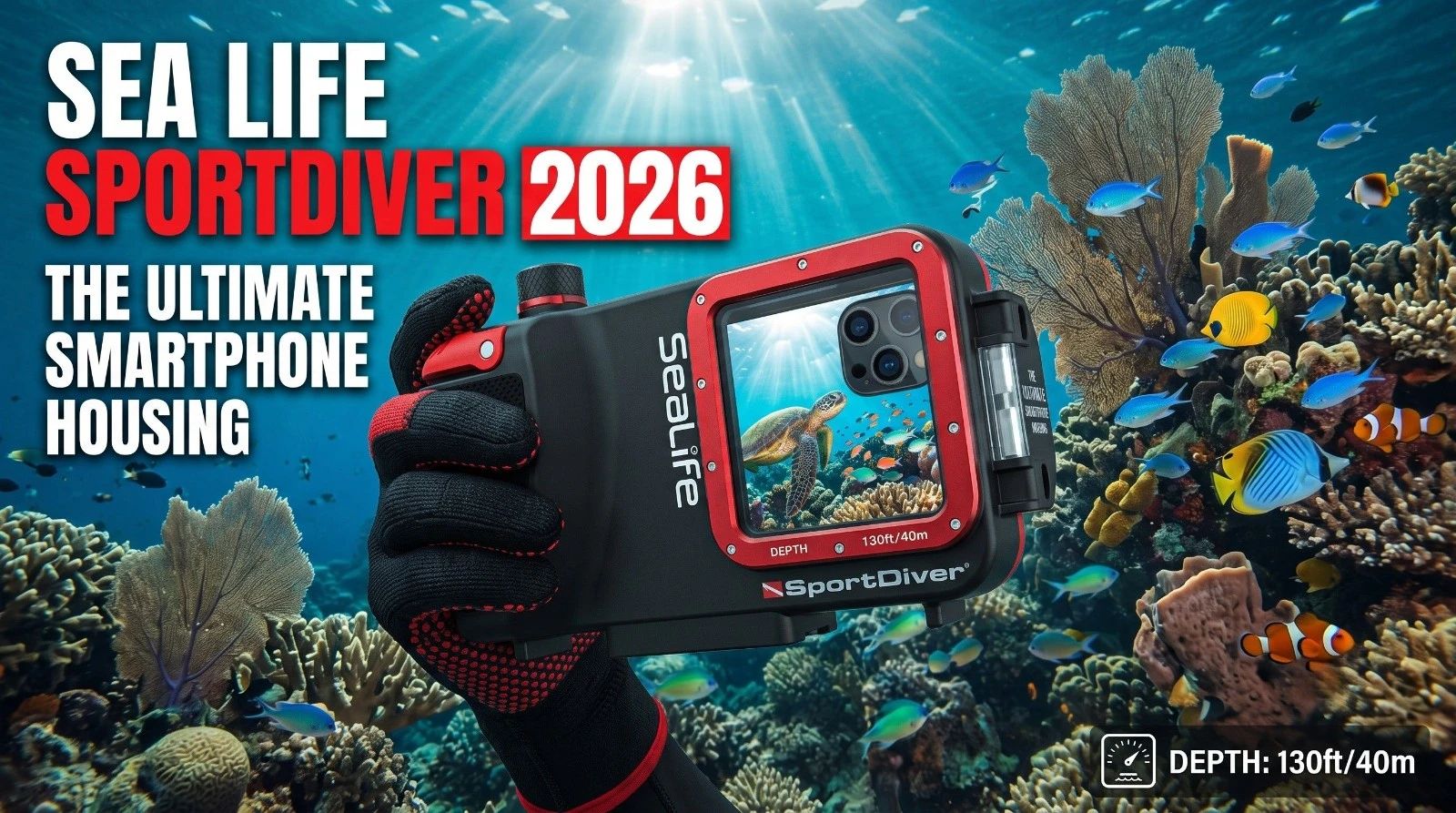
The 2026 SportDiver features a redesigned electronic module that stays sealed even with the door open. What changed, what stayed the same, and who should buy it at 299 euros.
When a brand updates its flagship product, the details matter. The 2026 SportDiver isn't a cosmetic refresh. There's genuine engineering work behind the change, and it solves a real problem that divers have been reporting for years.
That said, an update doesn't fix everything. Here's what you need to know.
The core update to the 2026 SportDiver is invisible from the outside. It's in the electronic module that manages the alarm sensors - which is now sealed independently from the main housing.
What this means in practice: you can open the housing with wet hands on the boat, slide your phone in with saltwater splashed on the rim, and the internal circuitry is no longer at risk. The electronics are isolated even when the door is open.
This directly addresses a failure mode that divers reported with previous generations - electronic damage from wet handling before even entering the water. That problem is solved.
The dual alarm system remains and has been refined. An early humidity alarm signals any abnormal moisture intrusion before water reaches the phone. A pressure alarm monitors seal integrity in real time during the dive.
The concept is sound. The terrain reality is more nuanced: a housing sealed on a hot boat and submerged in cooler water can trigger the humidity alarm on a perfectly intact seal - because the trapped warm air contracts as it cools, raising relative humidity. This is physics, not a manufacturing defect. Any alarm underwater must be treated seriously and checked at the surface.
The SportDiver 2026 is rated to 40 meters and priced at 299 euros, available through the SCUBAPRO distribution network.
The front-opening design remains. Convenient for inserting your phone quickly, but the main seal is directly exposed to manipulation every time. Sand particles, towel fibers, and salt residue settle exactly there. Maintenance discipline stays the same as previous generations: clean the seal before every closure.
SeaLife's proprietary app remains mandatory. No native RAW, no professional mode, no manual focus lock. If you have an iPhone 15 Pro and want to use ProRAW or Pro mode, the SportDiver won't let you.
The SportDiver 2026 has a clear target: divers who want decent images without managing settings, diving to 40 meters, with a solid product backed by SCUBAPRO's distribution and service network.
At AquaExposure, we point students toward the DiveVolk when they're learning. The DiveVolk keeps the phone's native app active: RAW available, professional mode open, focus lock possible. What we teach in training applies directly, without adapting exercises to a proprietary system.
Both approaches are valid. The difference is intention: shooting relaxed, or shooting to improve.
The SportDiver 2026 is depth-rated to 40 meters (130 feet). This covers the full range of standard recreational diving profiles.
No. The SportDiver requires SeaLife's proprietary app to trigger the shutter and adjust settings. This blocks access to native RAW format and manual professional modes. If keeping native app access matters to you, look at the DiveVolk or AxisGo housings instead.
This is a commonly reported issue with all sensor-based housings. When a housing sealed in warm air on the boat enters colder water, the trapped air contracts and relative humidity rises - potentially triggering the alarm on a perfectly intact seal. The 2026 version refines sensor sensitivity, but the underlying physics remains the same.
The SportDiver Ultra accommodates larger modern smartphones like the iPhone 15 Plus or Samsung Galaxy S24 Ultra. The standard SportDiver fits most iPhones from generation 8 through 15 Pro. Both models share the same electronic module and alarm systems.