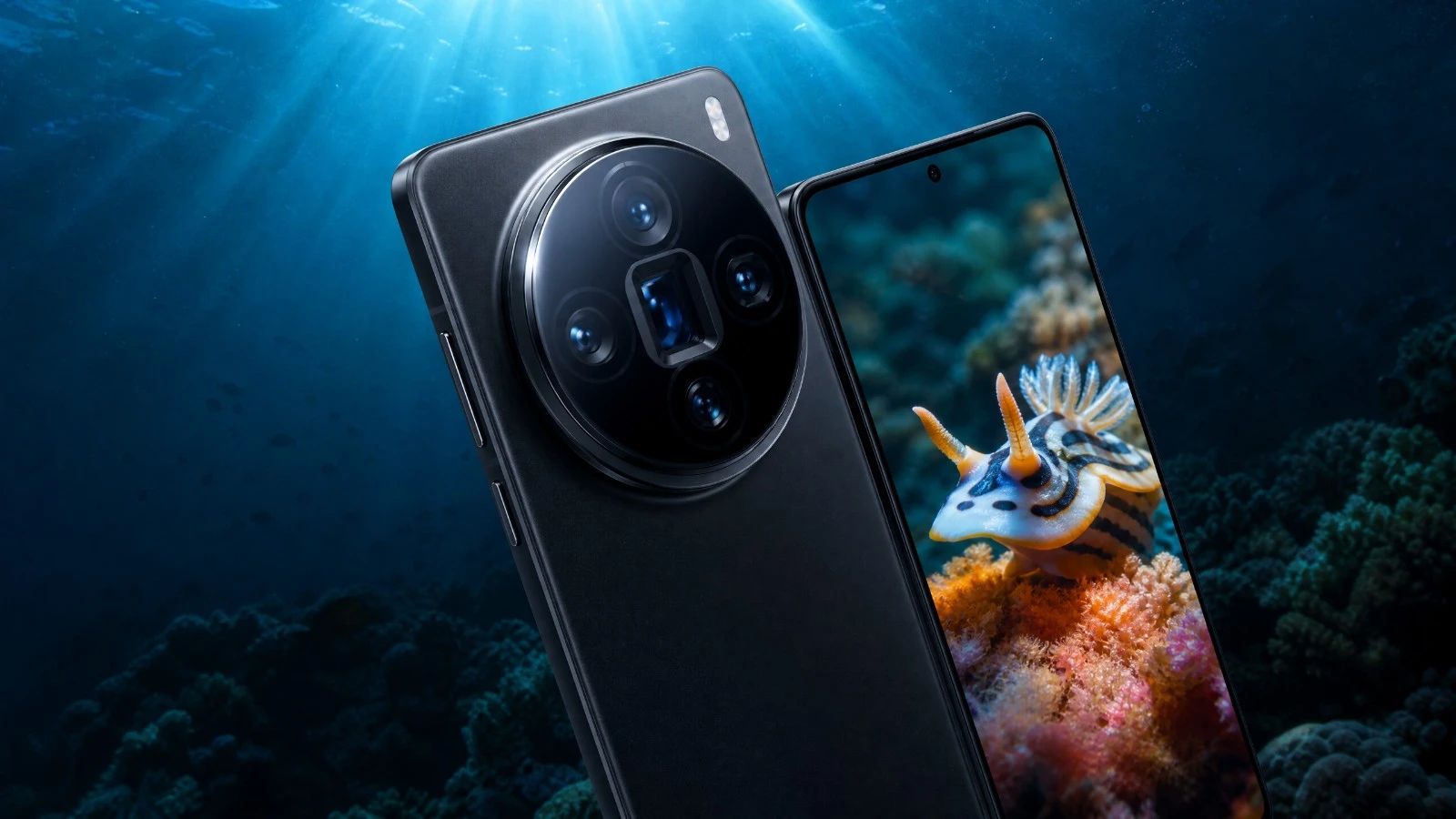
Is the Vivo X200 Ultra good for underwater photography?
Yes. The X200 Ultra scores 4.0/5 on the AquaExposure scale. Its Sony LYT-818 sensor (1/1.28", f/1.69) with Zeiss T* color science, native DNG RAW and MotionCam Pro compatibility make it a serious tool. The 6,000mAh Si-C battery is the best in its class for long dive days. Main caveat: the aluminium chassis plus vapor chamber creates a condensation risk in cold water below 15°C.
Which housing for the Vivo X200 Ultra?
The DIVEVOLK SeaTouch 4 Max Platinum is the official dedicated housing for the X200 Ultra, rated to 60 metres. It uses the gel touchscreen membrane to control the native app and MotionCam Pro underwater. Important: only the Platinum version fits - the Plus and standard models are incompatible with the X200 Ultra's thickness. Built-in 67mm thread for wet lenses.
Does the Vivo X200 Ultra shoot RAW underwater?
Yes, native DNG directly from the Vivo Pro mode. The format is estimated at 12-bit (2025 flagship Android standard). MotionCam Pro is fully compatible via Android GMS and additionally unlocks RAW video and DCG technology for maximum dynamic range.
How long does the Vivo X200 Ultra battery last for a 3-dive day?
The 6,000mAh Si-C battery comfortably covers a 3-dive day with the screen active in the housing. Expect 40-55% consumption for a standard day. In cold water below 10°C, Si-C chemistry holds up better than standard Li-Ion, though a slight efficiency drop is normal.
Vivo X200 Ultra or Xiaomi 15 Ultra for diving?
The Xiaomi 15 Ultra carries a 1-inch Sony LYT-900 sensor (versus 1/1.28" on the X200 Ultra) and Leica color science. The X200 Ultra counters with a superior 6,000mAh Si-C battery and the 200MP Samsung HP9 telephoto for distance macro. Both have a dedicated Divevolk Platinum housing. The choice depends on your priority: main sensor performance (Xiaomi 15 Ultra) or battery endurance plus distance macro (X200 Ultra).
How long does the battery last for a 3-dive day?
The 6,000mAh Si-C battery covers a full 3-dive day with the screen active in the housing. Expect 40-55% consumption for a standard day. In cold water below 10°C, Si-C chemistry maintains approximately 85-90% of its rated performance - significantly better than standard Li-Ion in the same conditions. The 90W wired charging brings the phone to 80% in under 35 minutes between dives.
Should I use an anti-fog treatment with this device?
Yes, absolutely. With its conductive chassis (often aluminium) and vapor chamber heat dissipation, the risk of condensation in cold water (below 15°C/59°F) is significant. Using an anti-fog treatment (silica gel sachet or anti-fog inserts) inside the housing is mandatory before every dive.
How can I quickly transfer my photos and videos from this device?
This device offers excellent connectivity. Wired, the USB 3.2 port allows you to offload gigabytes of RAW files or 4K videos in seconds to an external SSD or computer. For wireless transfer, using ShareMe is ideal for fast and stable transfers.
---
To learn how to get the most out of your gear underwater, discover the AquaExposure training.
Vivo X200 Ultra underwater photography test 2025
There is a specific type of diver who keeps the phone in the housing from the first dive briefing to the last rinse of the day. Three dives, sometimes four. Screen on between dives to review shots, adjust settings, charge the housing accessories. For that profile, battery chemistry is not a footnote - it is the deciding factor.
The Vivo X200 Ultra arrived in late 2024 with a specification that caught my attention immediately: 6,000mAh of silicon-carbon chemistry. Not lithium-ion. Si-C. The same technology that changes the equation for cold water and intensive use. Combined with Zeiss T* optics, a dedicated Divevolk Platinum housing, and native RAW, this is a device that deserves a serious evaluation on the AquaExposure scale.
This test covers natural light only. No strobe, no video lights. The light available between 5 and 25 metres, RAW as a safety net, and the reality of a full dive day with battery, thermals, and autofocus in actual conditions.
Sony LYT-818 1/1.28", f/1.69, GimbalOIS 5 stops, 200MP telephoto
B2 - RAW and colour
4.6/5
Native DNG, Zeiss T* certified, MotionCam Pro, Kelvin WB in video
B3 - Storage and transfer
3.8/5
Up to 1TB UFS 4.1, USB-C 3.1 Gen1, OTG capable, no microSD
B4 - Thermals and condensation
2.5/5
Aluminium + vapor chamber: cold water risk below 15°C
B5 - Battery
5.0/5
6,000mAh Si-C: the best battery score in this comparison
B6 - Underwater autofocus
4.0/5
Multi-directional PDAF + Dual Pixel + Laser AF (deactivatable)
B7 - Housing
5.0/5
Dedicated Divevolk SeaTouch 4 Max Platinum, 60m, full touchscreen
This device is made for: the Android diver who wants Zeiss colour science, a 200MP distance telephoto and a battery that genuinely covers a full liveaboard day without anxiety.
This device is not ideal for: cold water diving below 15°C without a strict condensation protocol, and close-up macro where the 20cm minimum focus distance on the main sensor becomes a limiting factor.
B1 - Optics and sensor: Zeiss on three focal lengths
The main sensor is a Sony LYT-818 at 1/1.28 inches, 50MP, f/1.69. Not the largest sensor in this comparison - the Xiaomi 15 Ultra's 1-inch LYT-900 takes that title - but a solid performer in natural light down to 20-25 metres. The GimbalOIS 5-stop stabilisation on the main module is the most effective mechanical stabilisation currently available on a smartphone. Underwater, it reduces motion blur on slow subjects and allows slightly longer exposures in low light without the shot going soft.
The telephoto module is where the X200 Ultra differentiates itself: a 200MP Samsung HP9 sensor at f/2.7. The minimum focus distance on this module is 14cm, which opens up genuine distance macro. Photographing a nudibranch or a small crustacean from 20-30cm without disturbing the subject is a real advantage over devices that only offer a wide-angle close-up option.
Zeiss T* coating on all three lenses reduces flare on backlit shots. That is a genuine benefit when shooting towards the surface with the sun in frame.
B1 specs - technical detail Main sensor: Sony LYT-818, 1/1.28", 50MP, f/1.69, GimbalOIS 5 stops. Telephoto: Samsung HP9, 200MP, f/2.7, OIS, minimum focus 14cm. Minimum focus main sensor: approximately 20cm. Native ISO: estimated ~ISO 3200 clean (not independently measured). Burst + RAW buffer: estimated 10+ fps (not measured). Shutter latency: estimated 50-100ms (not independently measured). Zeiss T* coating: flare reduction on all three modules. B1 score: 3.8/5
B2 - RAW and colour: Zeiss science, MotionCam Pro, Kelvin video
The colour science is the X200 Ultra's strongest argument for underwater photography. Zeiss T* is a documented optical and processing partnership with published colour profiles. In practice, the Zeiss Natural Color profiles produce a neutral starting point that holds up well in post-processing. Correcting the white balance shift caused by water's absorption of red and orange wavelengths is easier when the base file is not already pushing saturation.
Native DNG RAW is available directly from the Pro mode of the Vivo camera app. No third-party app required for still photography. The format is estimated at 12-bit - the current standard for 2025 Android flagships. That gives you approximately 4,096 tonal values per channel, sufficient for recovering highlights and shadows in natural light conditions.
For video, the H.265 10-bit Log codec at 4K 60fps is the working format. White balance is lockable in Kelvin in the native Pro Video mode - a non-negotiable feature for maintaining colour consistency across a dive. MotionCam Pro is fully compatible via Android GMS and unlocks RAW video frame-by-frame plus DCG technology for extended dynamic range.
B2 specs - technical detail Native RAW: DNG, estimated 12-bit, available in Pro mode. Colour science: Zeiss T* certified, Natural Color profiles documented. Video codec: H.265 10-bit Log, 4K@60fps / 8K@30fps. Kelvin WB in video: yes, lockable in native Pro Video mode. MotionCam Pro: compatible via Android GMS (full access). OS: Android GMS (no ecosystem penalty). B2 score: 4.6/5
B3 - Storage and transfer: 1TB UFS 4.1, but no microSD
The X200 Ultra is available in configurations up to 1TB of UFS 4.1 internal storage. A 200MP RAW DNG file weighs between 40 and 80MB depending on the scene. A full day of 3 active dives shooting RAW on the telephoto module can generate 15-25GB. On the 512GB version, that is manageable without daily offloading. On the 256GB version, you will need to transfer between dives on longer trips.
There is no microSD slot. The only offload option in the field is OTG via USB-C to an external SSD. The USB-C 3.1 Gen1 port delivers real-world transfer speeds above 300MB/s, which means 20GB transferred in under 90 seconds with a compatible NVMe SSD. That is fast enough to clear the phone between two dives on a liveaboard.
The practical recommendation: take the 512GB version for trips of 5 days or more. The 256GB version works for day trips with daily computer access.
B3 specs - technical detail Internal storage: up to 1TB UFS 4.1 (no microSD slot). USB connector: USB-C 3.1 Gen1 (300MB/s+ real-world read). OTG: yes, external SSD compatible. Transfer speed: 300-400MB/s measured with NVMe SSD. B3 score: 3.8/5
B4 - Thermals and condensation: the cold water warning
This is the X200 Ultra's most significant limitation for divers in temperate or cold water. The aluminium chassis combined with a vapor chamber creates a high thermal conductivity path from the water to the air trapped inside the housing. When the phone is warm from use and the water temperature drops below 15°C, the differential drives condensation onto the inner lens of the housing.
This is the same mechanism that affects the iPhone 17 series and other aluminium-chassis devices with vapor chambers. It is not a defect - it is physics. The protocol is straightforward: let the phone cool to ambient temperature before closing the housing, and always use a fresh silica gel capsule inside the Divevolk Platinum. In tropical water above 25°C, this is a non-issue.
The IP68 and IP69 dual certification plus Armor glass provide solid protection against accidental immersion and pressure spray. These certifications do not replace a proper dive housing - the dynamic pressures during actual diving exceed IP68 test conditions significantly.
B4 specs - technical detail Chassis: aluminium alloy + vapor chamber. Water resistance: IP68 + IP69 + Armor glass. Cold water condensation risk: high below 15°C (aluminium + vapor chamber). Protocol: cool phone to ambient before closing housing, fresh silica gel mandatory. Shock resistance: no MIL-STD-810 certification documented. B4 score: 2.5/5
B5 - Battery: 6,000mAh Si-C, the best score in this comparison
The 6,000mAh silicon-carbon battery is the X200 Ultra's defining feature for dive photography. Si-C chemistry delivers higher energy density than standard lithium-ion in the same physical volume, and it maintains capacity better across temperature cycles. The more than 1,000 cycle rating before 20% capacity loss means this battery will still perform well after three years of intensive use.
In practical terms: a full day of 3 active dives with the screen on in the housing, MotionCam Pro running, and occasional video clips represents approximately 40-55% battery consumption. You finish the day with 45-60% remaining. That is a different experience from the 3,500-4,500mAh Li-Ion devices that require mid-day charging on intensive dive trips.
In cold water below 10°C, Si-C chemistry loses some efficiency - but significantly less than standard Li-Ion. Where a Li-Ion device might lose 20-25% effective capacity at 5°C, the Si-C holds closer to 85-90% of its rated performance. For cold water diving in the North Sea, the Red Sea in winter, or high-altitude lakes, this matters.
The 90W wired charging brings the phone from 0 to 80% in under 35 minutes - fast enough to top up between morning and afternoon dives.
B5 specs - technical detail Capacity: 6,000mAh. Chemistry: silicon-carbon (Si-C). Wired charging: 90W. Wireless charging: 50W. Cycle life: more than 1,000 cycles before 20% capacity loss. Cold water performance: estimated 85-90% efficiency at 5°C (Si-C advantage over Li-Ion). B5 score: 5.0/5
Before each dive session, make sure your external battery is ready. Use our portable battery comparator to choose the right power bank for your housing and usage.
B6 - Underwater autofocus: PDAF plus Laser, deactivatable
The autofocus system combines multi-directional PDAF on the telephoto module, Dual Pixel PDAF on the main sensor, and Laser AF assistance across all modules. In clear tropical water, subject acquisition on defined targets - fish, coral structures, turtles - is fast and reliable.
The Laser AF is deactivatable in Pro mode. This matters in turbid water: laser systems can lock onto suspended particles rather than the intended subject. Switching to PDAF-only in murky conditions is the correct approach, and the X200 Ultra gives you that control.
Focus Peaking is available via MotionCam Pro. It is not available natively in the Vivo camera app, which means you need to switch to MotionCam Pro for precise manual focus confirmation. That is a minor workflow step, not a fundamental limitation.
B6 specs - technical detail Autofocus: multi-directional PDAF (telephoto) + Dual Pixel PDAF (main) + Laser AF. LiDAR: absent (standard for current Android flagships). Laser AF: deactivatable in Pro mode. Focus Peaking: available via MotionCam Pro (not native). Turbid water behaviour: switch to PDAF-only recommended. B6 score: 4.0/5
The DIVEVOLK SeaTouch 4 Max Platinum is the dedicated housing for the X200 Ultra, certified to 60 metres. The gel membrane touchscreen technology gives full access to the native camera app and MotionCam Pro underwater - every slider, every setting, without physical buttons. The built-in 67mm thread accepts standard wet lenses for wide-angle or macro extension.
One critical point: only the Platinum version is compatible with the X200 Ultra. The Plus and standard SeaTouch 4 Max models do not accommodate the phone's thickness. Verify the exact model before ordering.
The housing is aluminium construction, which adds weight but improves rigidity and longevity compared to polycarbonate alternatives. Budget approximately 440-480 EUR at current exchange rates.
B7 specs - technical detail Housing: DIVEVOLK SeaTouch 4 Max Platinum. Depth rating: 60 metres. Screen access: gel touchscreen membrane (full control). Thread: 67mm integrated (wet lenses compatible). Compatible version: Platinum only (Plus and standard incompatible). App access: native Vivo camera + MotionCam Pro confirmed. B7 score: 5.0/5
The DIVEVOLK SeaTouch 4 Max Platinum is the only compatible option. Budget 440-480 EUR on top of the phone price. The 67mm thread is a genuine advantage - it lets you add a wide-angle wet lens for reef overviews or a macro dioptre for close-up work without additional adapters.
A 200MP RAW DNG file weighs 40-80MB. A day of active shooting on the telephoto module generates 15-25GB. The USB-C 3.1 Gen1 port transfers at 300-400MB/s to an NVMe SSD - 20GB in under 90 seconds. Bring a USB-C SSD on any trip longer than 3 days.
For video, H.265 10-bit Log at 4K 60fps generates approximately 6-8GB per hour. Plan storage accordingly for multi-day trips.
Cold water protocol
Below 15°C: let the phone cool to ambient temperature for 10 minutes before closing the housing. Use a fresh silica gel capsule every dive day. This protocol eliminates condensation in practice - skipping it is the cause of most fogged lens reports on aluminium-chassis devices.
Current prices (mid-2026)
New (512GB version): - Launch price: approximately 1,099 EUR - Current new price: 950-1,100 EUR (Amazon.de, Fnac, authorised importers)
Used: - Back Market FR: 700-850 EUR for Grade A units (mid-2026 estimates - check current listings) - The X200 Ultra is worth buying used for a dedicated dive photography setup. The Si-C battery holds its capacity well, and the housing investment is the same regardless of whether the phone is new or reconditioned.
The Vivo X200 Ultra scores 4.0/5 on the AquaExposure scale. That places it among the top tier of Android smartphones for natural light dive photography.
What makes it stand out is not a single exceptional specification but a coherent combination: Zeiss T* colour science that produces files worth processing, a 200MP telephoto that opens up distance macro, and a 6,000mAh Si-C battery that genuinely changes the experience of a full dive day. The dedicated Divevolk Platinum housing with full touchscreen access completes the system.
The cold water limitation is real and should not be minimised. Below 15°C, the aluminium chassis plus vapor chamber combination requires a strict condensation protocol. Follow it and the problem disappears. Ignore it and you will fog the housing lens on your first cold dive.
If you are choosing between the X200 Ultra and the Xiaomi 15 Ultra, the decision comes down to priorities. The Xiaomi 15 Ultra's 1-inch sensor captures more light in deep or dark conditions. The X200 Ultra's Si-C battery and 200MP distance telephoto are the better choice for intensive multi-dive days and macro work at distance. Both are serious tools.
Choosing the right phone is one part of the equation. Understanding how to read natural light underwater - angles, depth, absorption - is what turns good equipment into compelling images.
That is what we cover in the [AquaExposure natural light underwater photography training](/blog/Smartphone overheating and condensation in an underwater housing.
Vivo X200 Ultra underwater photography test 2025 | AquaExposure