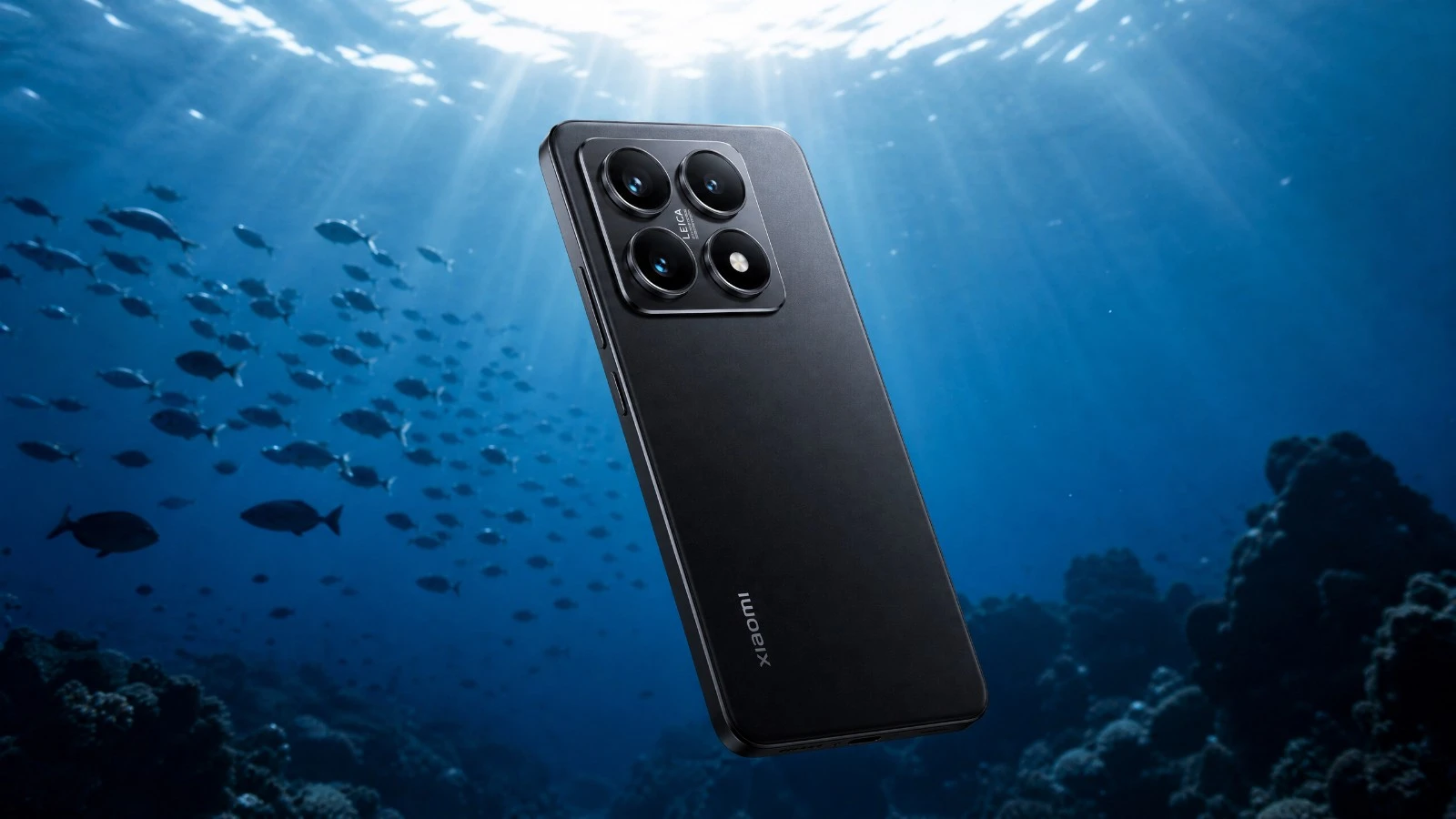
Xiaomi 14T Pro underwater camera test: natural light performance, AquaExposure score, housing options. Read before you buy!
Xiaomi 14T Pro for underwater photography: our 2026 review
When it comes to underwater photography using natural light, the choice of camera is a crucial factor. The Xiaomi 14T Pro is entering the market with enticing promises, particularly its partnership with Leica. I had the opportunity to put it to the test, pushing it to its limits, to see what it truly offers once submerged. Forget about marketing specifications, what matters is the real-world performance, responsiveness, and ability to withstand the constraints of our environment. Let's explore together whether this smartphone is a reliable companion for your underwater explorations, or if it remains best suited for staying on dry land.
The Verdict in Summary
Overall score: 3.5/5
| Criterion | AquaExposure Score | Explanation |
|---|---|---|
| B1 Optics | 4/5 | High-quality Leica optics, excellent main sensor. |
| B2 RAW | 4/5 | Usable RAW files, good room for maneuver in post-production. |
| B3 Storage | 3/5 | Fast UFS 4.0, but the USB 2.0 port is a bottleneck. |
| B4 Thermal | 3/5 | Generally good thermal management, but be careful when recording extended 4K video in warm water. |
| B5 Battery | 4/5 | 5000 mAh, more than enough for a day of diving. |
| B6 Autofocus | 3.5/5 | Fast on the surface, slightly less responsive underwater, but still effective. |
| B7 Housing | 5/5 | Perfect compatibility with the Divevolk SeaTouch 4 Max. |
Ideal Profile: The Xiaomi 14T Pro is aimed at the informed enthusiast who is looking for a good balance between image quality and budget. If you primarily take photos and occasional videos, and are willing to deal with slower file transfers, it can be an excellent choice. It's a device for those who want beautiful images without breaking the bank, and who understand the limitations of USB 2.0.
Block-by-block analysis
B1 Optics: The Leica Legacy Underwater
The partnership with Leica is not just a marketing gimmick. The optics of the Xiaomi 14T Pro, especially on the main 50MP sensor, offer excellent image quality. The colors are accurate, the sharpness is good, even in soft natural light. You can feel a real commitment to quality. The wide-angle lens is effective for underwater landscapes, and the telephoto lens allows you to capture more distant subjects without too much loss of detail.
For more details: The main 50MP sensor with a size of 1/1.31" and an aperture of f/1.6 is a major advantage. Optical image stabilization (OIS) helps to compensate for small movements underwater, resulting in sharper images.
B2 RAW: Freedom in Post-Production
The Xiaomi 14T Pro allows you to shoot in RAW format. This is a crucial feature for any underwater photographer who wants to go further. In RAW format, you have all the information from the sensor. This means that you can correct white balance, adjust exposure, and recover details in shadows or highlights without degrading the image. This is what matters to get stunning shots, even with the blue tint of the water.
B3 Storage: Fast, but the transfer.
The device features UFS 4.0, which is excellent for internal read and write speeds. Your photos and videos are recorded without any lag. The problem, the real issue, is the USB 2.0 port. Transferring a full card of 4K videos after a day of diving can take an incredibly long time. This is a crucial point to consider if video recording is your priority.
For more information: The Xiaomi 14T Pro uses a USB 2.0 port (480 Mbps). This is slow compared to current standards (USB 3.2 at 10 Gbps). Wi-Fi 7 can help with wireless transfers, but for large volumes, a cable remains the best option, and in this case, it's a disadvantage.
B4 Thermal: Keep a Cool Head.
The thermal management is acceptable for taking photos. However, if you are recording long sequences in 4K, especially in hot tropical waters, the device may start to overheat. This isn't critical, but it can lead to a slight decrease in performance or a limitation of the recording duration. It's important to be aware of this and take breaks if necessary.
B5 Battery: Endurance Underwater
With a 5000 mAh battery, the Xiaomi 14T Pro is a good performer. You can expect a full day of use, with three dives, without worrying about running out of power. The 120W fast charging is a plus for recharging between sessions if you have access to electricity, but underwater, it's the raw battery capacity that makes the difference.
Before each diving session, remember to check your external battery. Use our portable battery comparator tool to choose the right power bank for your dive equipment and desired battery life.
B6 Autofocus: Responsiveness in Aquatic Environments
The autofocus is fast and accurate on the surface. Underwater, it remains performant, but sometimes you can feel a slight hesitation, especially when focusing on subjects moving quickly or in low-light conditions. You need to anticipate a bit more, but it does the job. This is a key feature for not missing that crucial moment.
B7 Enclosure: The essential companion.
For the Xiaomi 14T Pro, the Divevolk SeaTouch 4 Max case is the ideal choice. It is robust, reliable, and allows you to use the smartphone's touchscreen underwater. This provides real comfort for navigating menus and adjusting your settings. The phone fits perfectly inside, and the entire setup is ready for diving.
What you need to know before buying.
Available Enclosures
The Divevolk SeaTouch 4 Max is the reference housing for the Xiaomi 14T Pro. It offers excellent protection and a well-thought-out ergonomics for underwater use. Be sure to check the exact compatibility of your model with the housing, but in general, the standard version of the SeaTouch 4 Max is perfectly suitable.
Terrain workflow
Prepare your camera settings before you get in the water. Underwater, focus on framing and composition. RAW mode is your friend for post-production. For video, be selective about key moments to avoid filling up the memory too quickly, and allow time for transferring files via USB 2.0.
Key Considerations
The USB 2.0 port is the Achilles' heel of this device for video applications. If you are a heavy user of video, this can become frustrating. Also, consider protecting your phone inside the case. The aluminum/glass frame is sturdy, but silica gel is essential to prevent condensation.
Prix
The Xiaomi 14T Pro positions itself as a more affordable option compared to some flagship phones, while still offering very respectable photographic performance. It represents an excellent value for money for underwater photography, provided you are willing to accept its few compromises.
Our Verdict
The Xiaomi 14T Pro is a capable smartphone for underwater photography in natural light. Its Leica optics and main sensor deliver high-quality images. The ability to shoot in RAW format is a major advantage. The key drawback is its USB 2.0 port, which significantly slows down video transfer speeds. If you are primarily a photographer and have the patience for transfers, this is an excellent choice that offers a lot for its price. For videographers who need fast transfer speeds, this limitation will be a significant issue. It doesn't revolutionize the genre, but it does the job well.
Learning Underwater Photography with This Camera
Want to master your Xiaomi 14T Pro underwater and enhance your photos? Visit our learning platform for courses dedicated to underwater photography using natural light. Whether you are a beginner or want to perfect your techniques, our modules will guide you step by step. AquaExposure Training
To learn more about condensation and overheating, read our dedicated article: Overheating and condensation on smartphones in underwater housings.
Compare this device with others.
Are you hesitating between several devices? Use our underwater photography equipment comparison tool to compare this device with other tested models.
Share
Table of Contents
- 01The Verdict in Summary
- 02Block-by-block analysis
- 03B1 Optics: The Leica Legacy Underwater
- 04B2 RAW: Freedom in Post-Production
- 05B3 Storage: Fast, but the transfer.
- 06B4 Thermal: Keep a Cool Head.
- 07B5 Battery: Endurance Underwater
- 08B6 Autofocus: Responsiveness in Aquatic Environments
- 09B7 Enclosure: The essential companion.
- 10What you need to know before buying.
- 11Available Enclosures
- 12Terrain workflow
- 13Key Considerations
- 14Prix
- 15Our Verdict
- 16Learning Underwater Photography with This Camera
- 17Compare this device with others.
Questions about the Journal
Can I use the photographs from this journal?
All images are protected by copyright. For any commercial or editorial use, please contact us via our form.
How can I be notified of new articles?
Follow us on social media or join the Sentinels Circle to receive our immersion stories before anyone else.
Do you offer hands-on workshops?
Yes, we organize masterclasses and field expeditions for members of our school. Check the Training page for details.