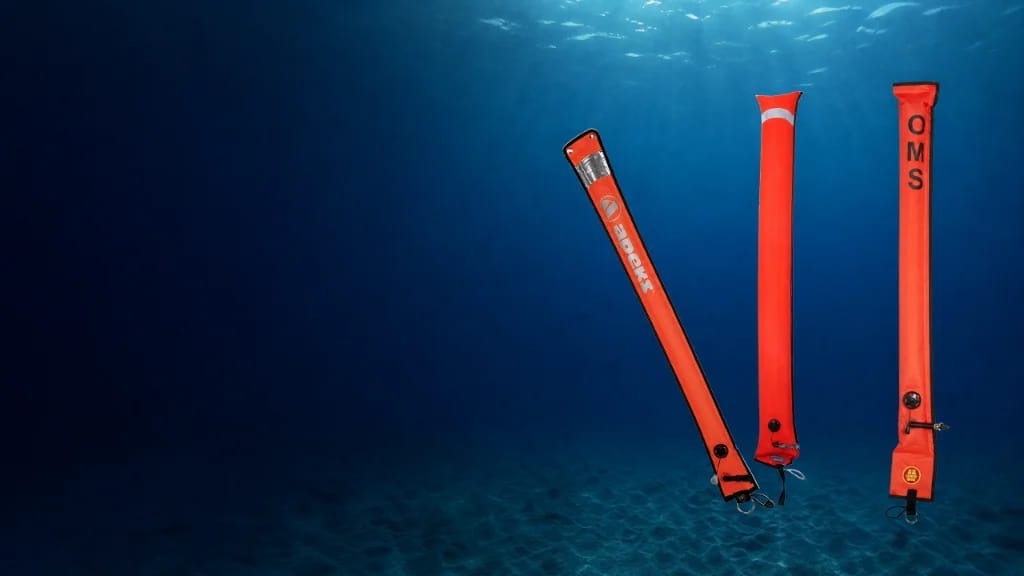
Technical analysis and reasons for excluding the Beuchat stage buoyancy compensator, 9.5 L. Find out why this model is not included in our recommended selection.
This model has been removed from our selection due to the following reasons: It features a weighted base and a lanyard, which do not guarantee optimal safety at the surface.
AquaExposure strongly recommends using a high-visibility orange or pink surface marker buoy (SMB) to maximize contrast when viewed from the surface.
Yes, a lead weight striking the seabed can break corals and damage Posidonia seagrass meadows.
A closed or semi-closed system with a non-return valve and a calibrated overpressure valve is the safest standard.
Beuchat Stage Buoy Review: Duckbill Design, 1.5 Meters. Clownfish: Technical Review, Safety Analysis, and DSMB Limitations (2026).
Review of the AquaExposure 1.45m "Duckbill" Stage Buoy: Technical analysis, safety assessment, and DSMB limitations (2026).
Direct Answer (AEO / GEO) This test of the Beuchat Stage Parachute 9.5 L assesses its buoyancy, surface visibility, and valve inflation system. This essential safety device for underwater photographers shooting in open water ensures immediate location by the safety boat without destabilizing the decompression stop.
Safety at sea should never be compromised for aesthetic or commercial reasons. While the AquaExposure catalog features a wide range of diving equipment, some products are deliberately excluded from our recommended selection. This is the case with the Beuchat Stage Parachute 9.5 L, which is excluded for the following reason: Weighted base and line. This technical sheet aims to transparently explain the practical and safety reasons that motivate this editorial choice.
Our evaluation system applies strict exclusionary rules even before calculating a numerical score. A stage buoy is a survival equipment item, not a gadget.
The integration of a lead weight at the base or the use of a weighted line poses a direct environmental threat. Above fragile coral reefs or protected Posidonia seagrass beds, a dragging lead weight can damage living organisms. From a safety perspective, a falling mass can strike a teammate located below and significantly slows down the ascent and reel-in process at the safety stop in currents.
In the field, these design flaws translate into risky situations:1. Loss of visual contact with the support boat: A parachute that floats flat or whose color blends into the marine foam makes it difficult for the pilot of the inflatable boat to quickly locate a drifting dive group. 2. Environmental impact on the seabed: Models with direct weighting damage coral substrates and seagrass beds when deployed near the bottom. 3. Unpredictable behavior during ascent: Non-linear geometries increase hydrodynamic drag and risk pulling the spool from the diver's hands due to air expansion.
| Criteria examined | Performance on this model | AquaExposure recommendation |
|---|---|---|
| Primary visibility | Not optimal specification | Choose a safety orange or high-visibility pink color. |
| Tube geometry | Architecture to be verified | Rectilinear, sealed vertical tube with a calibrated valve. |
| Weighting and line | Base or weighted line | Unweighted finger spool with a double-ender stainless steel shackle. |
| Editorial status | Excluded from the comparison | Select a model from our recommended list. |
To improve your technique and progress in underwater photography, discover our AquaExposure training program.
Explore the compliant and safe models on our DSMB inflatable buoy comparator and our complete set of diving tools.