7/11
64%
Chapter 7 — pratique
RAW vs JPEG in Underwater Photography: Which Format to Choose?
RAW or JPEG for diving? Why RAW is essential underwater. Advantages, disadvantages and a guide for the underwater photographer.
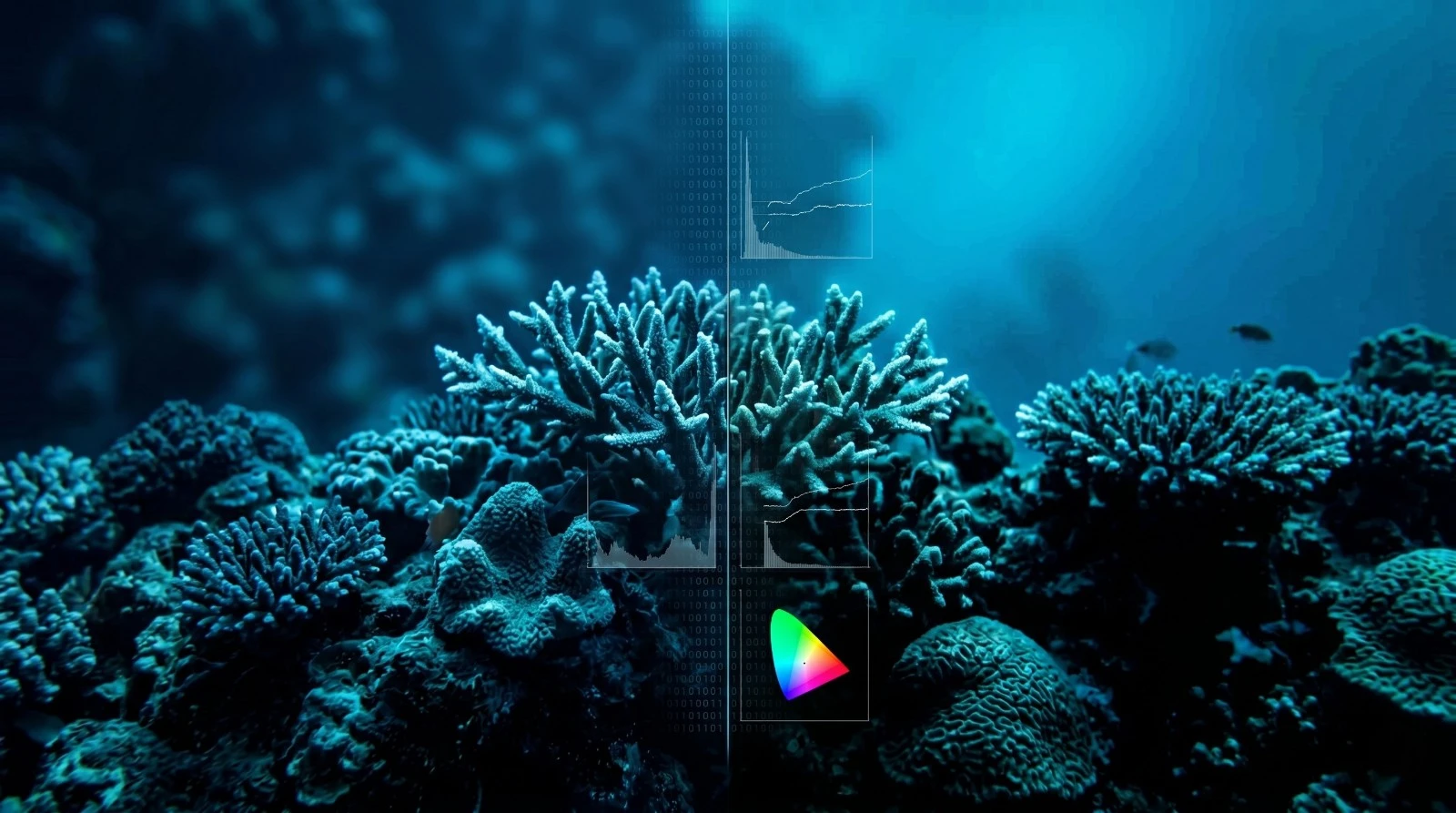
The RAW format: the digital negative
RAW contains all the raw data from the sensor, without processing. It offers 12 to 16 bits per channel, adjustable white balance, extended dynamic range for capturing shadows and highlights, and non-destructive processing.
The JPEG format: ready to use
An image processed by the ISP (Image Signal Processor) and compressed with lossy compression. Small, universal, and immediate. However, every piece of information removed is permanently lost.
| Criterion | RAW | JPEG |
|---|---|---|
| Data | Raw, un-processed | Processed and compressed |
| Color depth | 12-16 bits | 8 bits |
| File size | 25-80 MB | 5-15 MB |
| White balance | Adjustable without loss | Fixed |
| Shadow recovery | Excellent (+3 EV) | Very limited |
| Underwater Verdict | ESSENTIAL | Only for supplementary use |
Why RAW is non-negotiable underwater
Water imposes systematic corrections: shifted white balance, frequent underexposure, and loss of contrast. Only RAW offers the necessary flexibility. Attempting to recover lost reds in JPEG generates noise and irreversible posterization.
In underwater photography, not shooting in RAW is like diving without a dive computer: it's possible, but you lose all your safety margin.
🧪 Outils interactifs
Frequently asked questions
Pourquoi le RAW est-il indispensable en photo sous-marine ?
L'eau impose des corrections majeures (balance blancs, ombres, couleur). Le RAW 12-16 bits permet ces ajustements sans degradation. Le JPEG 8 bits ne le permet pas.
Le RAW prend-il beaucoup de place ?
25 a 80 Mo par fichier. Une carte 64 Go couvre 3-4 plongees en RAW 24 MP (environ 200 photos par plongee).
Peut-on faire RAW + JPEG ?
Oui. Le JPEG sert d'apercu rapide et partage, le RAW pour le traitement final. Excellent compromis pour debuter.