10/11
91%
Chapter 10 — avance
Advanced Exposure, Histogram, and ETTR in Underwater Photography
Master histogram analysis, the ETTR (Expose to Right) technique, and signal-to-noise ratio for perfectly exposed underwater photographs.
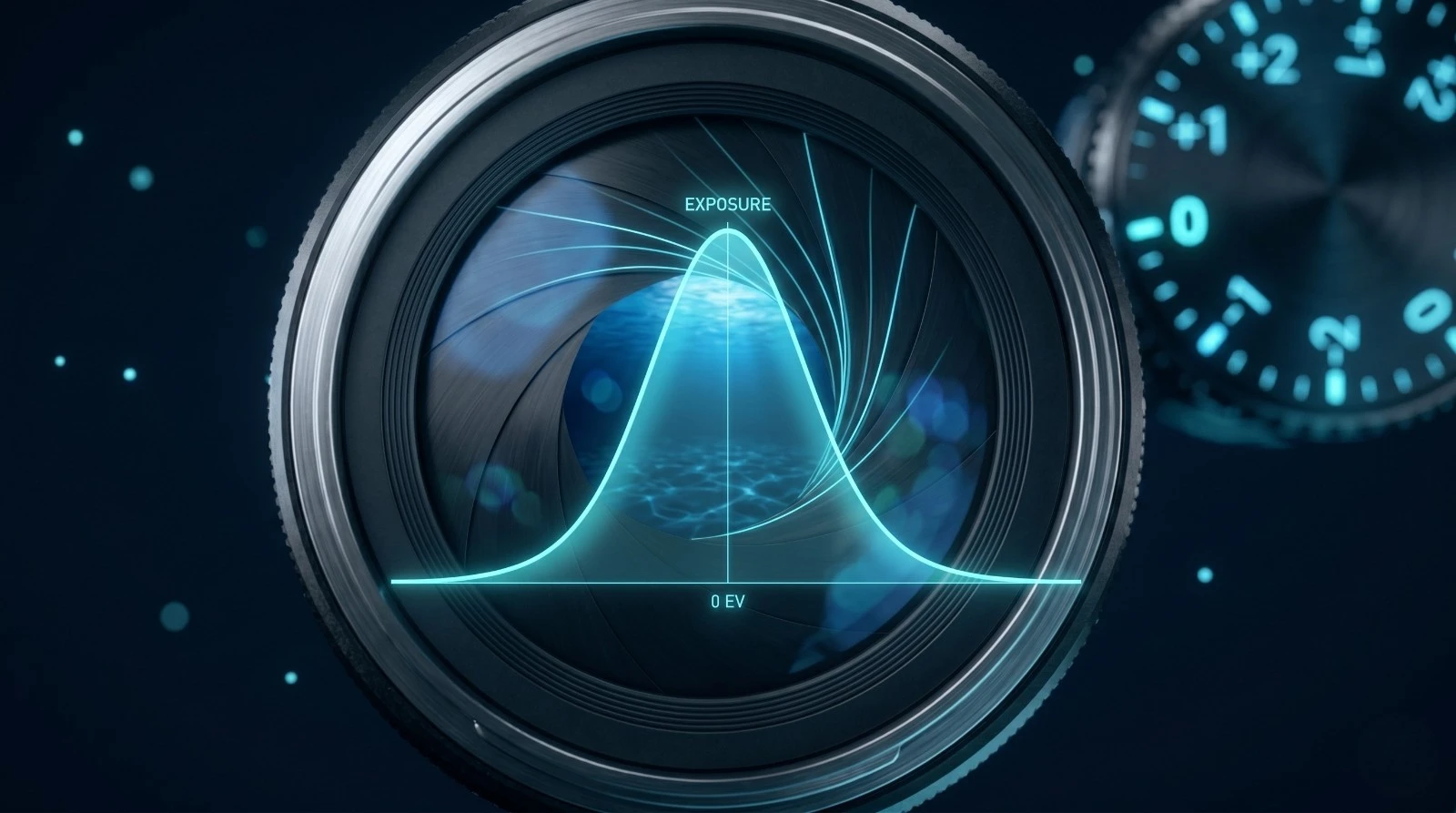
The Histogram: The Exposure Map
The histogram shows the distribution of pixels by brightness level. Left: Shadows. Right: Highlights. It is an objective tool, much more reliable than the camera screen.
Quick Guide: Peak on the left = underexposure. Peak on the right = overexposure. Balanced distribution = correct exposure. Narrow histogram = low contrast.
ETTR: Expose to the Right
The ETTR technique involves exposing so that the histogram is shifted to the right, without burning out the highlights. The richest data are found in the bright tones (in RAW format). It is easier to recover shadows than to restore overexposed highlights.
Underwater Application
Underwater, the instinct is to underexpose. This is a mistake. In RAW, overexpose by +0.5 to +1 EV. Your shadows will be much cleaner in post-production. Monitor the highlight warning to avoid going too far.
Signal-to-Noise Ratio (SNR)
The SNR measures the proportion of useful signal to noise. The more light there is, the better the SNR. ISO does not increase the sensitivity of the sensor, it amplifies the signal (including noise). An image correctly exposed at ISO 800 will always be less noisy than an underexposed image at ISO 100, then brightened.
+1 EV of exposure = 2x less noise in the shadows. This is the most underutilized technique in underwater photography.
🧪 Outils interactifs
Frequently asked questions
Qu'est-ce que la technique ETTR ?
Exposer a Droite : surexposer legerement pour maximiser les donnees captees. En RAW, les tons clairs contiennent plus d'info. Reduit le bruit dans les ombres en post.
L'ETTR fonctionne-t-il en lumiere naturelle sous-marine ?
Oui, c'est meme la ou il est le plus utile. Surexposez legerement pour que l'histogramme tire vers la droite : le fond bleu sera bien expose, et le post-traitement recupere les details dans les ombres sans bruit.
Pourquoi mes photos sont bruyantes malgre ISO bas ?
Le bruit vient de la sous-exposition, pas de l'ISO. Une image sous-exposee a ISO 100, eclaircie en post, est plus bruyante qu'une image correctement exposee a ISO 400.