2/11
18%
Chapter 2 — fondamental
Pixel Quality and Sensor Size for Underwater Photography
Why does pixel size on the sensor affect the quality of your underwater photos, especially in low light conditions?
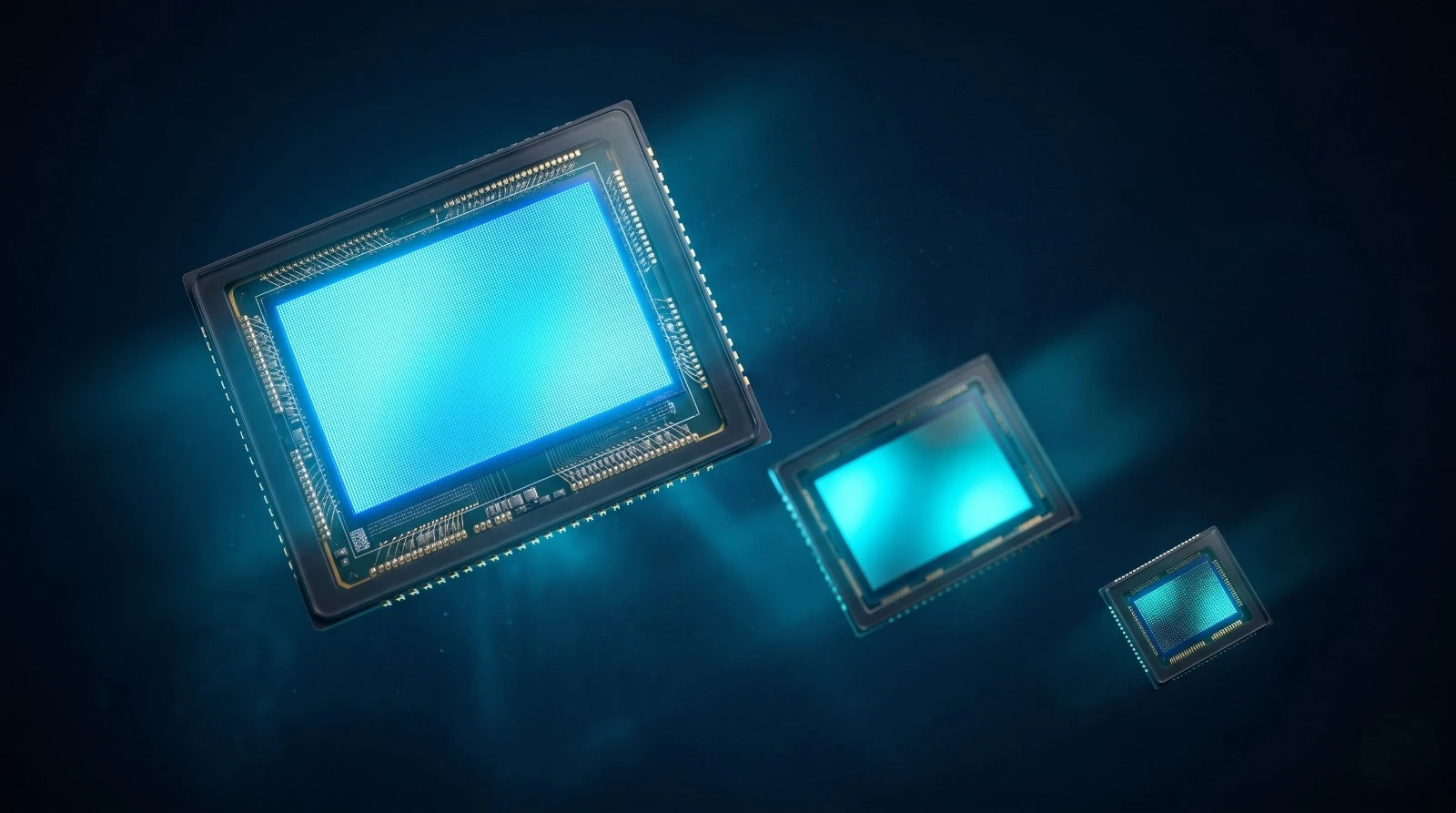
Pixel Size: The Quality of the Brick
The camera sensor is the heart of the device. It converts light into an electrical signal. Each pixel corresponds to a physical photosite on this sensor. The larger the photosite, the more photons (light) it can capture.
A larger photosite produces a better signal-to-noise ratio (less grain), a wider dynamic range (more detail in shadows and highlights), and increased sensitivity in low light conditions.
Key Concept: On a fixed-size sensor, increasing the number of megapixels reduces the size of each photosite. Therefore, there is a trade-off between resolution (number of pixels) and sensitivity (size of each pixel).
Underwater Application
Underwater, light decreases by approximately 50% every 5 meters of depth. At 20 meters, only about 1% of surface light remains. Larger photosites partially compensate for this deficit, producing images that a sensor with small pixels would not be able to capture effectively.
Image Processing: The Brain of the Device
The raw data from the sensor passes through sophisticated algorithms: noise reduction, sharpness enhancement, white balance correction, and contrast management. Intelligent processing can make an image from a small sensor superior to an image from a large sensor that has been poorly processed.That is why modern smartphones, despite having tiny sensors, produce impressive images: their computational processing compensates for the physical limitations of the sensor.
Summary: The final quality is a synergy between three factors: resolution (number of pixels), the physical size of the pixels (sensitivity), and the intelligence of the processing (ISP). An optimal balance between these three elements produces the best images.
🧪 Outils interactifs
Frequently asked questions
Un capteur avec plus de megapixels est-il meilleur pour la plongee ?
Pas necessairement. Un capteur avec des pixels physiquement plus grands captera plus de lumiere, produisant des images plus propres dans les conditions sombres de la photo sous-marine.
Quelle taille de capteur choisir pour debuter en photo sous-marine ?
Un capteur APS-C ou Micro 4/3 offre un excellent compromis : qualite suffisante et caisson compact. Le Full Frame excelle en basse lumiere mais necessite des caissons plus volumineux.
Le traitement d'image est-il important sous l'eau ?
Oui. Un bon ISP compense le bruit en faible lumiere, optimise la balance des blancs dans les teintes bleues predominantes. Photographier en RAW permet de reprendre le traitement en post-production.