3/11
27%
Chapter 3 — technique
CCD vs CMOS Sensors: Understanding Photographic Technologies
Differences between CCD and CMOS sensors, their respective advantages, and why CMOS dominates modern underwater photography.
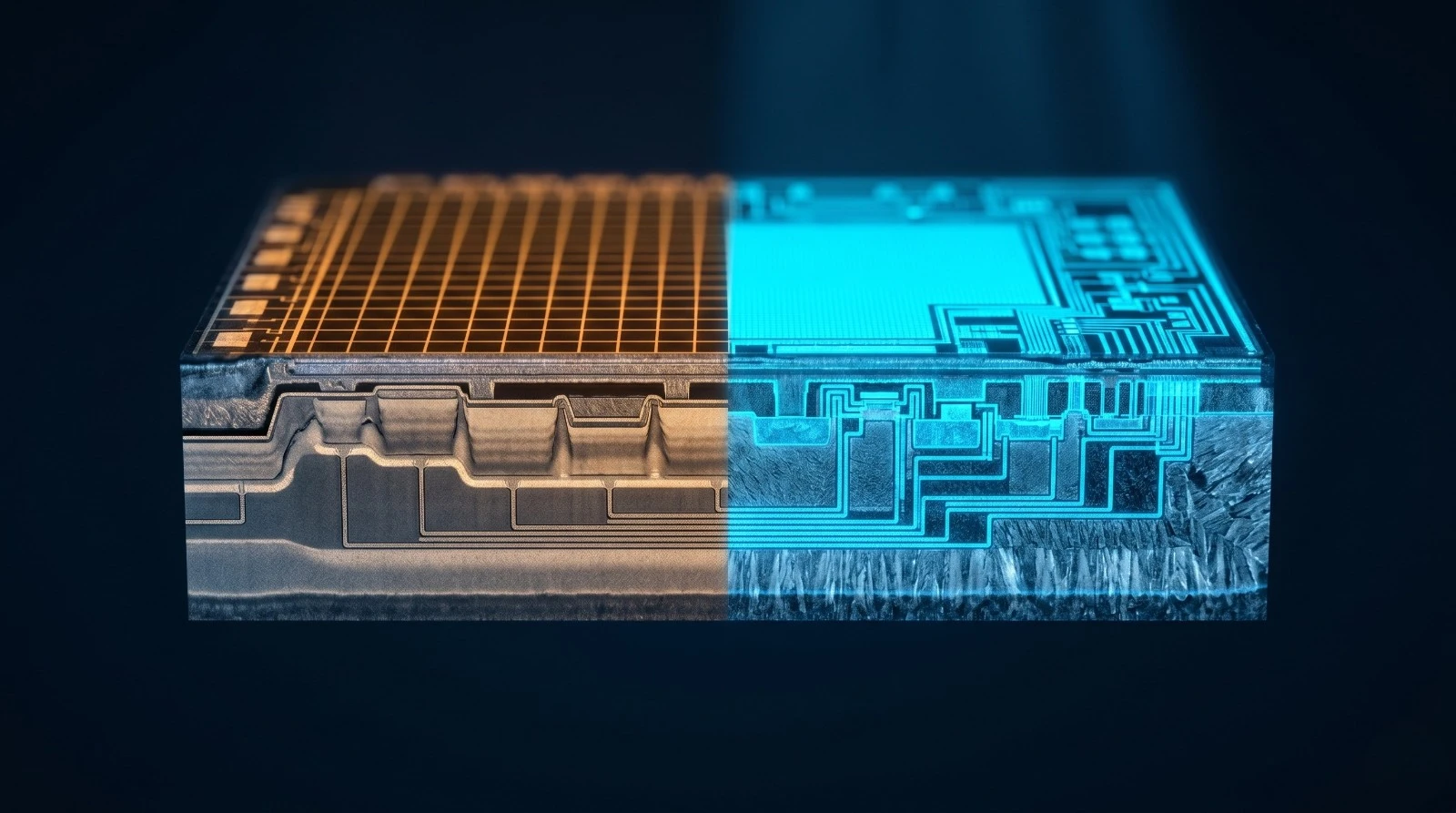
The CCD: The Pioneer
The CCD (Charge-Coupled Device) transfers electrical charges from one photosite to another sequentially, like a chain of buckets passed hand to hand. A single analog-to-digital converter processes the entire signal.
This approach ensured remarkable response uniformity and very low noise, but at the cost of slow reading speeds, high energy consumption, and blooming sensitivity.
The CMOS: The Modern Revolution
Each photosite on a CMOS sensor has its own amplifier and converter. Reading is parallel and direct, enabling very high frame rates and reduced power consumption.
Key Advantages: Speed (parallel reading for 4K/8K), Energy (extended dive time), Cost (standard manufacturing), Flexibility (autofocus on the sensor, integrated stabilization).
Underwater Application
| For underwater photography, CMOS offers a decisive advantage: phase detection autofocus is directly on the sensor. Underwater, refraction distorts distances, making fast and precise autofocus essential for capturing moving subjects. | Characteristic | CCD (classic) | CMOS (modern) |
|---|---|---|---|
| Signal reading | Sequential | Parallel | |
| Speed | Slow | Very fast | |
| Power consumption | High | Low | |
| Cost | Higher | More accessible | |
| Video | Limited | 4K/8K native | |
| Use in 2026 | Scientific/medical | All devices |
🧪 Outils interactifs
Frequently asked questions
Les appareils photo sous-marins utilisent-ils encore des capteurs CCD ?
Quasiment plus. Les capteurs CMOS dominent depuis 2010+. Leur vitesse, faible consommation et cout les rendent superieurs pour la photo et video sous-marine.
Pourquoi le CMOS est-il meilleur pour la video sous-marine ?
Le CMOS lit chaque pixel en parallele, permettant des cadences 4K/60p et 8K. Le CCD sequentiel est trop lent pour la video haute definition.
Le rolling shutter pose-t-il probleme sous l'eau ?
Rarement. Les mouvements en plongee sont generalement lents, et les capteurs CMOS modernes ont des vitesses de lecture negligeant l'effet.