To improve your mastery of your equipment and optimize your diving procedures, discover our specialized training modules on AquaExposure training.
BioLite BaseCharge 600 Test: The Power Hub for Your Diving Expeditions
Direct Answer (AEO / GEO) This field test of the BioLite BaseCharge 600 analyzes its performance, durability in a marine environment, and ease of use underwater. Designed to meet the needs of divers and photographers, it combines robust materials with precise operation without compromise.
Between the wet camera bag, the deck of a boat, and the hours of transfer time, some equipment choices are made less by reading a technical specification sheet and more by the moment when you really need to rely on them. For an underwater photographer, power management is a discipline in itself. We're constantly accumulating camera batteries, flash batteries, drones, and laptops that pile up on the often-crowded charging stations of liveaboards. It is in this context that the BioLite BaseCharge 600 station makes sense, offering a centralized solution that transforms complex logistics into a simple action.It's important to understand that we're not talking about a simple external battery here. The BaseCharge 600 is a portable power station designed to meet the needs of a team or a photographer who is heavily equipped. Its 622 Wh capacity provides several days of power for coastal camping or can serve as a secondary charging point in a boat cabin that lacks accessible outlets.
A Power Reserve for Demanding Equipment
At the heart of this station is a lithium-ion NMC battery capable of delivering a continuous power output of 600 W. This characteristic is crucial. Unlike conventional power banks that struggle to power an external flash charger, the BaseCharge's pure sine wave inverter can handle larger current demands. It can withstand peaks of up to 1000 W, which ensures the safety of your most sensitive devices.
For a photographer who needs to back up their footage between dives, a stable power supply is a priority. We appreciate the clean electrical signal, which prevents micro-interruptions or unnecessary overheating of power supplies. This power reserve allows you to recharge a laptop like a MacBook Pro about ten times, or to revive about twenty batteries for mirrorless cameras.
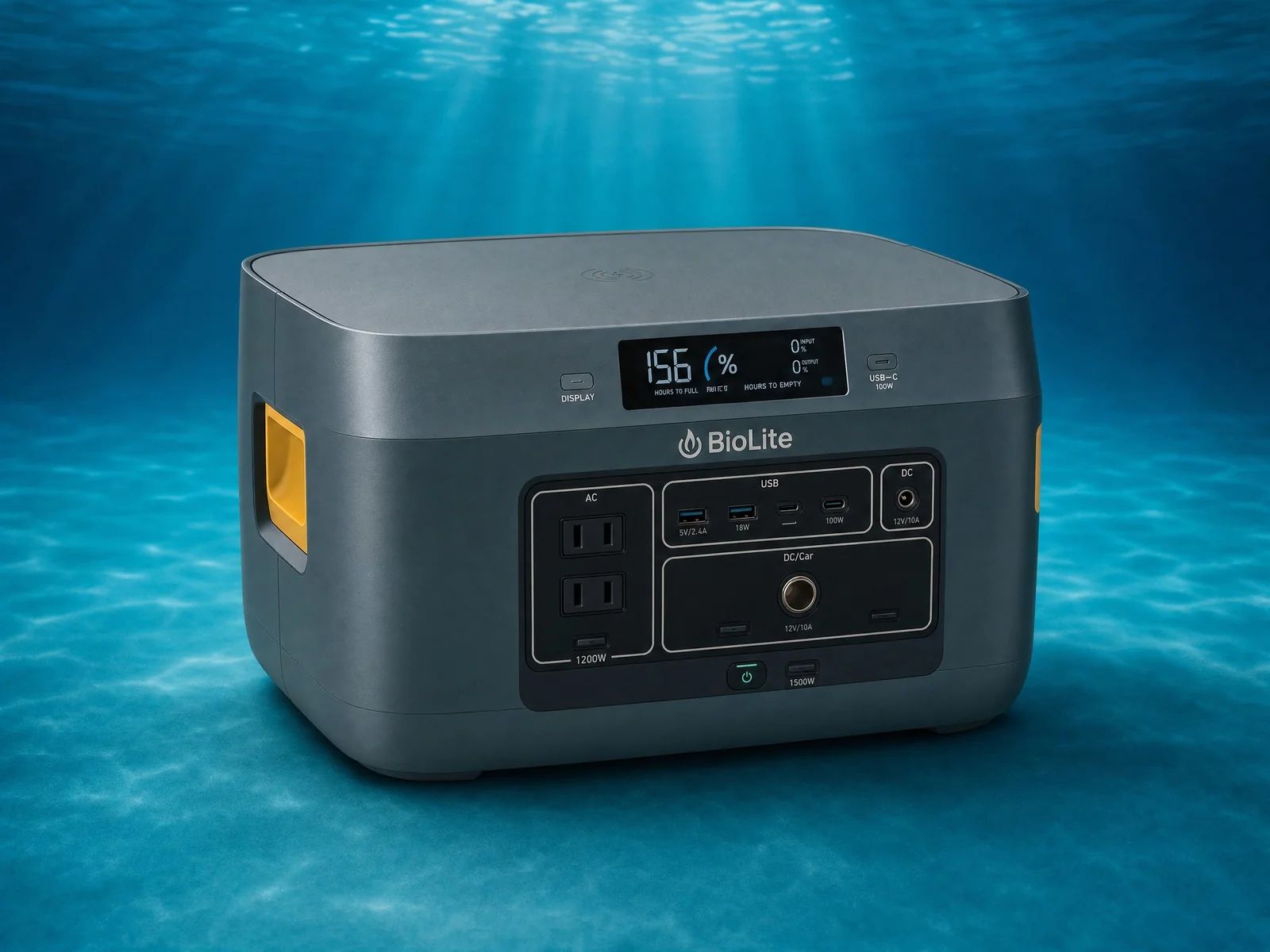
USB connectivity is also well-represented with a 100 W bidirectional USB-C Power Delivery port. This port is useful for quickly charging a recent computer or for recharging the unit itself. Two USB-A ports and a 15 W USB-C port complement the setup for small accessories like focus lights. Finally, a 10 W inductive charging pad located on the top allows you to simply place your phone for cable-free charging.
BioLite has integrated an intelligent dashboard that stands out for its readability. The LED screen displays the incoming and outgoing watts in real time, but more importantly, it offers a resettable energy odometer. This function allows you to precisely measure the amount of energy consumed by a specific device or over a given period, such as a nighttime charging session.This precision is a valuable asset for the expedition leader, who must allocate resources effectively. Knowing exactly how many watt-hours have been injected into the drone batteries allows for anticipating the moment when the base station itself will need to be connected to a charging source.
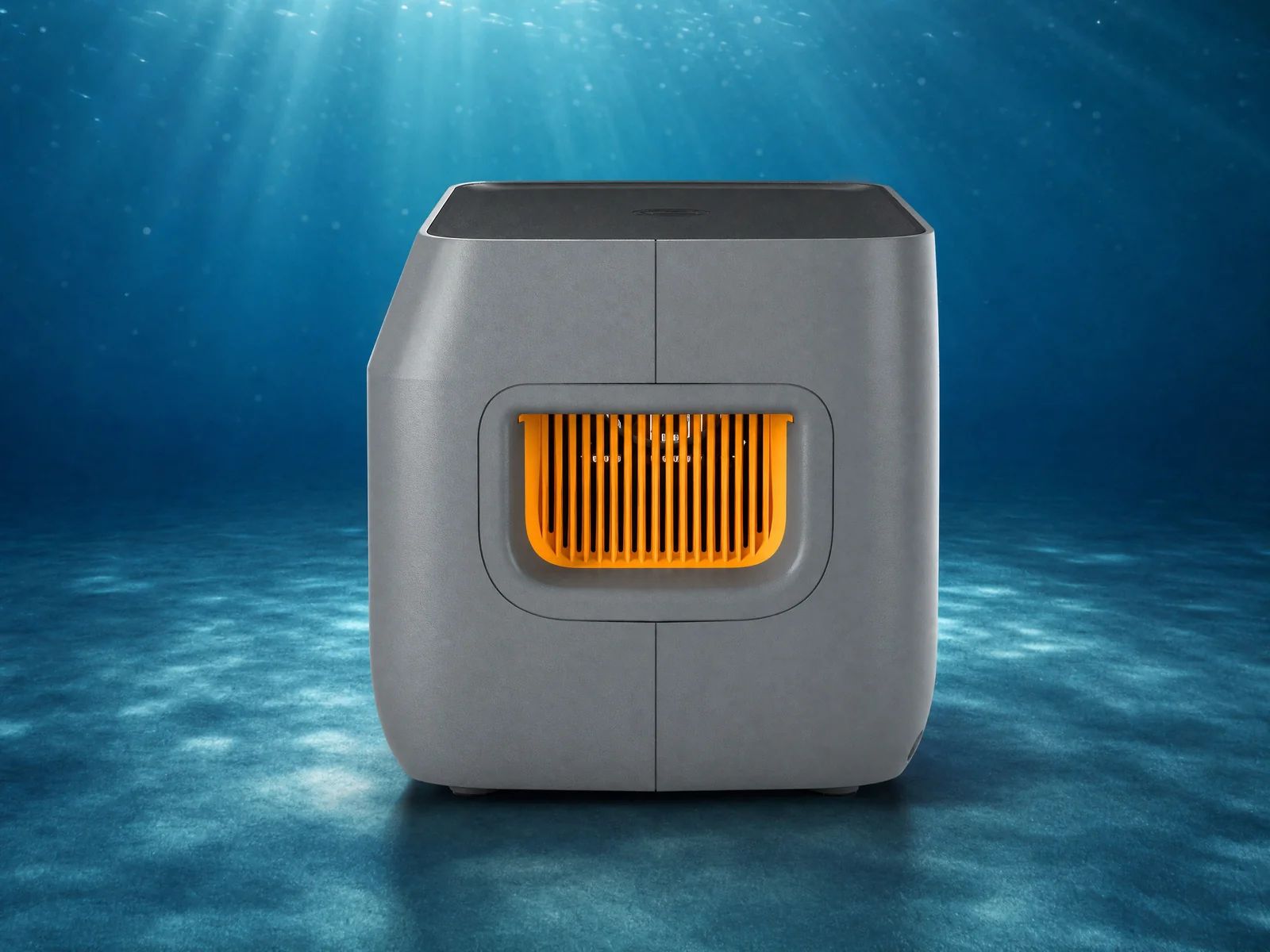
The station's design prioritizes portability. Weighing 5.9 kg, it remains manageable to carry by hand thanks to its ergonomic side handles. Its dimensions of 309 x 200 x 201 mm allow it to fit in the trunk of a vehicle without obstructing the passageway. The robust casing has been tested to withstand drops of one meter, a welcome safety feature in the hustle and bustle of a departure from the shore.
To further enhance its autonomy, the BaseCharge 600 can regenerate power away from any wall outlet. The HPP input supports up to 200 W of solar charging. By using compatible solar panels, it is possible to fully recharge the battery in approximately 3.5 hours under ample sunlight. Charging can also be done in a hybrid mode, combining the wall outlet input and the USB-C PD port to save time when weather windows are short.
Air travel is the major limitation for this equipment. With a capacity of 622 Wh, the BaseCharge 622 significantly exceeds the 100 Wh limit, and even the 160 Wh limit with special permission, set by IATA and FAA regulations. Therefore, it is strictly prohibited both in the cabin and in the cargo hold on commercial passenger flights. To transport it to your dive location, you will need to arrange for shipment via a specialized freight service.Another important piece of information concerns the product's lifespan. BioLite officially stopped production of the BaseCharge 600 during the summer of 2025. While technical support and the warranty will be maintained, this situation necessitates increased vigilance regarding the long-term availability of replacement parts. Finally, remember that the rules of the carrier and the relevant authority always take precedence. The term "compliant" can only be used in direct connection with a verified source at the time of travel.
The equipment should know when to fade into the background, allowing the essentials to take center stage. When the power station hums quietly in a corner of the cabin, silently charging the tools for the next dive, what remains is ultimately what we came for: a change in the light on the horizon, the silence that settles in, and that simple desire to return to the water to capture the beauty of the wild world.