Independent Database • 28 Tested Masks
Scuba Dive Mask Comparator
Compare 28 dive masks by field of view, internal volume, facial skirt fit, and optical lens compatibility.
Direct Answer • Key Takeaway
Choosing a dive mask depends on your facial morphology and diving style. For underwater photography and recreational diving, a single-lens frameless mask provides an expansive, unobstructed field of view. For freediving or deep diving, a low-volume dual-lens mask makes ear equalization effortless. Always perform a strap-free inhalation seal test before buying.
Express Selector in 3 Clicks • Instant Match
Find Your Perfect Scuba Mask in 3 Quick Choices
Answer 3 simple questions about your facial shape and diving style to instantly surface the best matching masks from our 28 tested models.
1. Facial Shape
2. Field of View & Use
3. Main Priority
Top 3 Recommended Masks for You
Based on 28 tested models#1 Recommendedtech
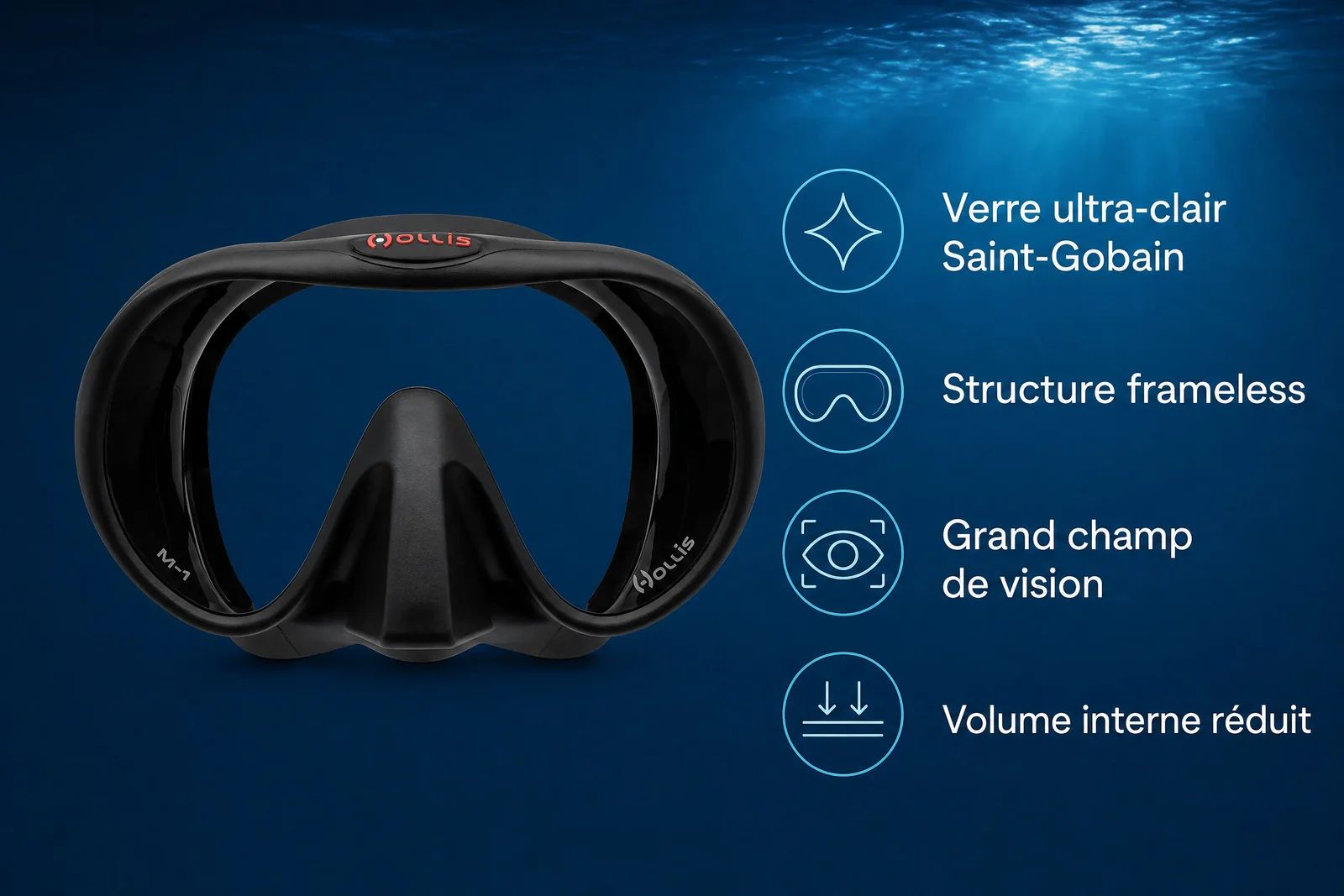
Hollis
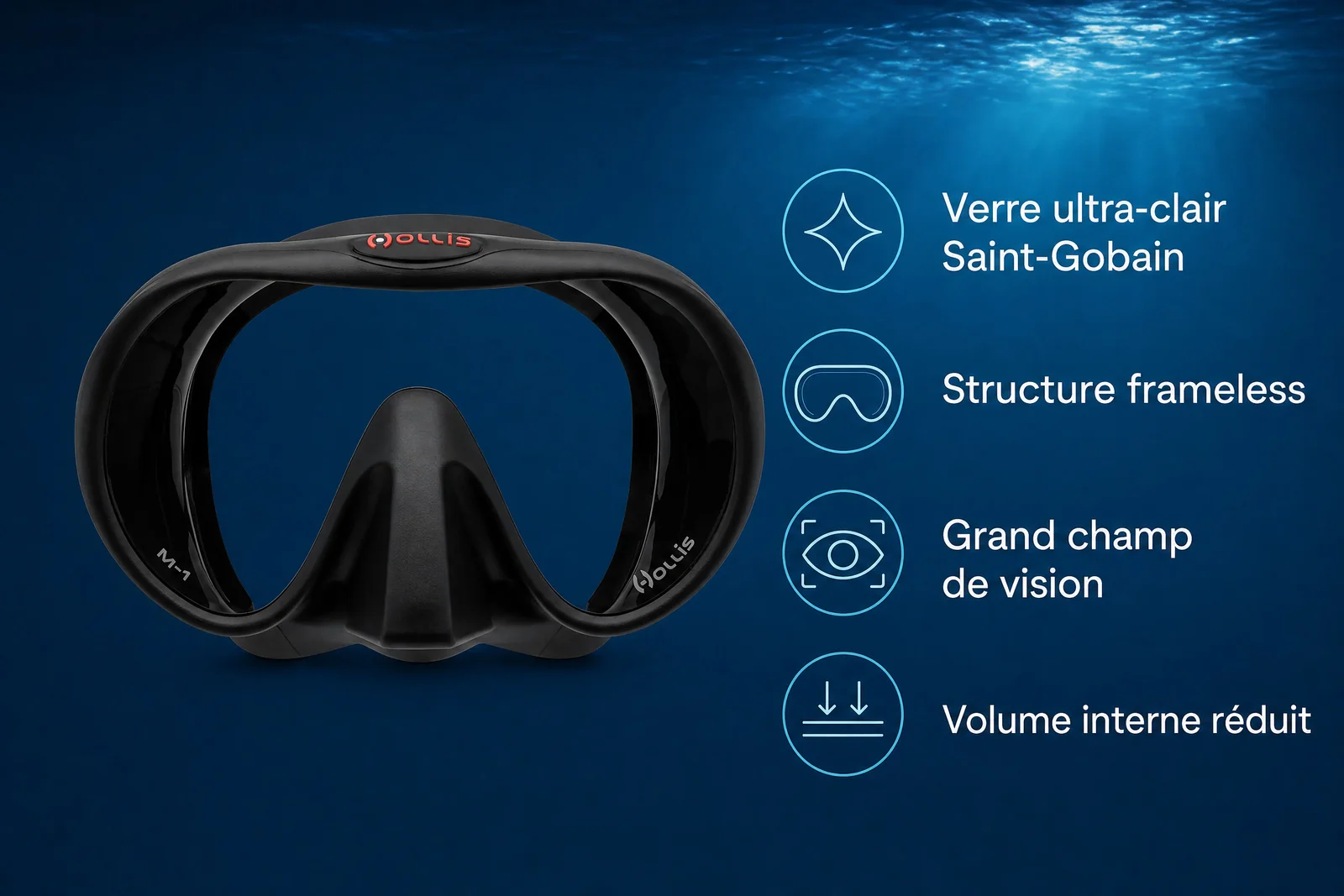
M1
Le masque Hollis M1 s’impose comme une référence incontournable en configuration technique et loisir grâce à son mono-verre frameless en verre ultra-clair Saint-Gobain et son volume réduit. Offrant une clarté optique remarquable et un confort accru, il convient à une large majorité de visages. Bien qu’aucun masque ne garantisse une étanchéité universelle, son positionnement tarifaire et sa robustesse en font un choix d’achat particulièrement sûr.
Type :Mono-verre frameless
Glass :Saint-Gobain Diamant ultra-clair
Est. Price :85–107 €
Overall Score :4.53 / 5
#2 Recommendedtech
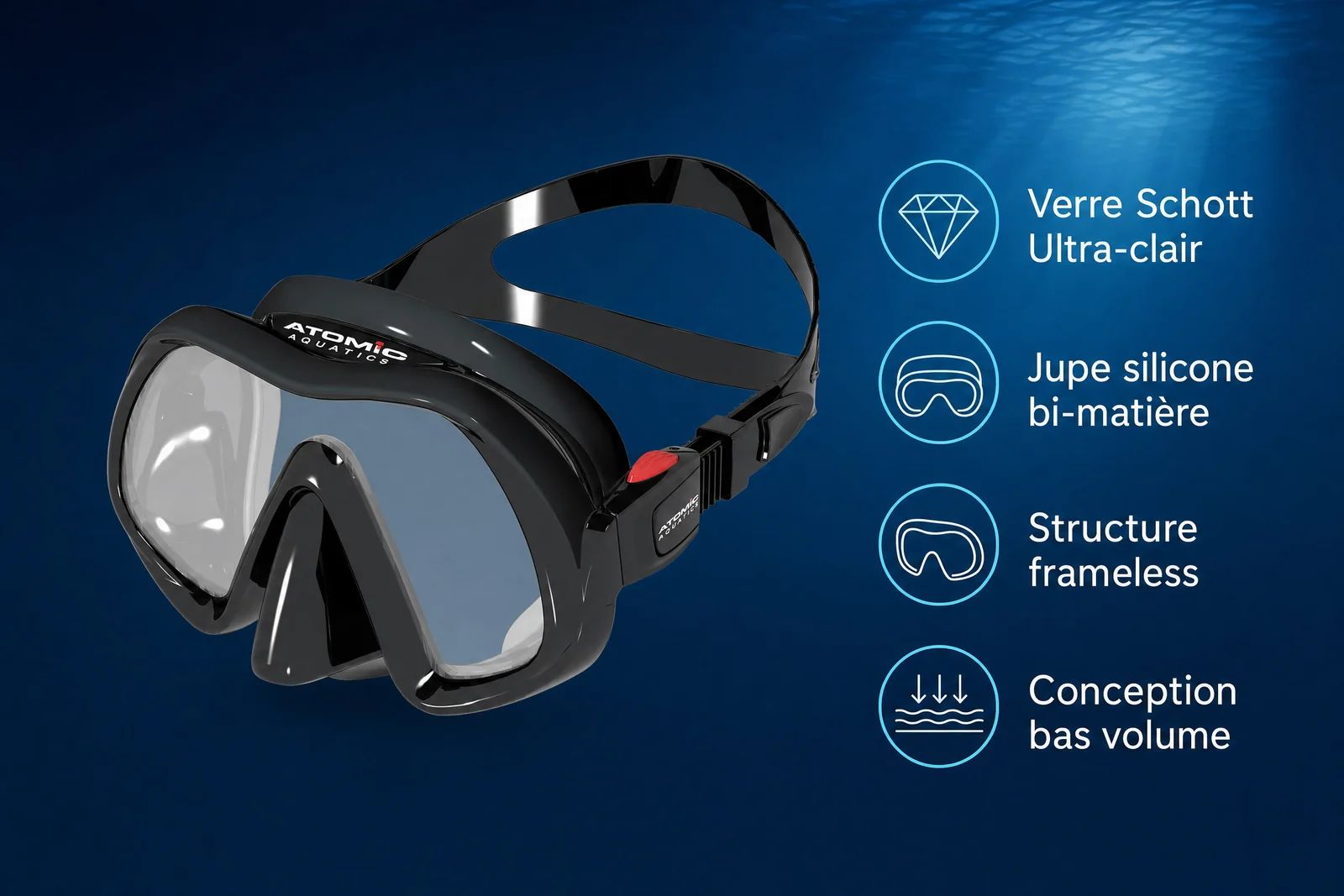
Atomic Aquatics
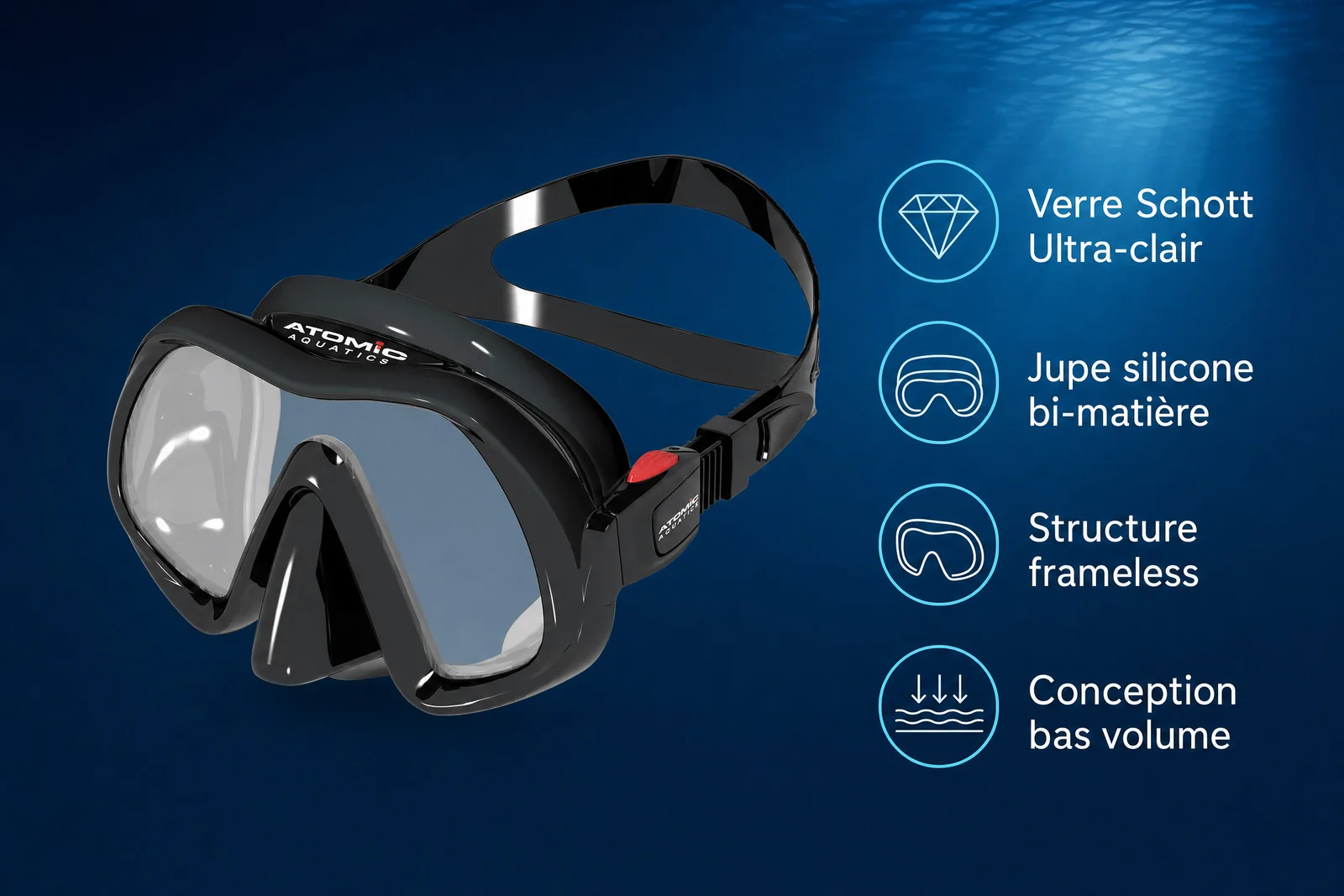
Venom Frameless
L'Atomic Aquatics Venom Frameless s'impose comme un masque technique haut de gamme de référence, combinant un verre optique Schott Superwhite à haute transmission lumineuse et une jupe co-moulée à double dureté offrant un confort remarquable. Bien que son positionnement tarifaire soit élevé et que l'étanchéité reste dépendante de la morphologie faciale de chaque plongeur, ses prestations optiques et sa stabilité structurelle en font un choix privilégié pour la plongée technique.
Type :Mono-verre frameless
Glass :Schott Superwhite ultra-clair, transmission annoncée 96 %
Est. Price :177–180 €
Overall Score :4.35 / 5
#3 Recommendedtech
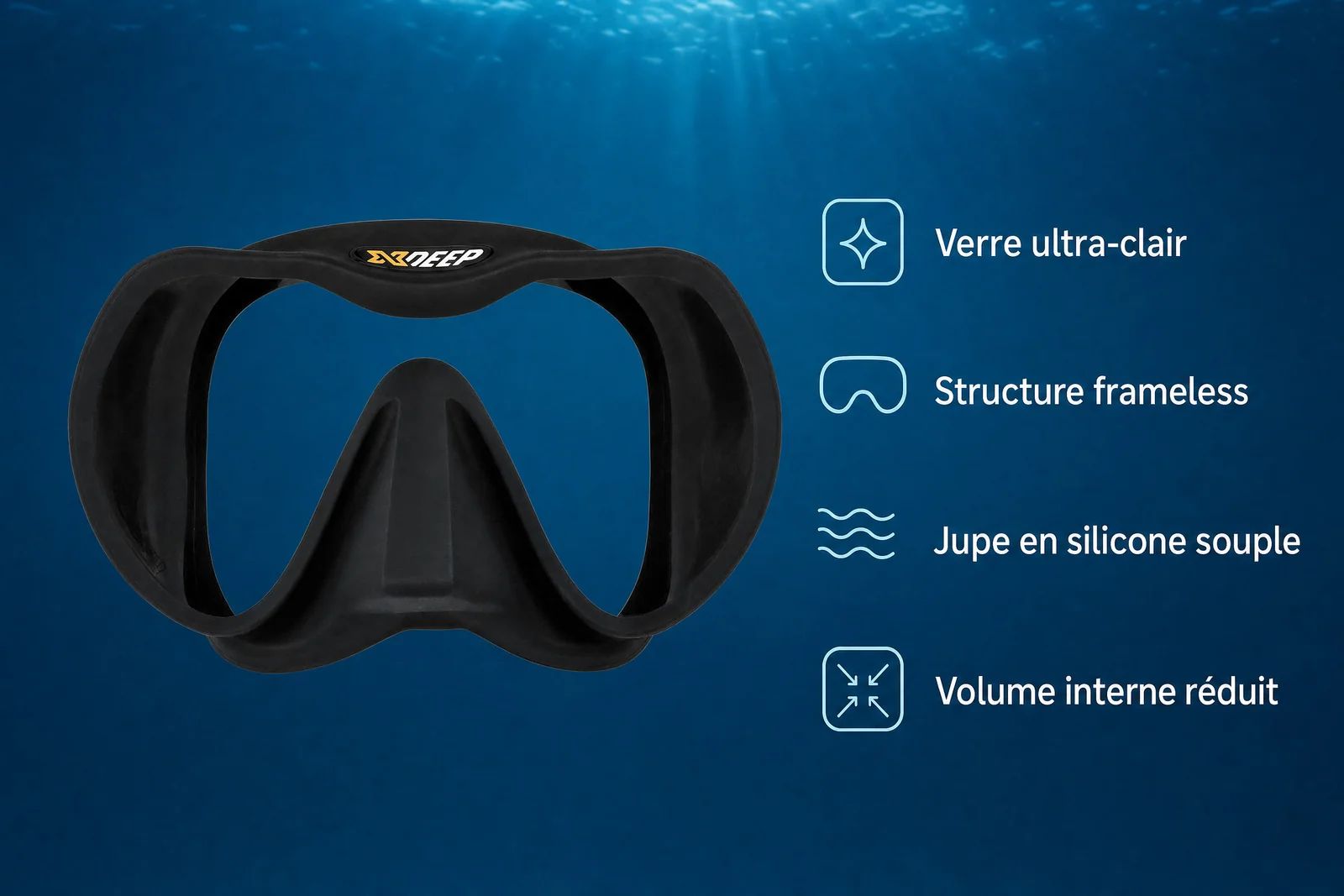
XDEEP
Radical Frameless L
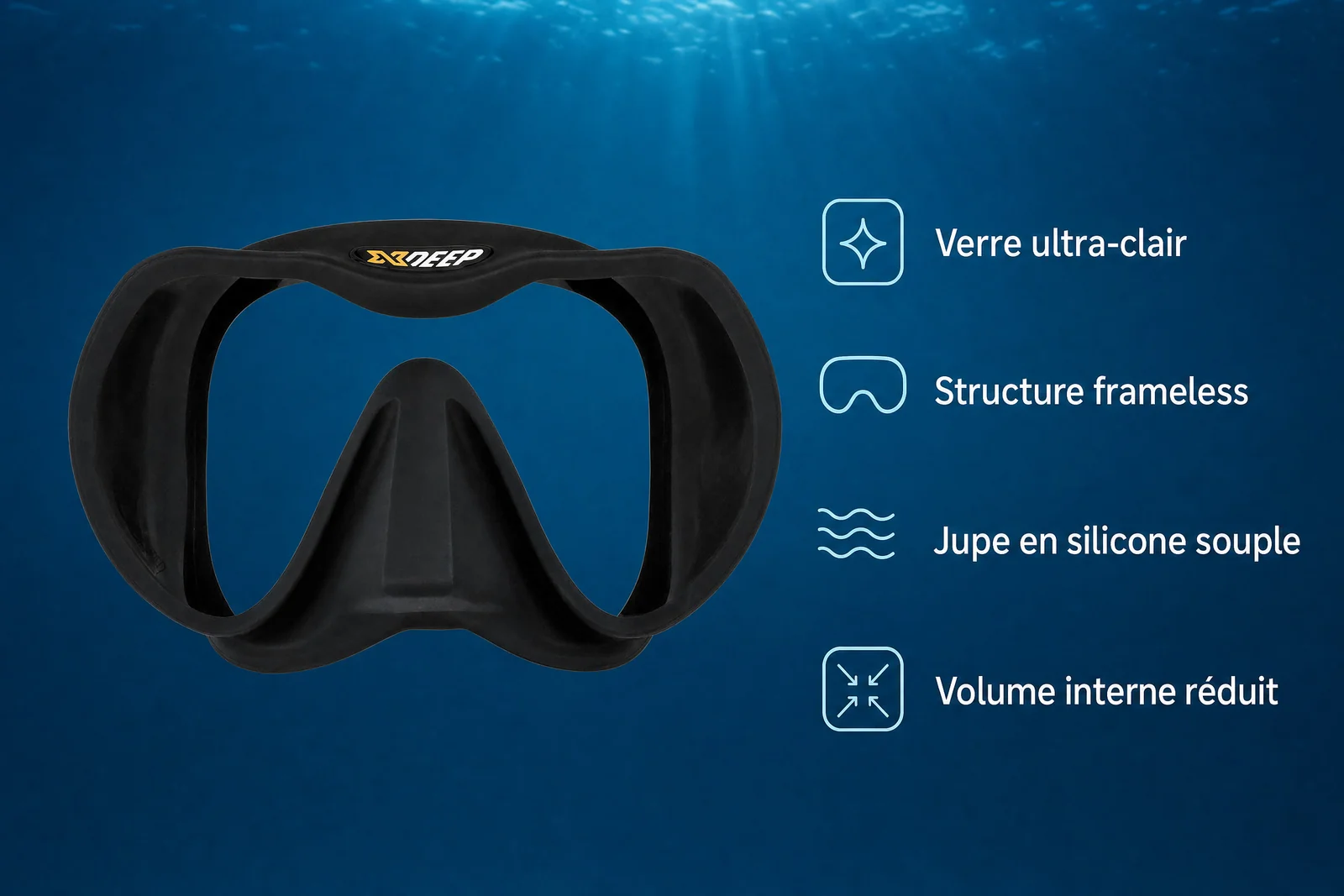
Le masque XDEEP Radical Frameless L s’impose comme un choix technique de premier plan pour les plongeurs recherchant un champ de vision maximal, un verre ultra-clair sans distorsion chromatique et une ergonomie pensée pour les gants épais. Son volume interne réduit et son espace nasal optimisé facilitent l'égalisation, bien que l'étanchéité reste dépendante de la morphologie faciale individuelle.
Type :Mono-verre frameless
Glass :Clair ultra-clair sans oxyde de fer
Est. Price :75 €
Overall Score :4.24 / 5
Technical Directory of the 28 Referenced Dive Masks
Consolidated specifications audited under the AquaExposure M1-M7 protocol.
| Model | Brand | Category | Lens Type | Volume | Optical | Est. Price | Score |
|---|---|---|---|---|---|---|---|
| Radical Frameless L | XDEEP | tech | Mono-verre frameless | Minimal, non chiffré | - | 75 € | 4.24 / 5 |
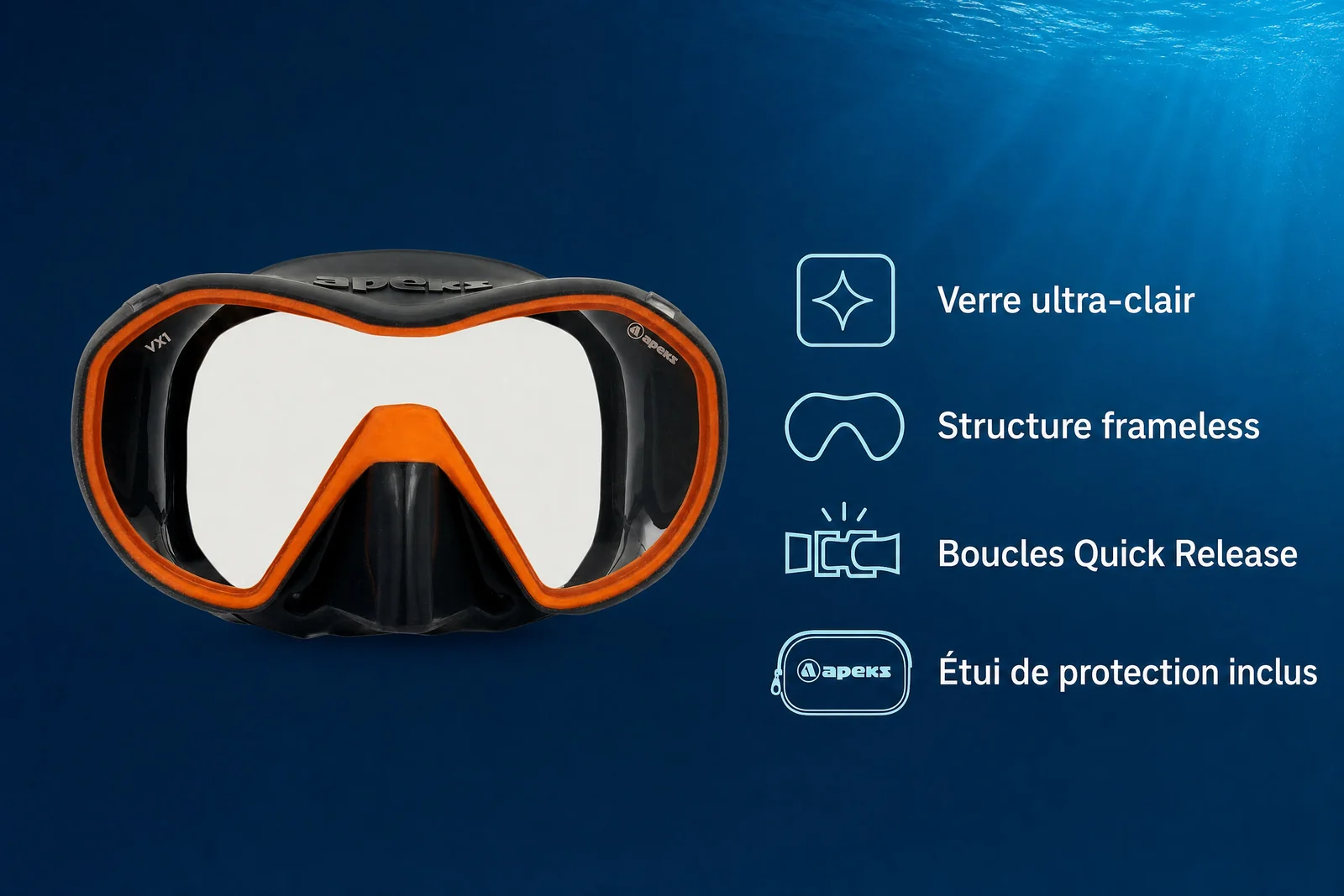
| VX1 | Apeks | tech | Mono-verre frameless | Faible, non chiffré | - | 89,95 € | 4.38 / 5 |
| VX2 | Apeks | tech | Mono-verre à cadre | Non chiffré | - | 179 € | 4.08 / 5 |
| Venom Frameless | Atomic Aquatics | tech | Mono-verre frameless | Non chiffré | - | 177–180 € | 4.35 / 5 |
| M1 | Hollis | tech | Mono-verre frameless | Non chiffré | - | 85–107 € | 4.53 / 5 |
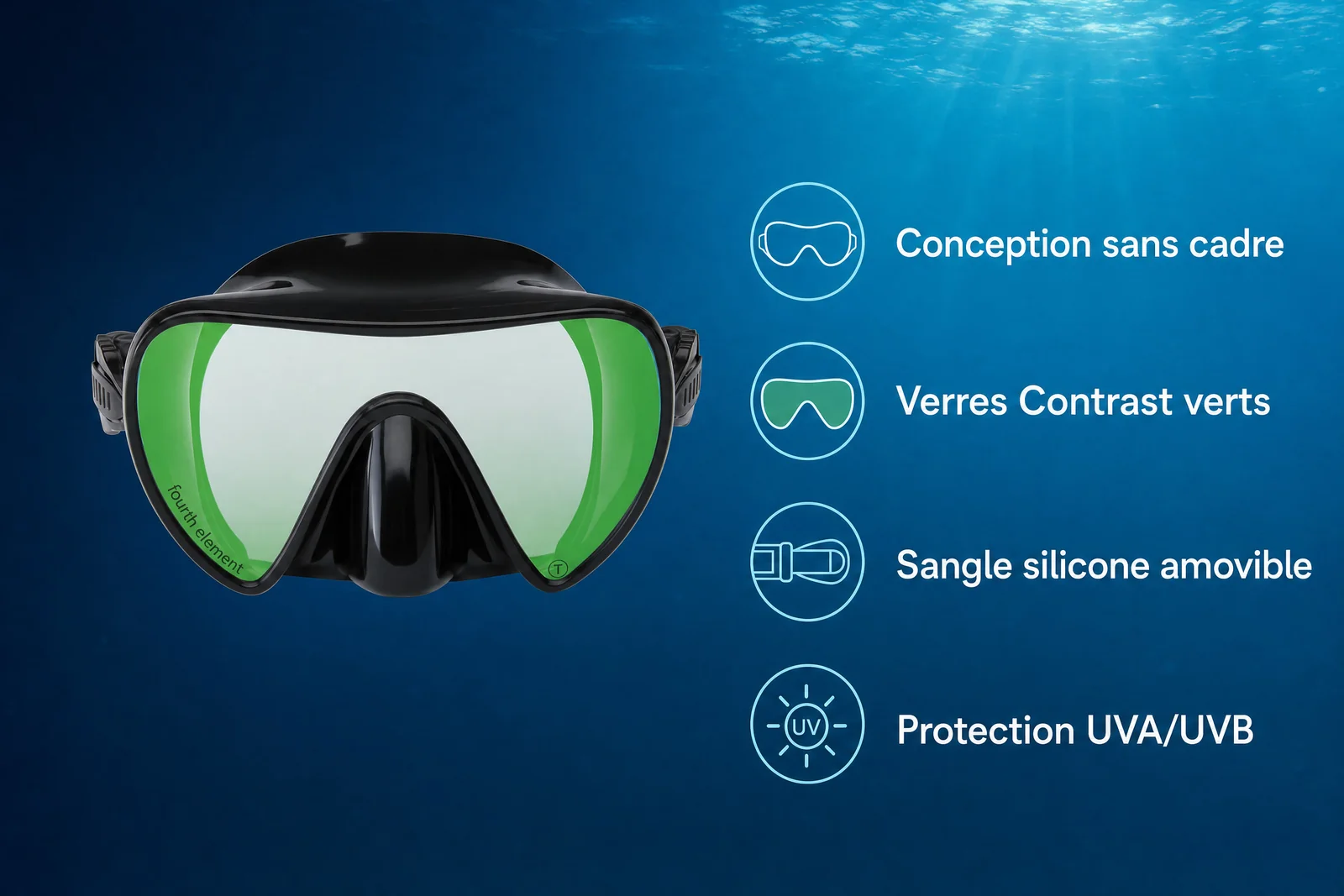
| Scout Contrast | Fourth Element | tech | Mono-verre frameless | Non chiffré | - | 123 € constaté chez Diving2000 | 4.03 / 5 |
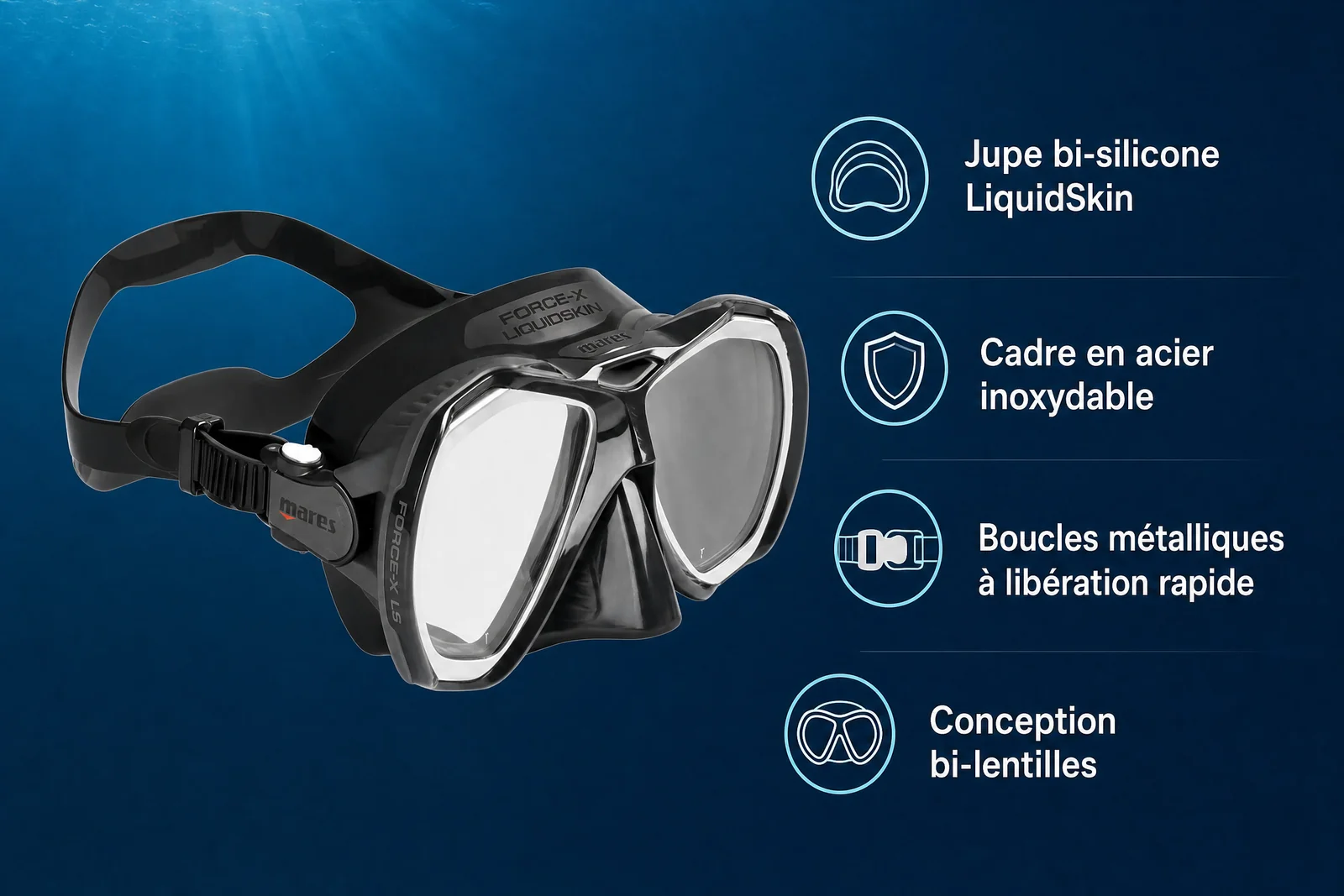
| Force-X LS | Mares | tech | Bi-verre | Non chiffré | Yes | 149–179 € constatés | 4.4 / 5 |
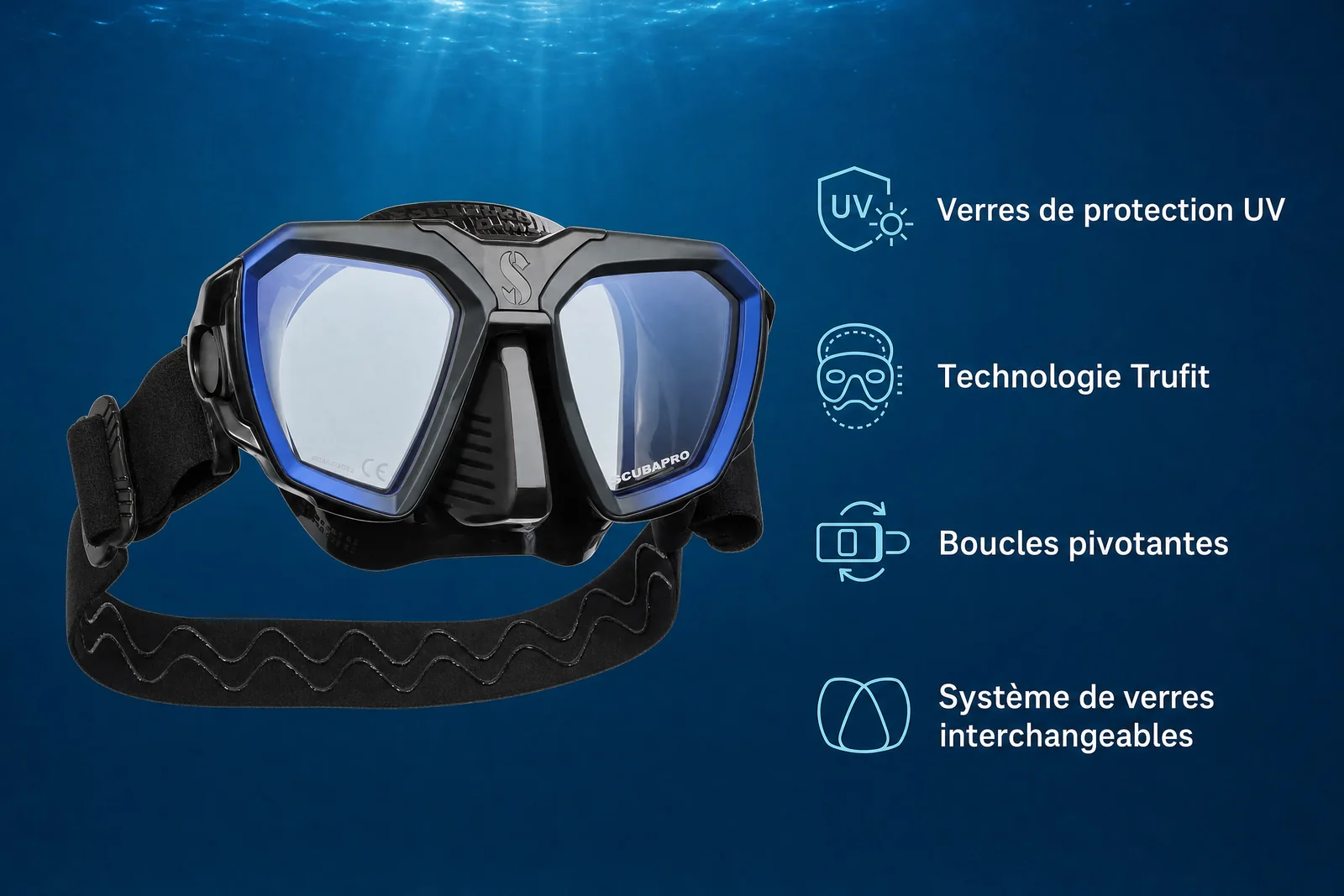
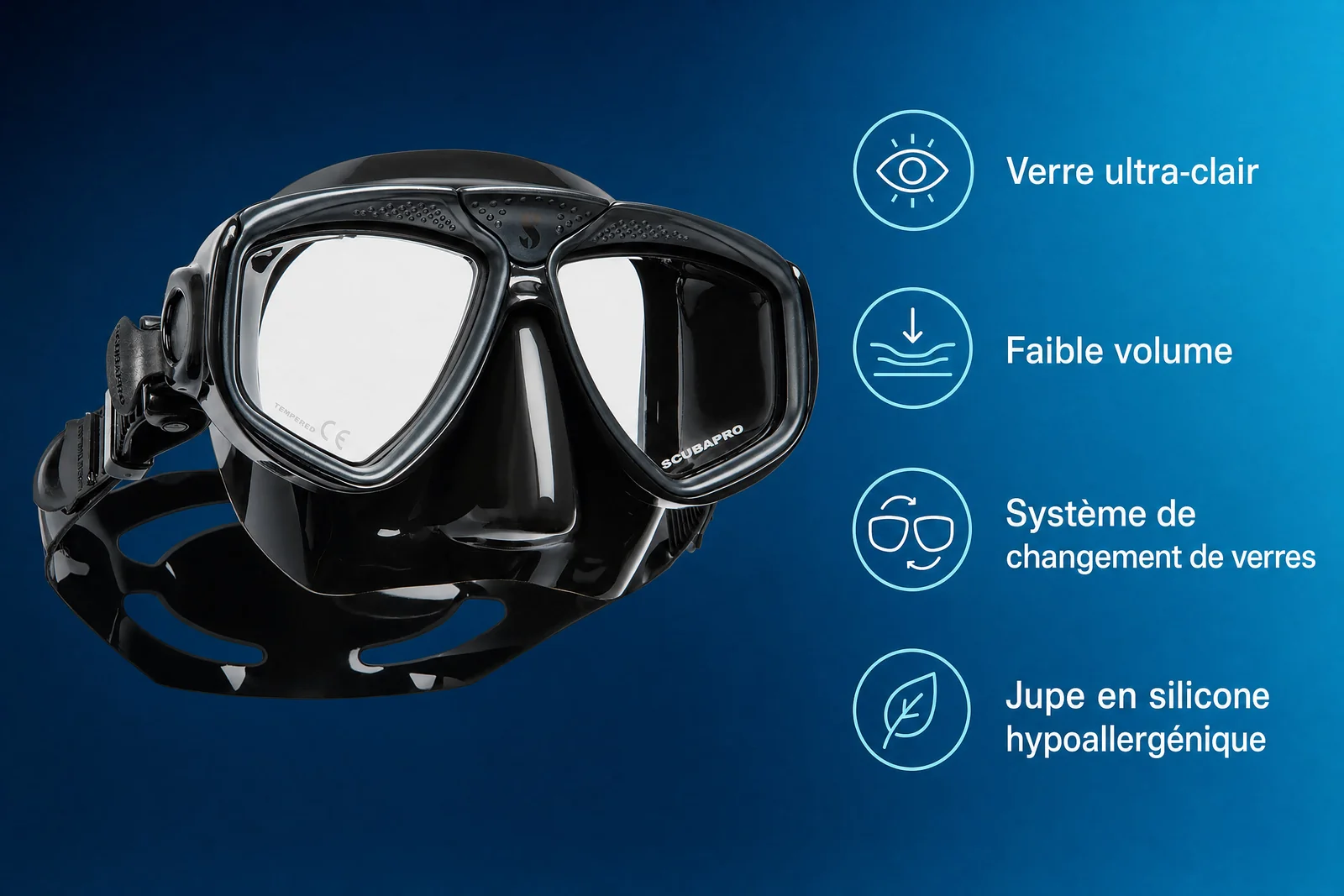
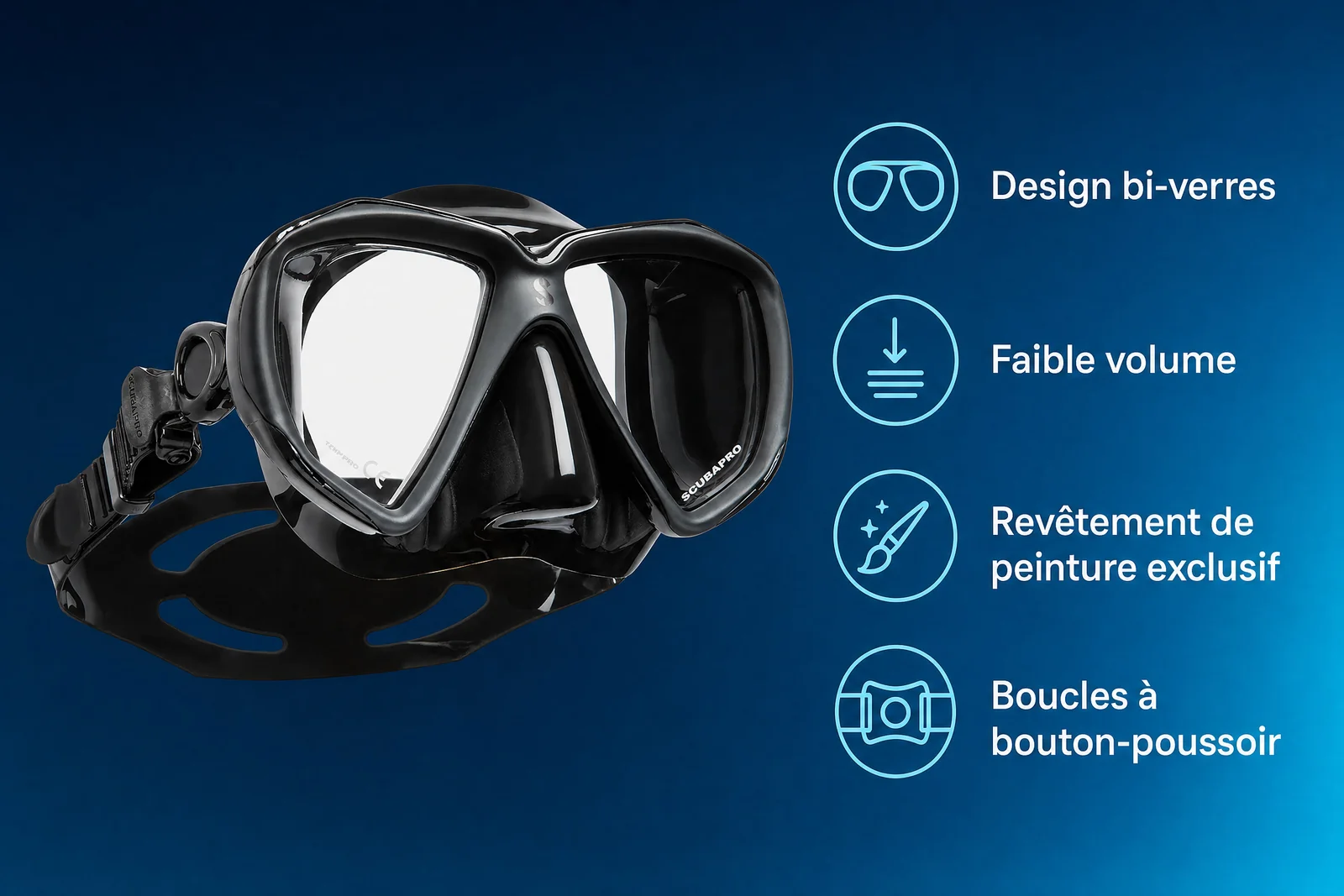
| D-Mask | Scubapro | tech | Bi-verre | Non chiffré | Yes | 129–175 € | 4.28 / 5 |
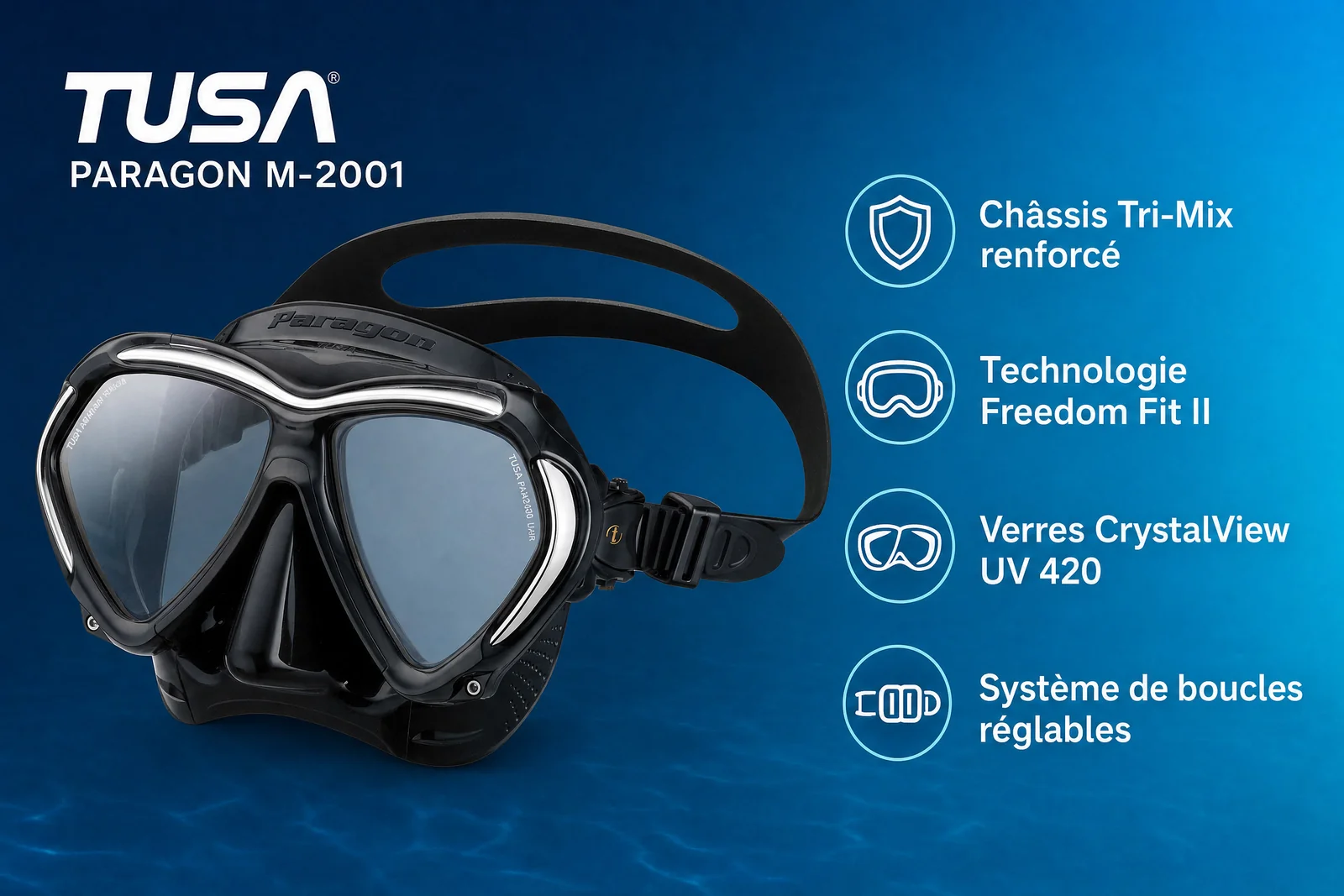
| Paragon M-2001 | TUSA | loisir | Bi-verre | Non chiffré | Yes | 229 € | 4.34 / 5 |
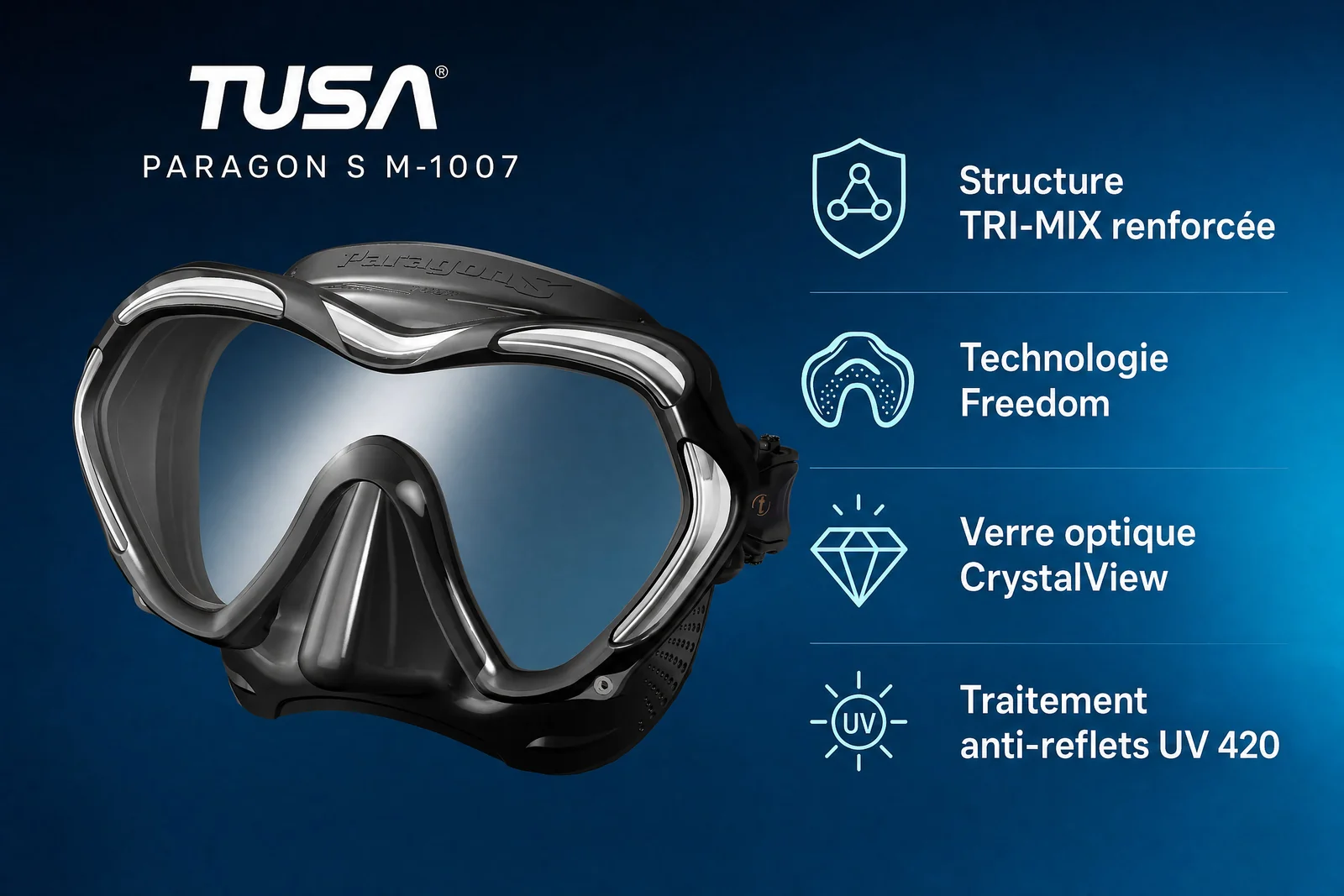
| Paragon S M-1007 | TUSA | loisir | Mono-verre | Non chiffré | - | 229 € | 4.37 / 5 |
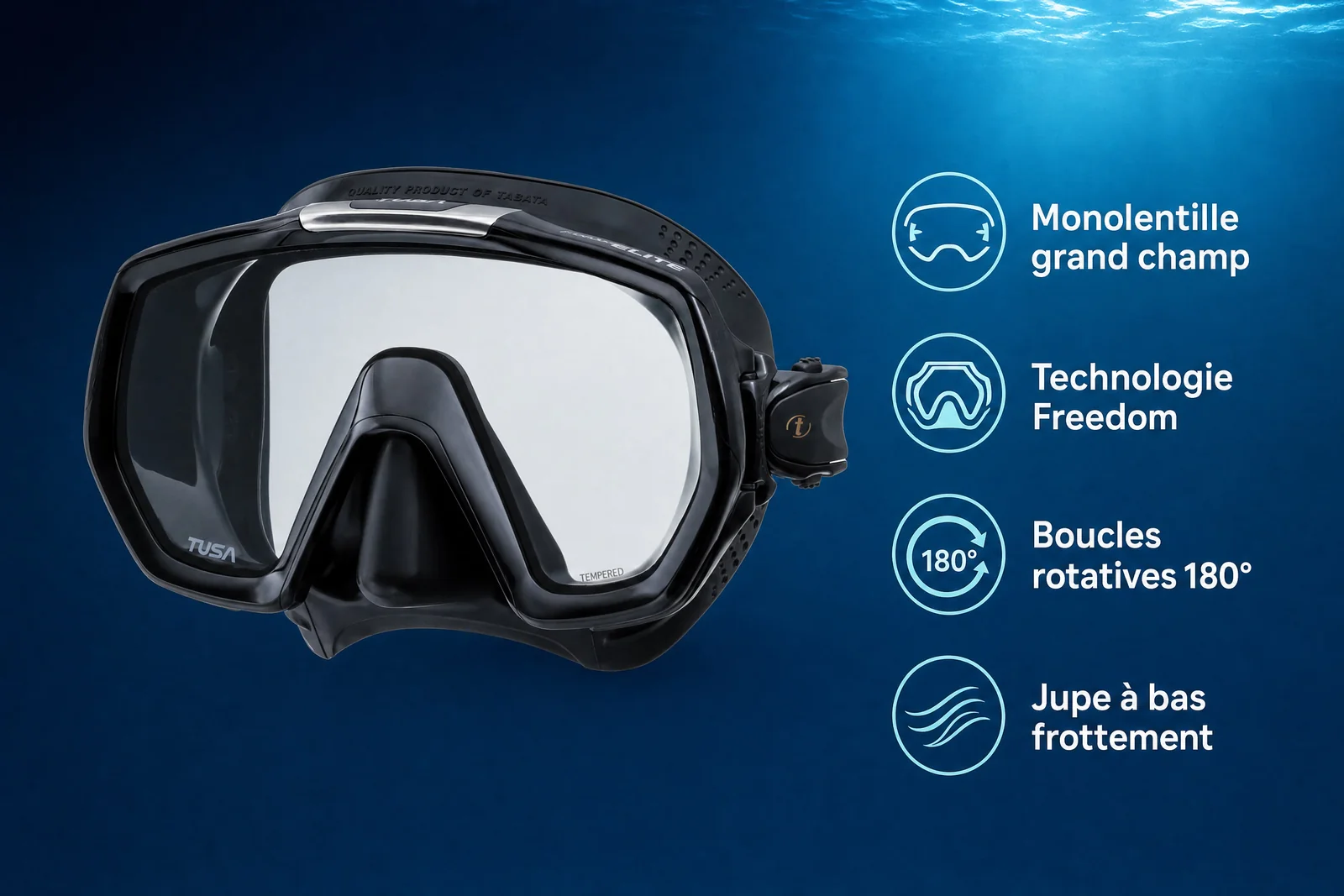
| Freedom Elite M-1003 | TUSA | loisir | Mono-verre | Réduit, non chiffré | - | 79–95 € | 4.24 / 5 |
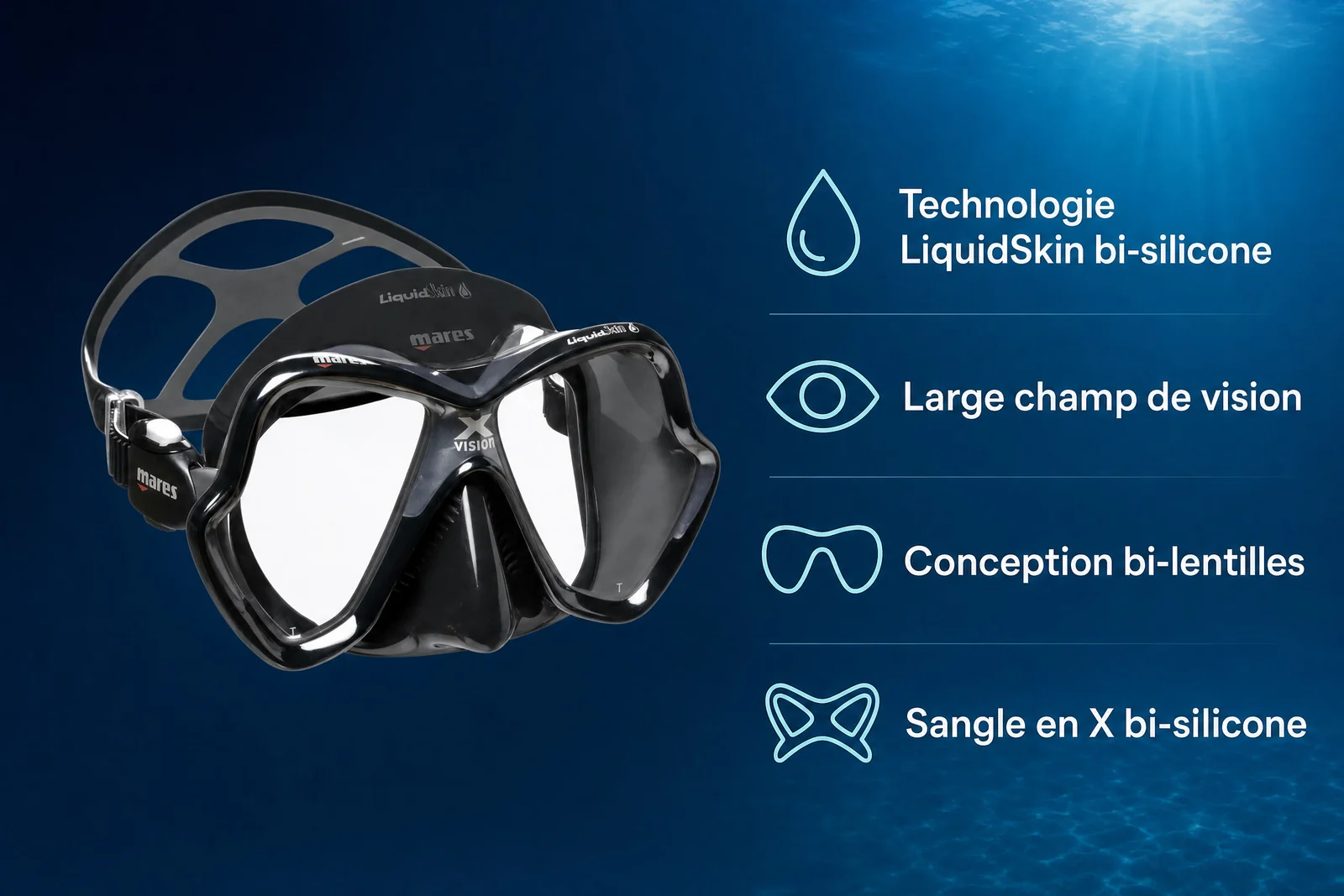
| X-Vision Ultra LiquidSkin | Mares | loisir | Bi-verre | Standard | Yes | 55 € constaté version claire | 4.14 / 5 |
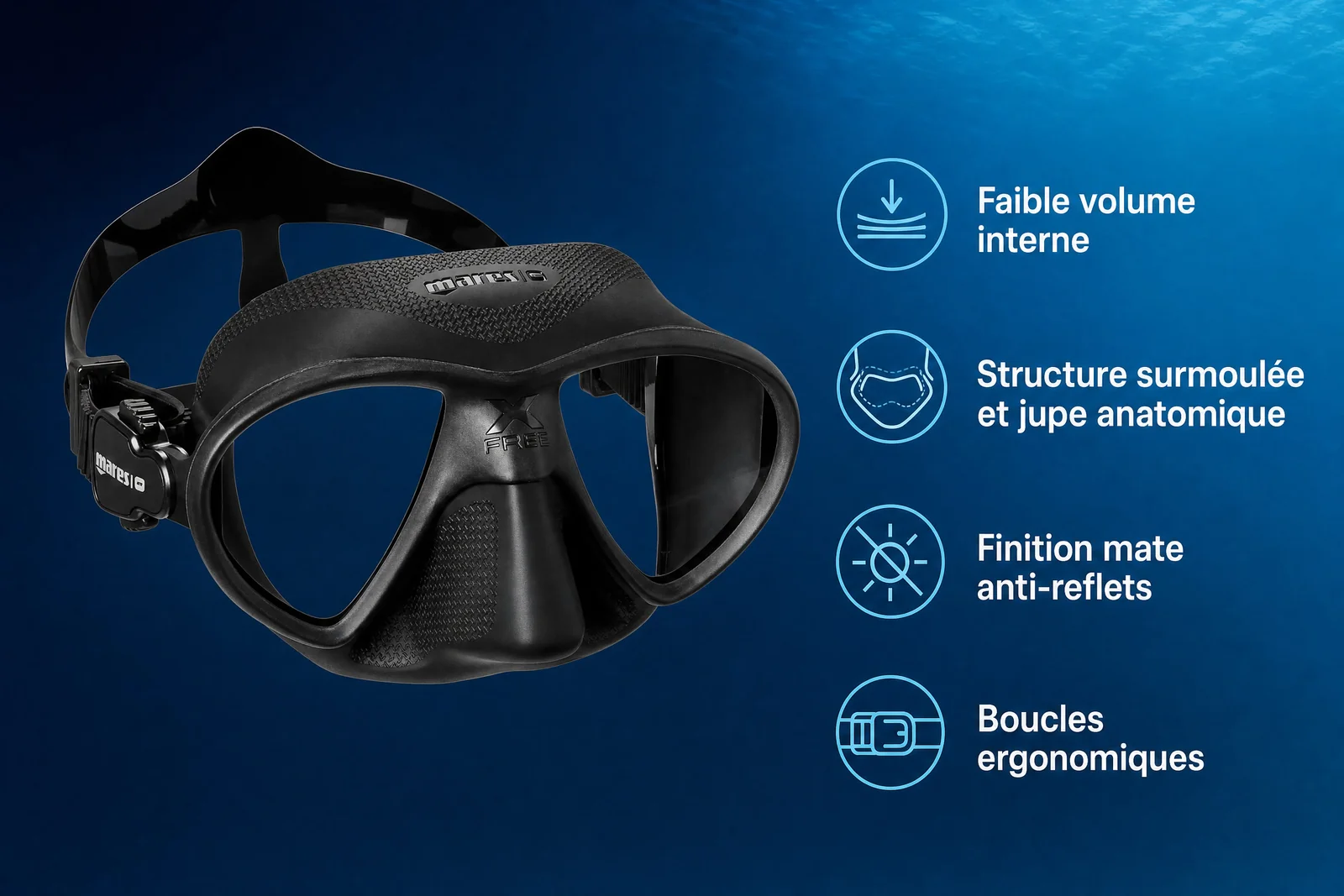
| X-Free | Mares | apnee | Bi-verre | < 80 cm³ | - | 41–59 € | 4.15 / 5 |
| Zoom EVO | Scubapro | loisir | Bi-verre | Faible | Yes | 51–69 € constatés France ; 99 USD fiche fabricant | 4.17 / 5 |
| Spectra | Scubapro | loisir | Bi-verre | Standard | Yes | 43 € constaté | 3.98 / 5 |
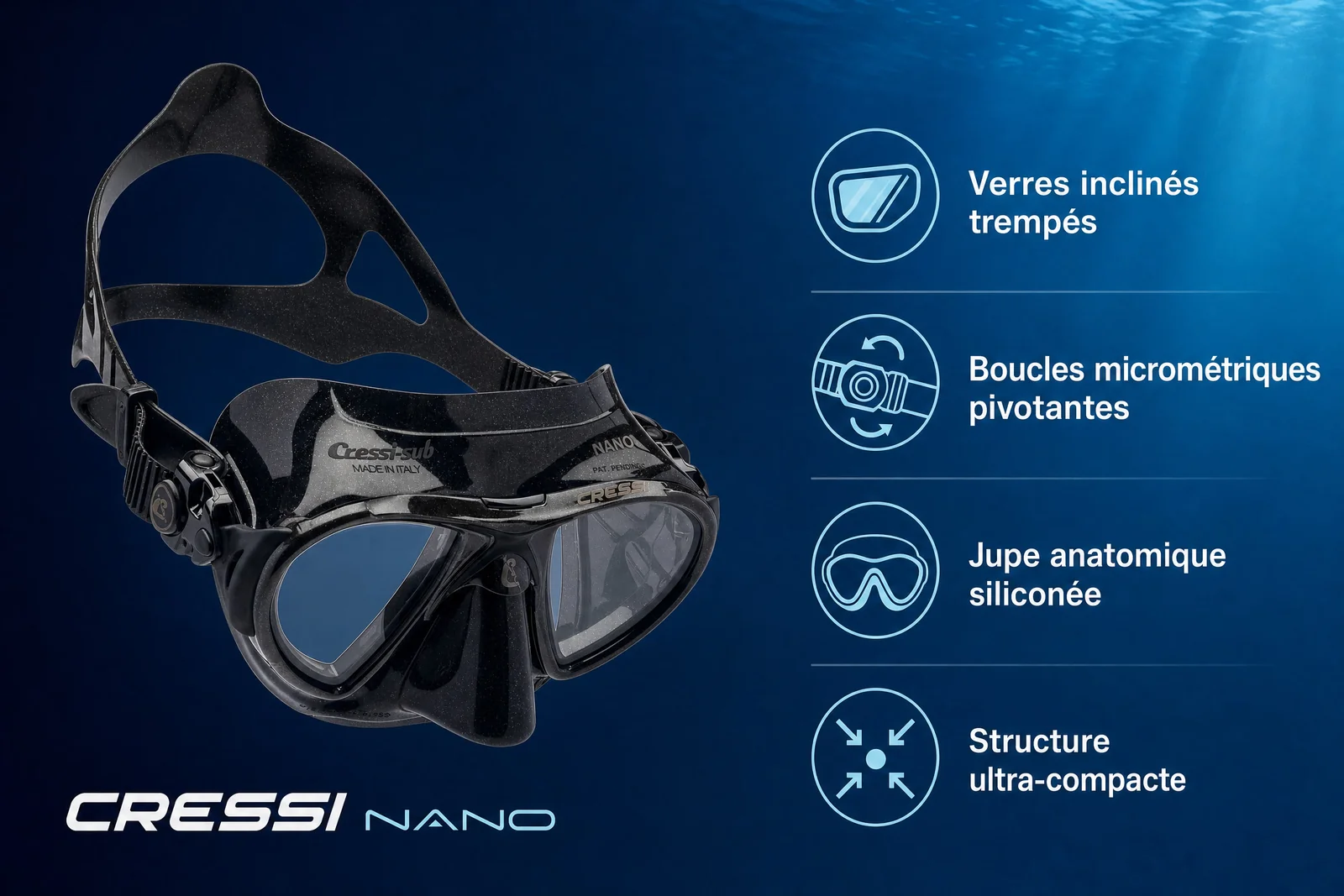
| Nano | Cressi | apnee | Bi-verre | 85 cm³ | - | 56–90 € | 4.1 / 5 |
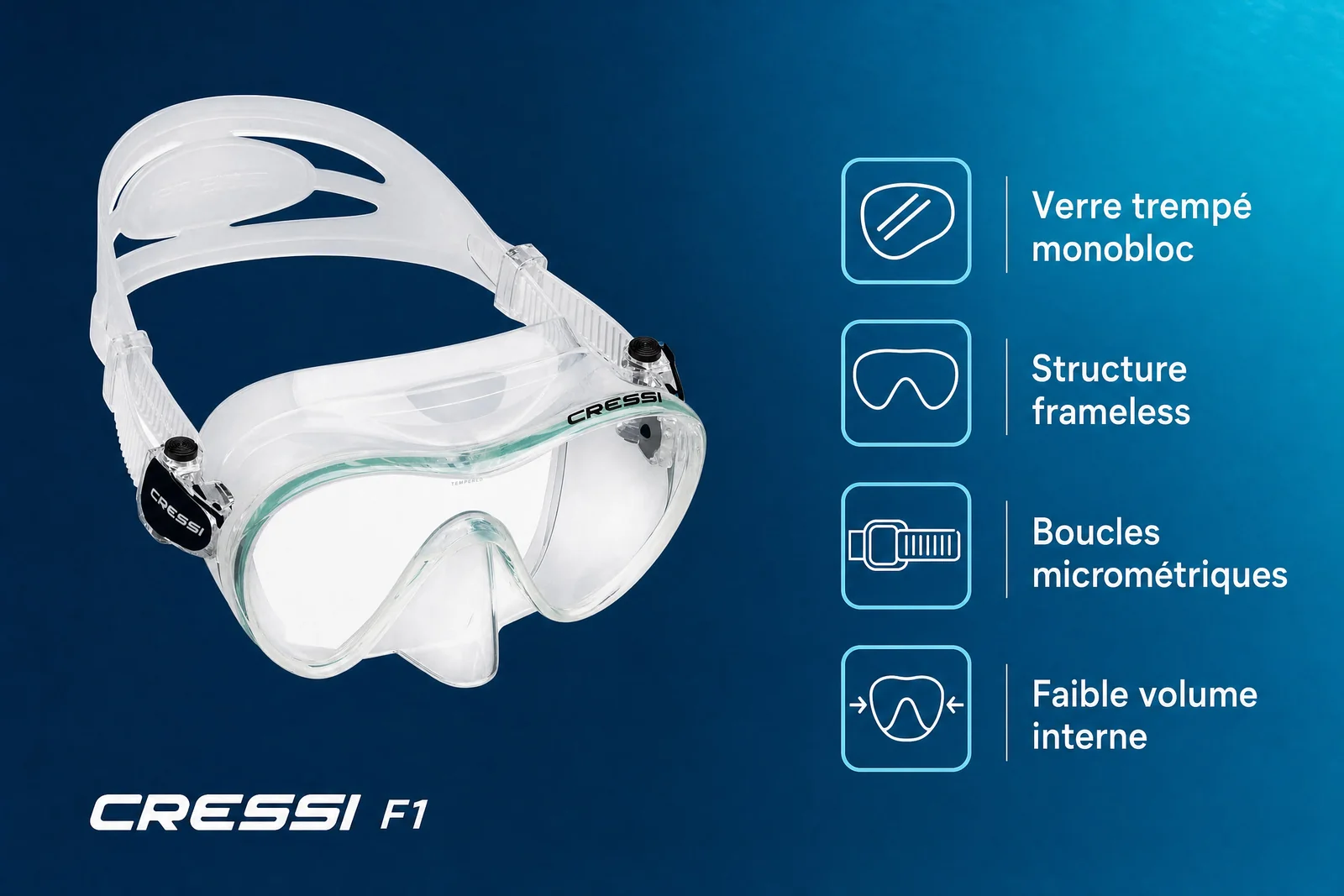
| F1 | Cressi | loisir | Mono-verre | Standard selon vendeur | - | 36,90 € constaté | 4.15 / 5 |
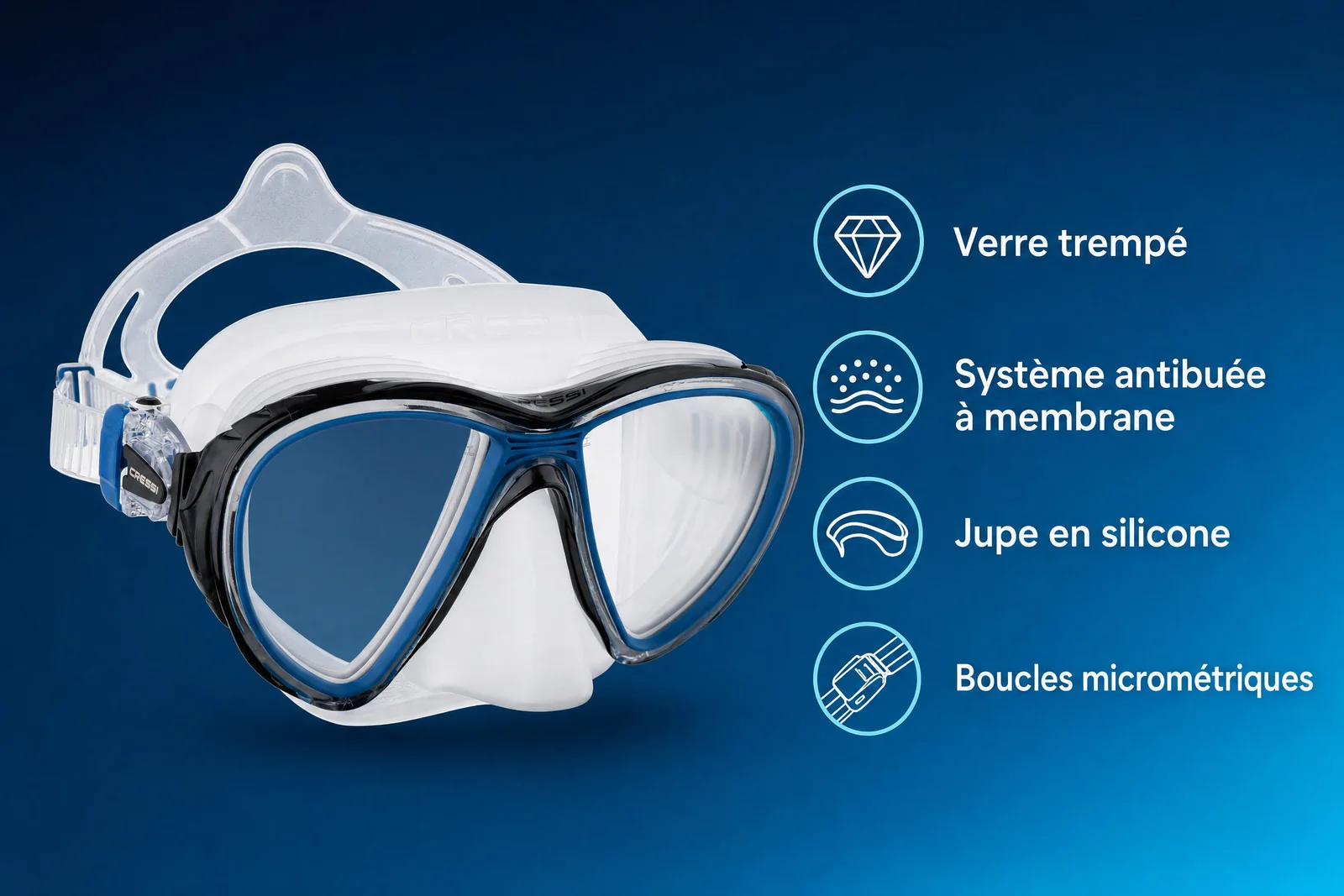
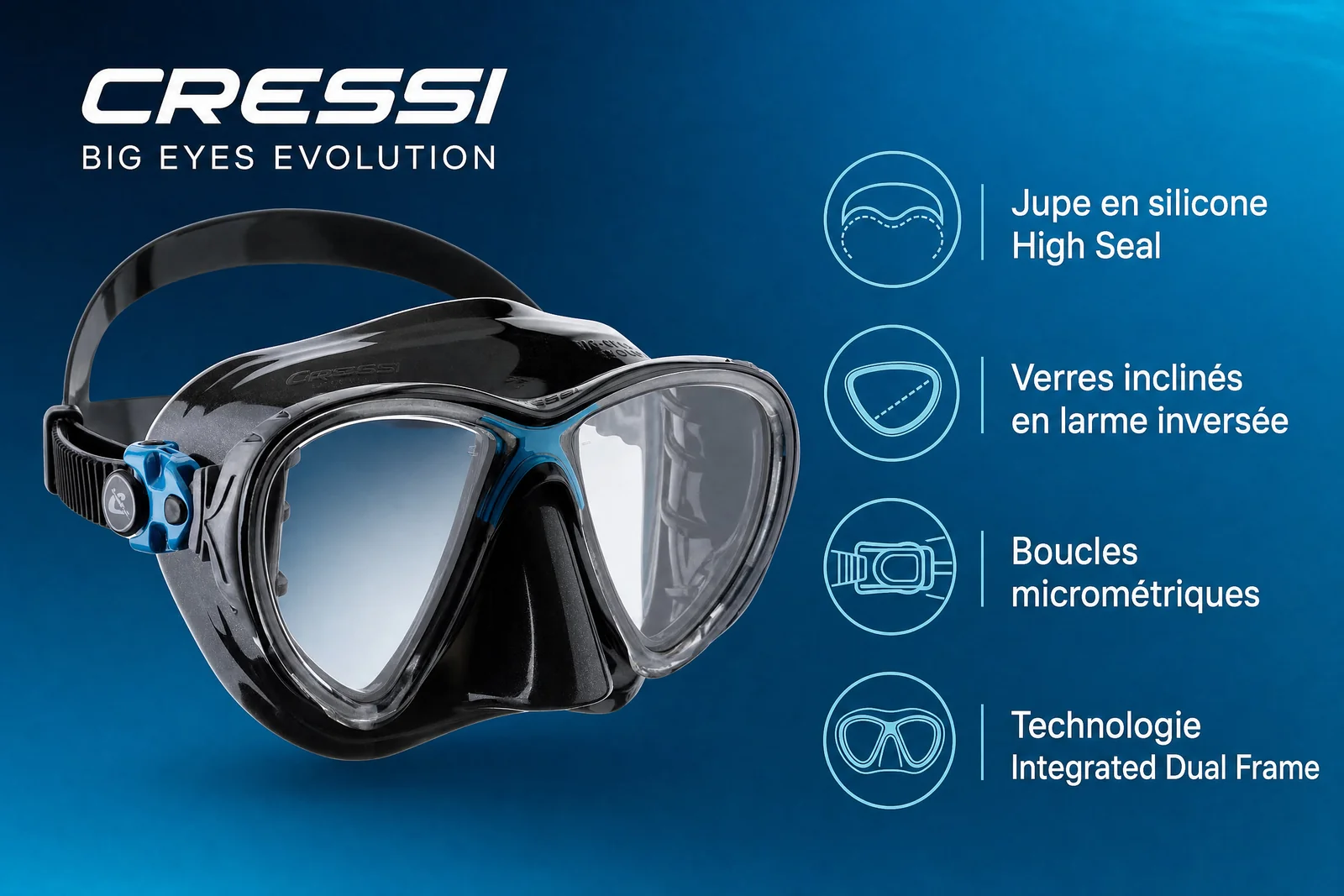
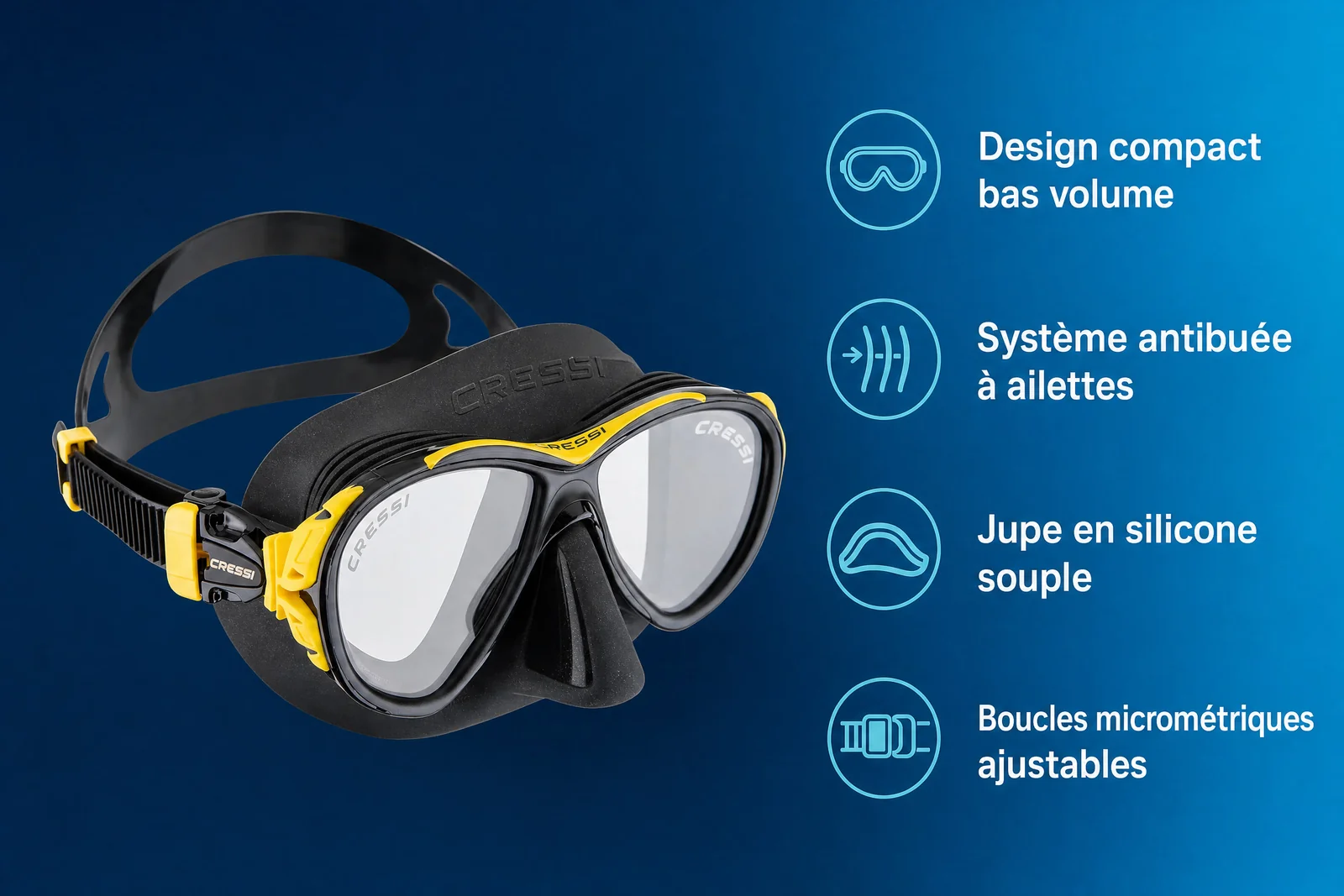
| Big Eyes Evolution | Cressi | loisir | Bi-verre | Réduit selon vendeur | Yes | 45,99 € constaté | 4.18 / 5 |
| Quantum | Cressi | loisir | Bi-verre | Non chiffré | Yes | 79–120 € | 4.4 / 5 |
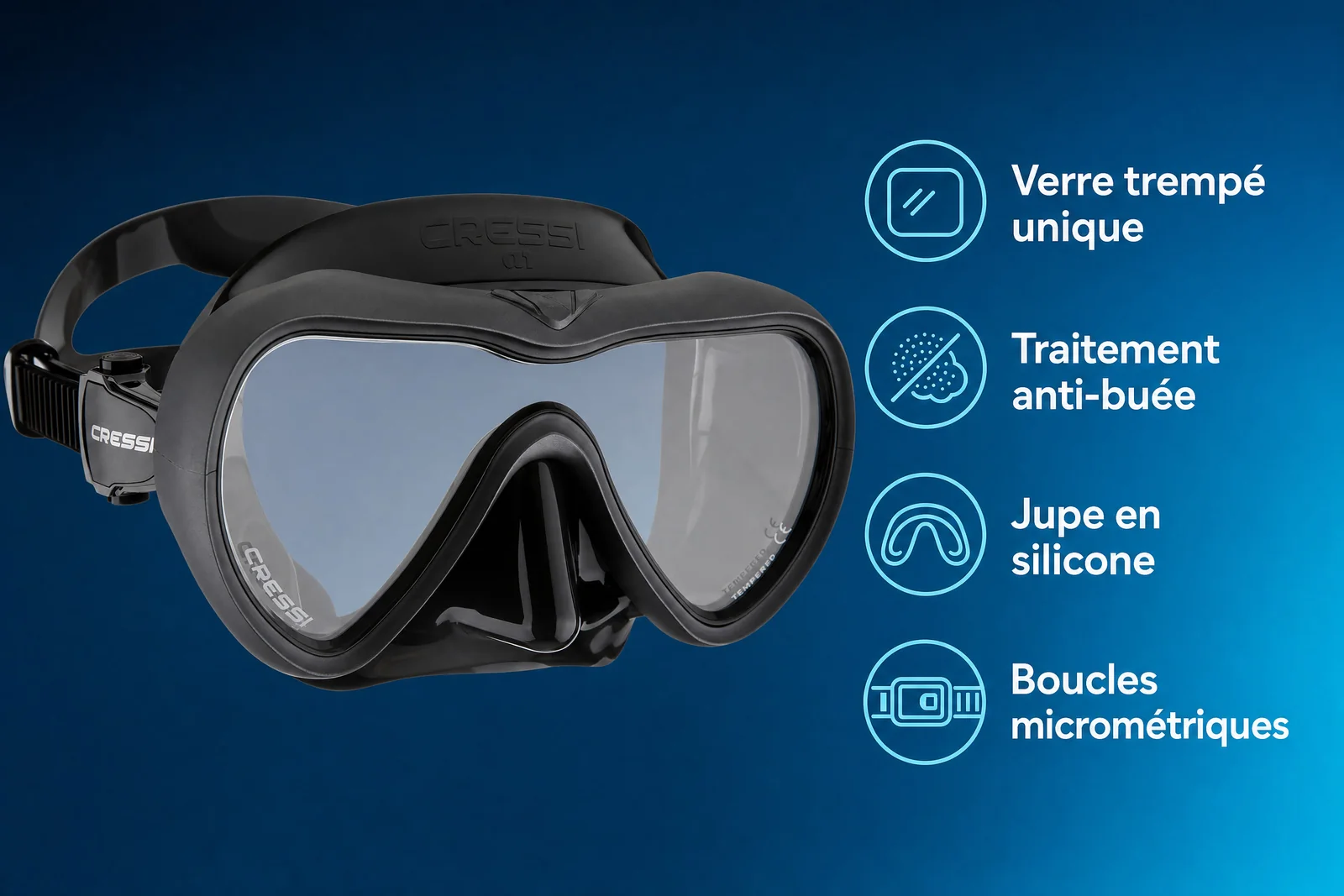
| A1 anti-buée | Cressi | loisir | Mono-verre | Standard selon vendeur | - | 119 € constaté | 4 / 5 |
| Naxos | Cressi | loisir | Bi-verre | Standard selon vendeur | - | 85 € constaté | 4.05 / 5 |
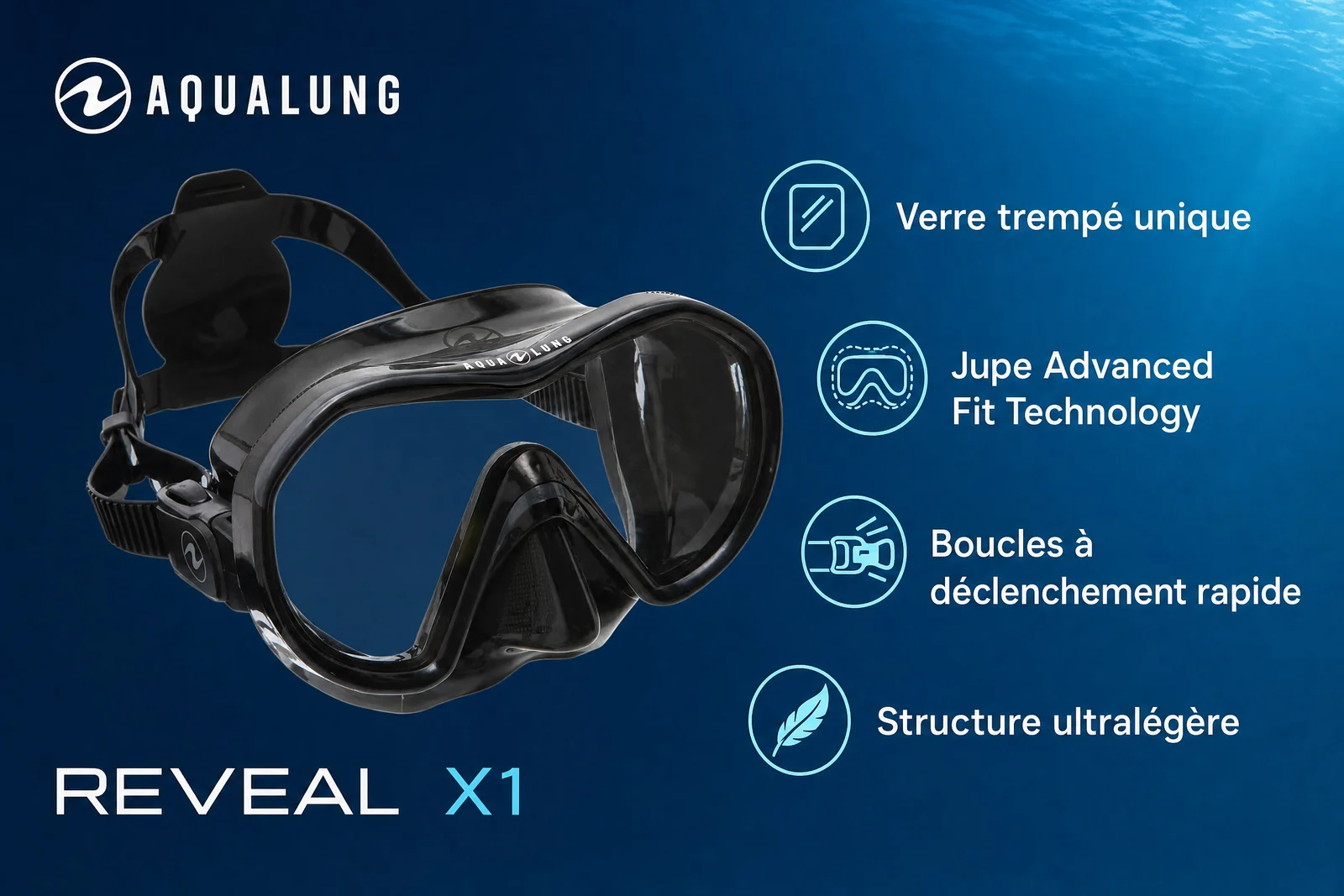
| Reveal X1 | Aqualung | loisir | Mono-verre | Faible, non chiffré | - | 50–86 € | 4.31 / 5 |
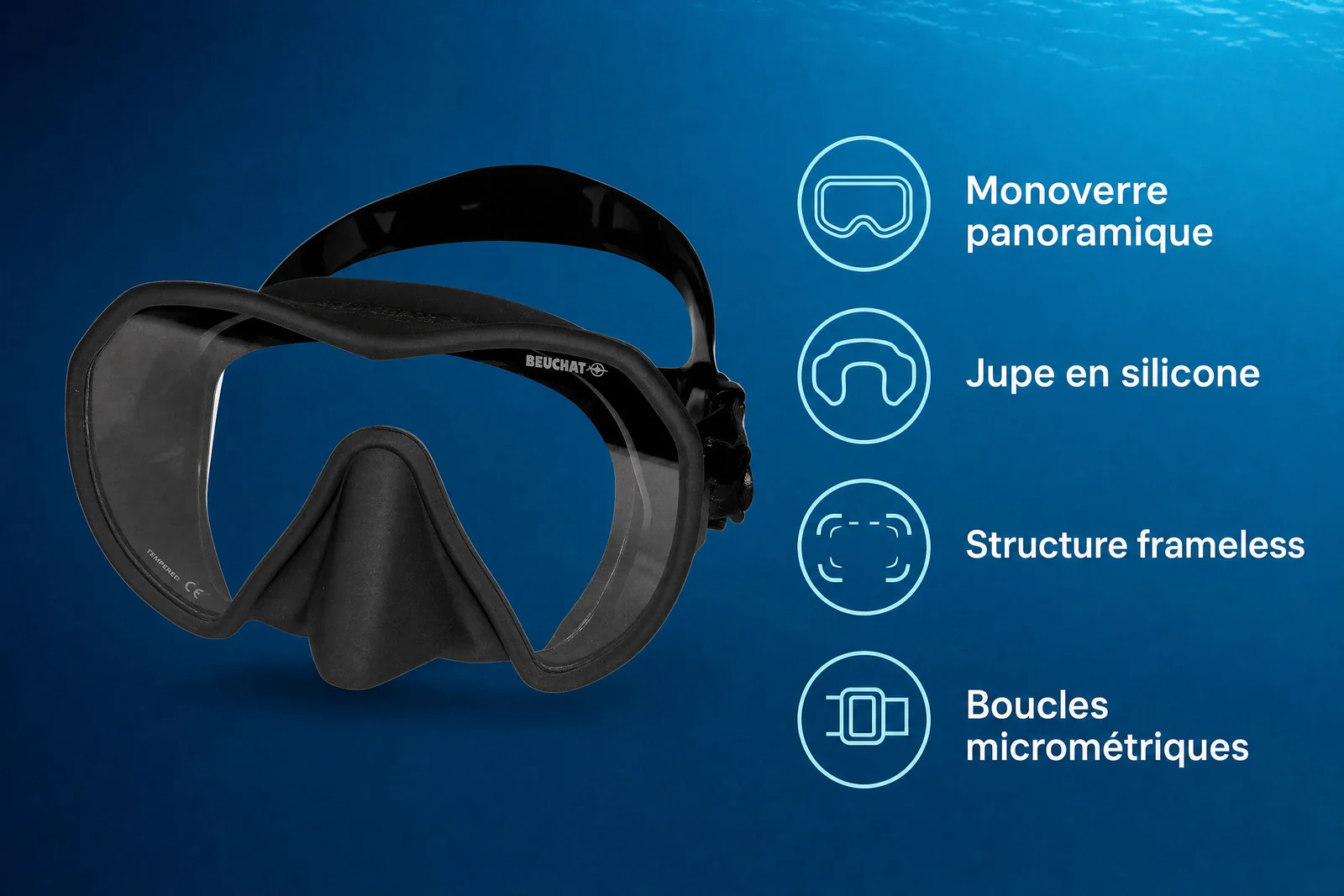
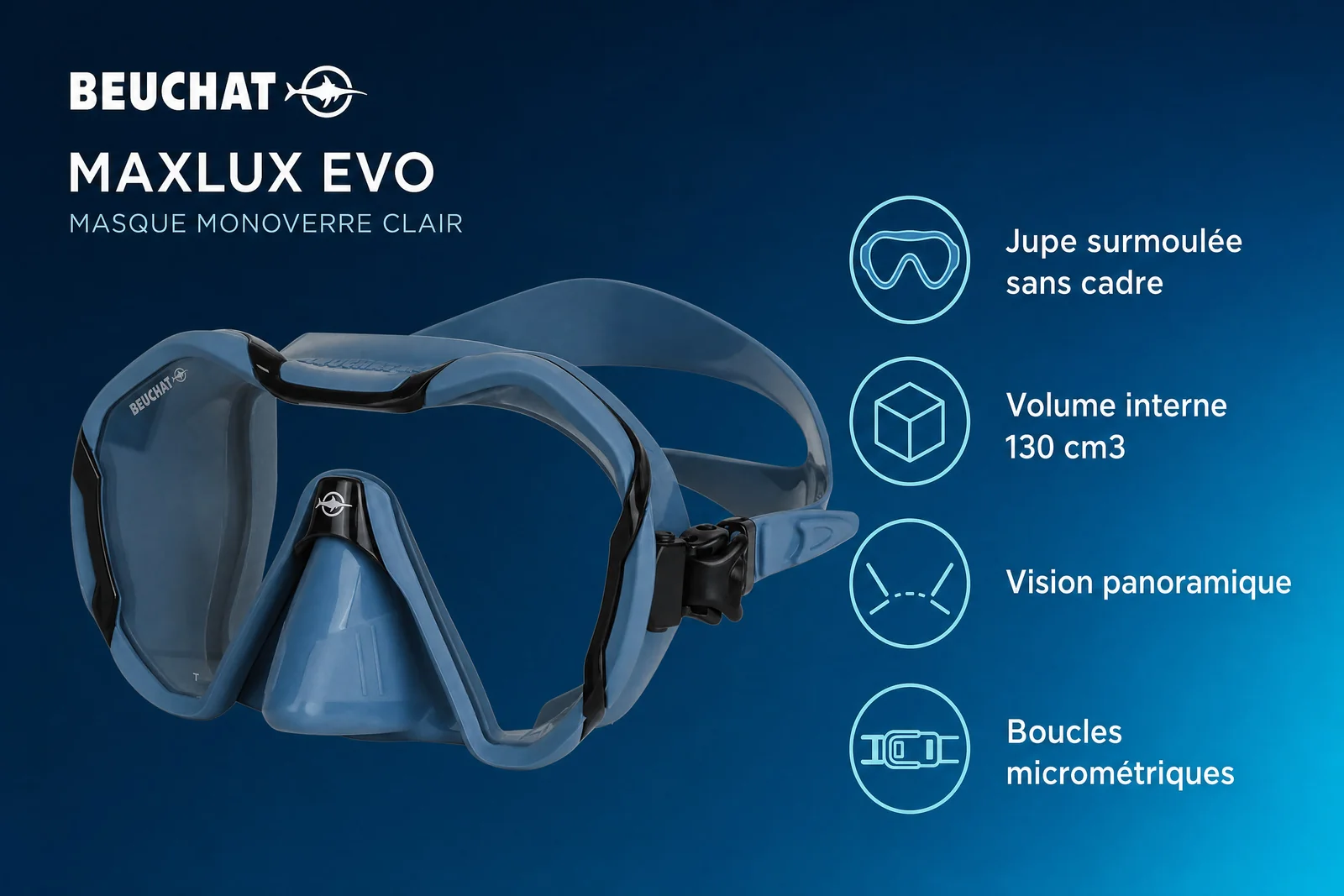
| Maxlux S | Beuchat | loisir | Mono-verre frameless | 127 cm³ | - | 40–68 € | 4.26 / 5 |
| Maxlux Evo | Beuchat | loisir | Mono-verre frameless | 130 cm³ | - | 72,90 € | 4.03 / 5 |
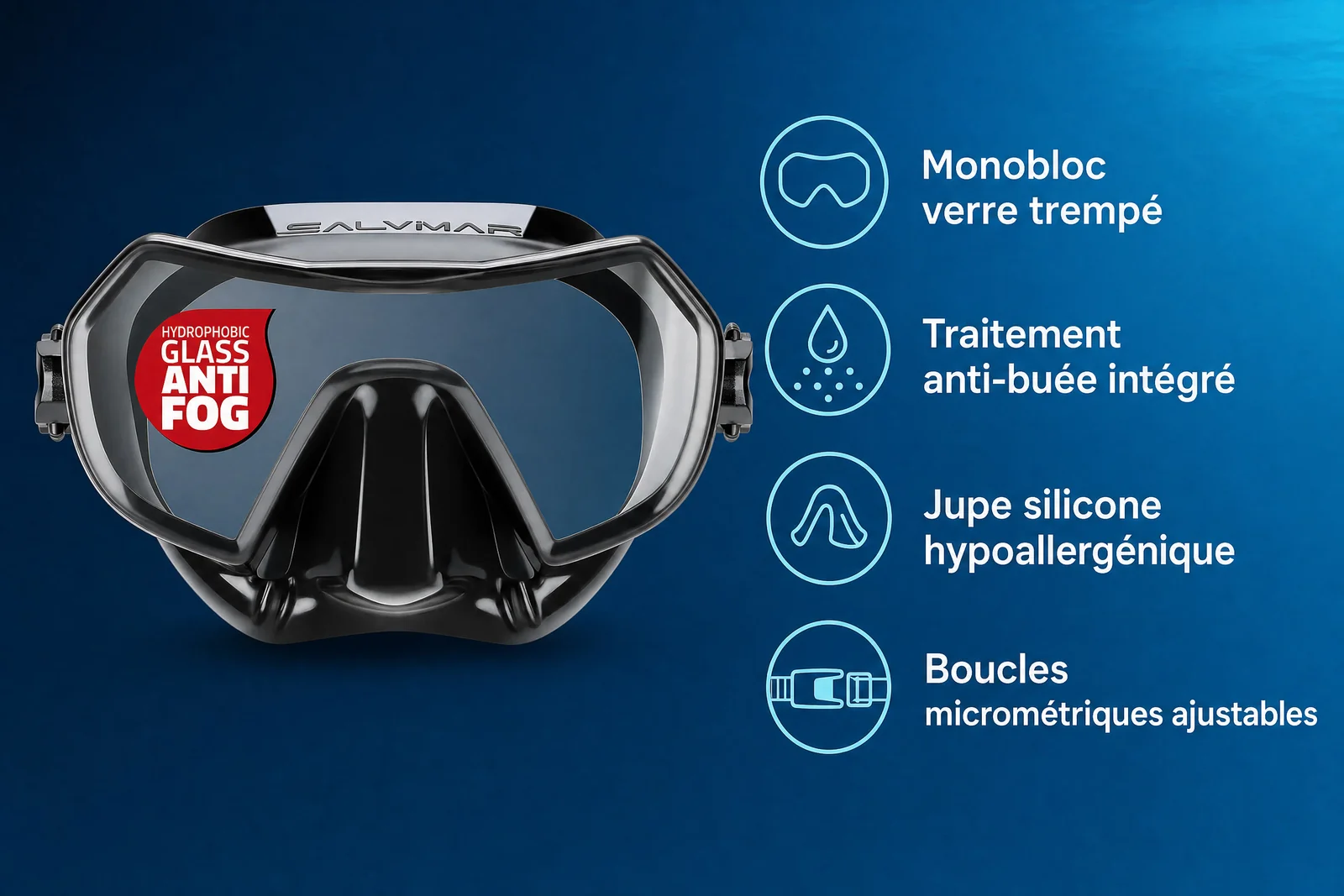
| Endless Anti-Fog | Salvimar | apnee | Mono-verre frameless | Réduit, non chiffré | - | 38,50 $ (fiche Nootica internationale) | 4.24 / 5 |
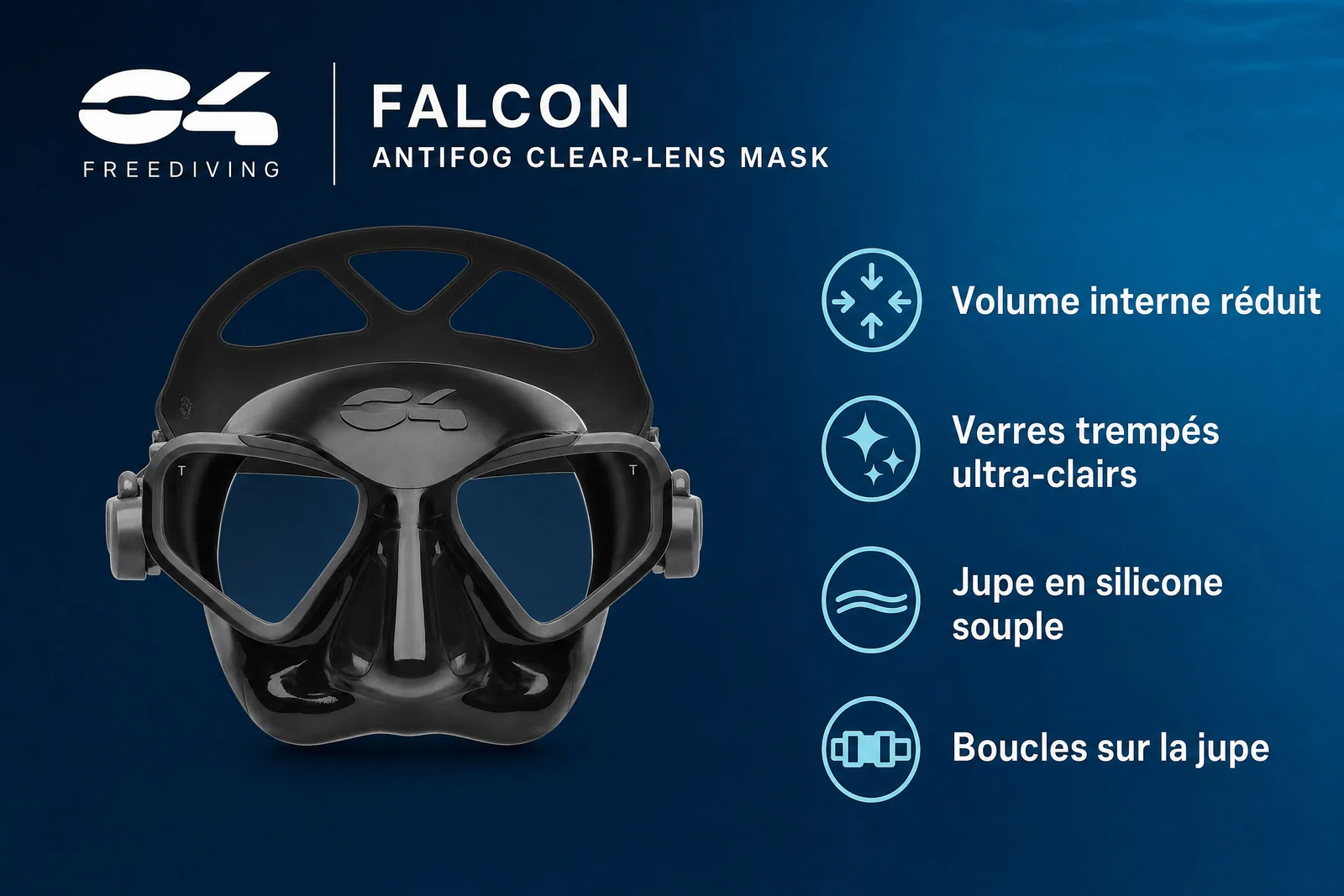
| Falcon Antifog | C4 Freediving | apnee | Mono-verre frameless | 95 cm³ | - | 30–55 € | 4.52 / 5 |
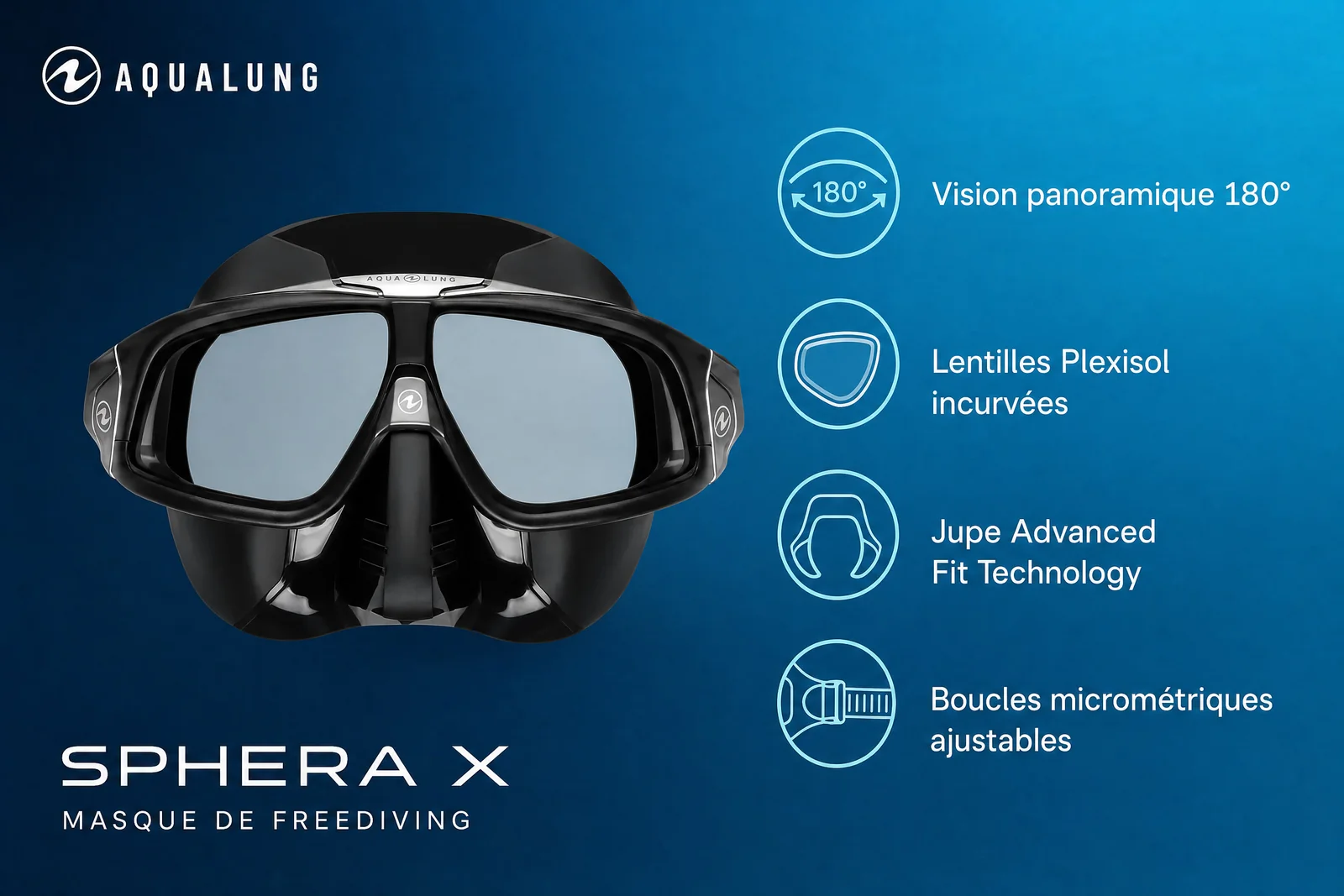
| Sphera X | Aqualung | apnee | Mono-verre frameless incurvé | Non chiffré | - | 79–89 € | 4.14 / 5 |
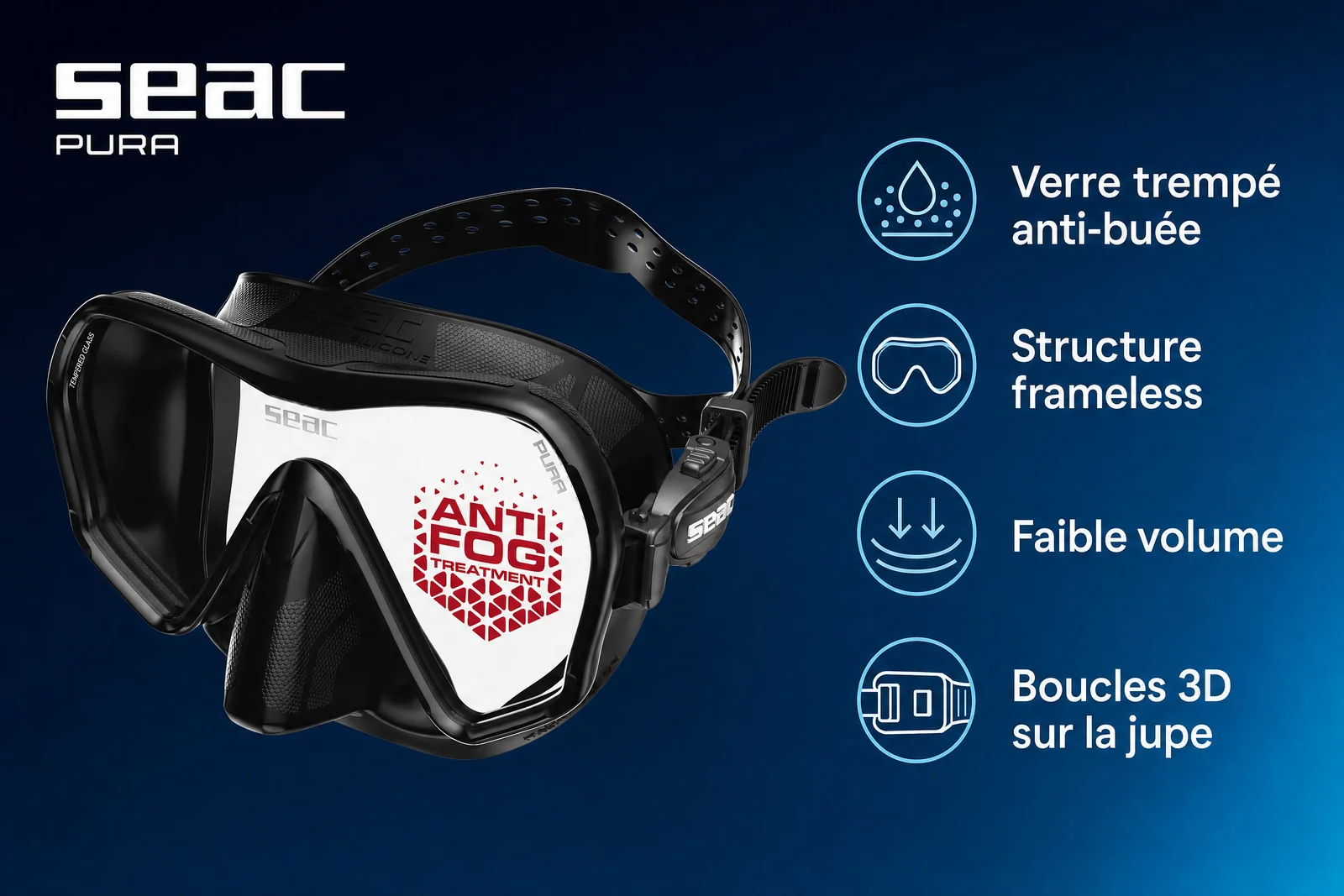
| Pura Anti-buée | SEAC | loisir | Mono-verre frameless | Non chiffré | - | 55–70 € | 4.32 / 5 |
Instructor Note by Benjamin Coste
Underwater vision: panoramic awareness in natural light photography
A leaking or fogging mask ruins comfort, air consumption, and concentration underwater. In natural light underwater photography, your mask is the sole window between your eyes, marine life, and your camera display. An open peripheral field of view lets you spot passing subjects without abrupt head movements that startle wildlife.
To glide effortlessly, hold rock-solid trim millimeters above the reef, and shoot vibrant natural light imagery while respecting marine wildlife, discover our formation AquaExposure.
How to Choose Your Dive Mask: Technical and Fit Guide
A diving mask restores an air space in front of your eyes so your cornea can focus light underwater. Unlike swimming goggles, it must enclose your nose to equalize internal pressure on descent and avoid mask squeeze.
1. Skirt & Silicone (Seal)
High-grade liquid silicone molds to facial contours without overtightening the strap. Frameless skirts fuse silicone directly onto glass for maximum flexibility and reduced weight.
2. Single vs Dual Lens
Single-lens masks provide an unobstructed field of view ideal for underwater framing. Dual-lens masks bring glass closer to the eyes to reduce air volume and support prescription lenses.
3. Mask Prep & Anti-Fog
Every new mask emits silicone residue that fogs the glass. Scrubbing with non-gel toothpaste or flame-treating tempered glass strips this layer away permanently.
Frequently asked questions about dive masks
Which dive mask should I choose as a beginner?+
For beginners, a recreational mask made of soft clear or black silicone with a standard internal volume is ideal (such as the Cressi F1 or Scubapro Spectra). The key is to test the inhalation seal on your face before buying.
Should I choose a single-lens or dual-lens mask?+
A single-lens mask offers an uninterrupted panoramic field of view in the center, ideal for underwater photography. A dual-lens mask usually has a smaller internal volume for easy clearing and allows the installation of optical prescription lenses.
Are mirrored or tinted lenses recommended?+
Mirrored lenses protect against surface glare, but they block eye contact with marine wildlife and your dive buddy. In underwater photography and scuba instruction, they are not recommended for this reason.
How do I prevent a new dive mask from fogging?+
A new mask has a thin film of manufacturing silicone on the lenses. Rub the inner lenses with plain white non-gel toothpaste or carefully burn the film off with a lighter flame, then use anti-fog solution before diving.